






RESEARCH | Sep 13, 2023
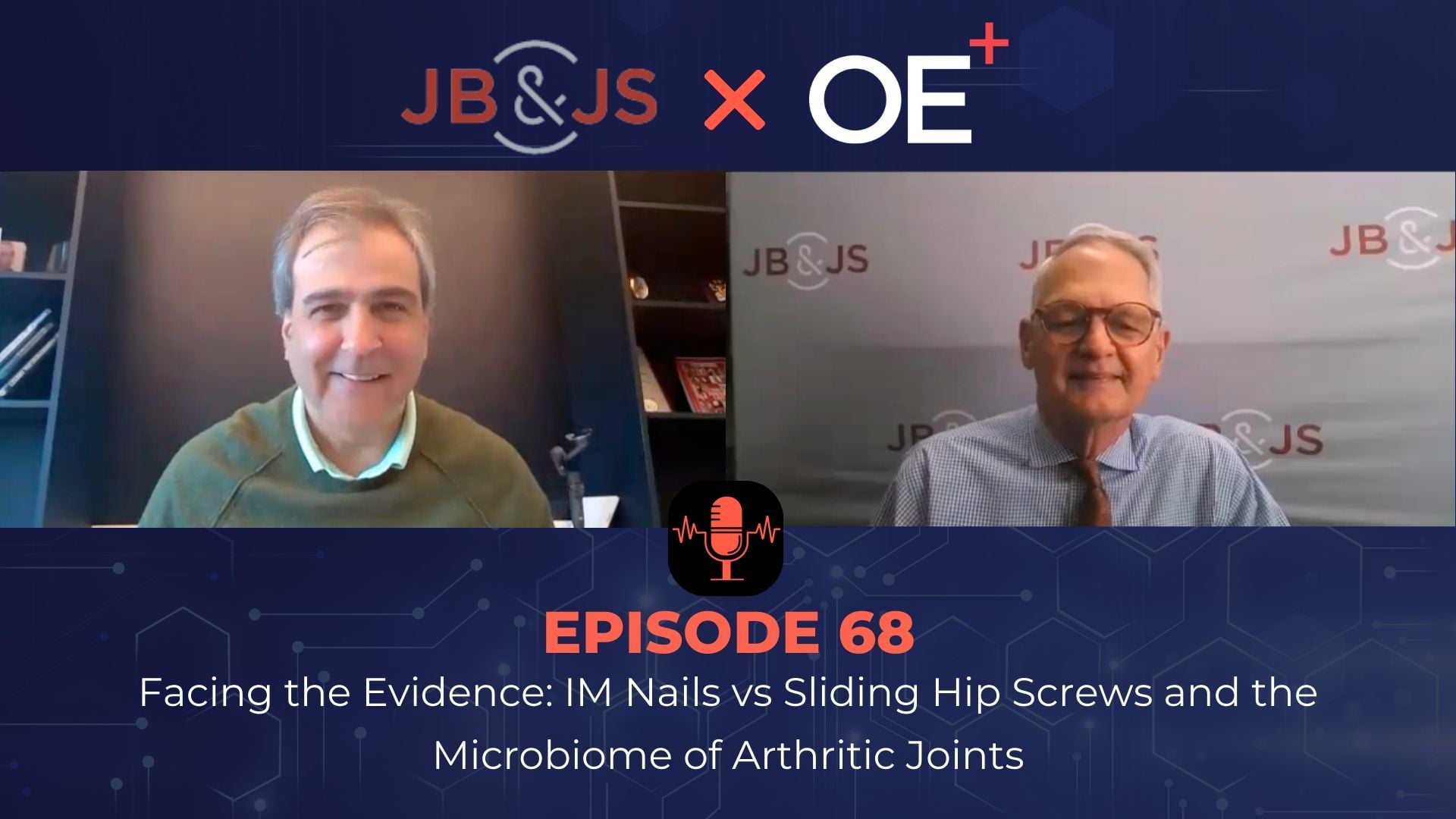
Facing the Evidence IM Nails vs Sliding Hip Screws and the Microbiome of Arthritic Joints.
Unlock this Podcast
You have access to 4 more FREE articles this month.
Click below to unlock and view this Videos
Unlock Now
Critical appraisals of the latest, high-impact randomized controlled trials and systematic reviews in orthopaedics
Access to OrthoEvidence podcast content, including collaborations with the Journal of Bone and Joint Surgery, interviews with internationally recognized surgeons, and roundtable discussions on orthopaedic news and topics
Subscription to The Pulse, a twice-weekly evidence-based newsletter designed to help you make better clinical decisions
Exclusive access to original content articles, including in-house systematic reviews, and articles on health research methods and hot orthopaedic topics
Or upgrade today and gain access to all OrthoEvidencecontent for as little as $1.99 per week.
Already have an account? Log in
Are you affiliated with one of our partner associations?
Click here to gain complimentary access as part your association member benefits!

Marc Swiontkowski
MD, FAOA
Professor, University of Minnesota
View More
The discussion highlights two emerging themes in orthopaedics: the persistence of practice patterns despite clear evidence, and the provocative possibility that osteoarthritis may have a microbial dimension. A large multinational RCT (INSITE) again showed no advantage of intramedullary nails over sliding hip screws for intertrochanteric fractures, reinforcing decades of consistent evidence. Yet training environments, industry influence, and ingrained habits continue to shape practice more than data. The conversation then shifts to new research using advanced microbial sequencing in arthroplasty specimens, which revealed microbial fragments in many joints. Although causation is unproven and contamination remains plausible, the work opens questions about injections, surgical prep, and the broader microbiome. Both hosts argue that large collaboratives and thoughtful knowledge translation are essential to close old practice gaps and responsibly explore new scientific frontiers.

DISCLAIMER
This content found on this page is for informational purposes only and is not intended to be a substitute for professional medical advice, diagnosis, or treatment. If you require medical treatment, always seek the advice of your physician or go to your nearest emergency department. The opinions, beliefs, and viewpoints expressed by the individuals on the content found on this page do not reflect the opinions, beliefs, and viewpoints of OrthoEvidence.
0 of 4 monthly FREE articles unlocked



