






PRACTICE | Jan 18, 2023
Preventing Surgical Site Infection.
Unlock this Podcast
You have access to 4 more FREE articles this month.
Click below to unlock and view this Videos
Unlock Now
Critical appraisals of the latest, high-impact randomized controlled trials and systematic reviews in orthopaedics
Access to OrthoEvidence podcast content, including collaborations with the Journal of Bone and Joint Surgery, interviews with internationally recognized surgeons, and roundtable discussions on orthopaedic news and topics
Subscription to The Pulse, a twice-weekly evidence-based newsletter designed to help you make better clinical decisions
Exclusive access to original content articles, including in-house systematic reviews, and articles on health research methods and hot orthopaedic topics
Or upgrade today and gain access to all OrthoEvidencecontent for as little as $1.99 per week.
Already have an account? Log in
Are you affiliated with one of our partner associations?
Click here to gain complimentary access as part your association member benefits!

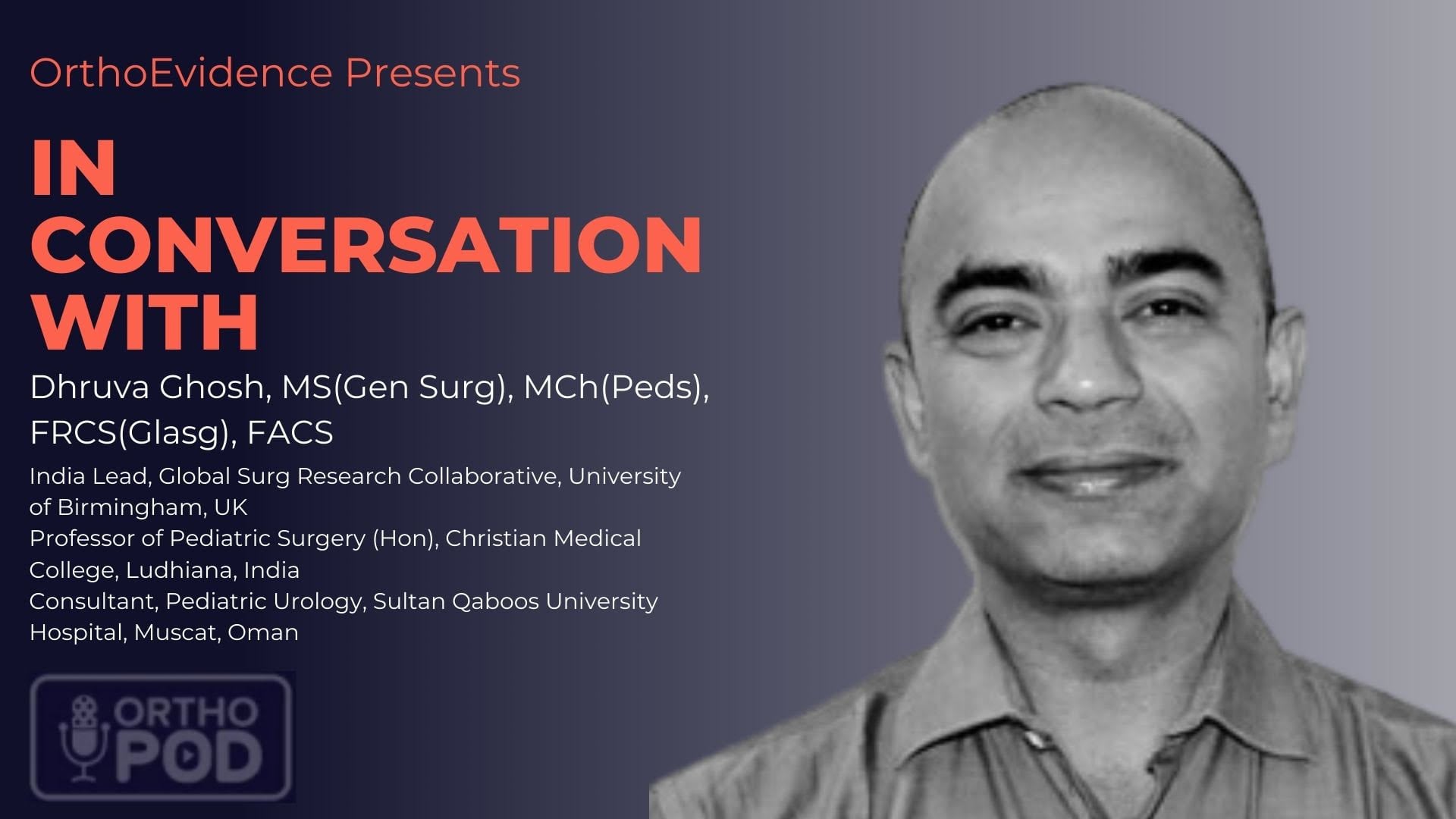
Dhruva Ghosh
MS, MCh, FRCS, FACS
Professor and Head, Department of Paediatric Surgery, Christian Medical College & Hospital
View More
The discussion explores a major Lancet-published cluster trial evaluating a simple, low-cost strategy to reduce surgical site infections across seven low- and middle-income countries. Building on earlier global surgery initiatives, the team tested routine glove and instrument changes before fascial closure—an intuitive yet rarely practiced step. Across more than 13,000 abdominal surgeries, this frugal intervention produced a meaningful absolute reduction in infection rates, with consistent benefits in both elective and emergency settings. The conversation highlights the challenge of translating evidence into sustained surgical practice, especially in settings with diverse healthcare structures, and underscores the need for cost-effectiveness data to drive policy adoption. It also points toward broader implications for other surgical fields and future global surgical research efforts.

DISCLAIMER
This content found on this page is for informational purposes only and is not intended to be a substitute for professional medical advice, diagnosis, or treatment. If you require medical treatment, always seek the advice of your physician or go to your nearest emergency department. The opinions, beliefs, and viewpoints expressed by the individuals on the content found on this page do not reflect the opinions, beliefs, and viewpoints of OrthoEvidence.
0 of 4 monthly FREE articles unlocked



