






RESEARCH | Feb 16, 2023
Thoracic Hyper-Kyphosis Reduction Improves Outcomes for Chronic Non-Specific Neck Pain.
Unlock this Podcast
You have access to 4 more FREE articles this month.
Click below to unlock and view this Videos
Unlock Now
Critical appraisals of the latest, high-impact randomized controlled trials and systematic reviews in orthopaedics
Access to OrthoEvidence podcast content, including collaborations with the Journal of Bone and Joint Surgery, interviews with internationally recognized surgeons, and roundtable discussions on orthopaedic news and topics
Subscription to The Pulse, a twice-weekly evidence-based newsletter designed to help you make better clinical decisions
Exclusive access to original content articles, including in-house systematic reviews, and articles on health research methods and hot orthopaedic topics
Or upgrade today and gain access to all OrthoEvidencecontent for as little as $1.99 per week.
Already have an account? Log in
Are you affiliated with one of our partner associations?
Click here to gain complimentary access as part your association member benefits!

Deed Harrison
DC
Director, Ideal Spine Health Center
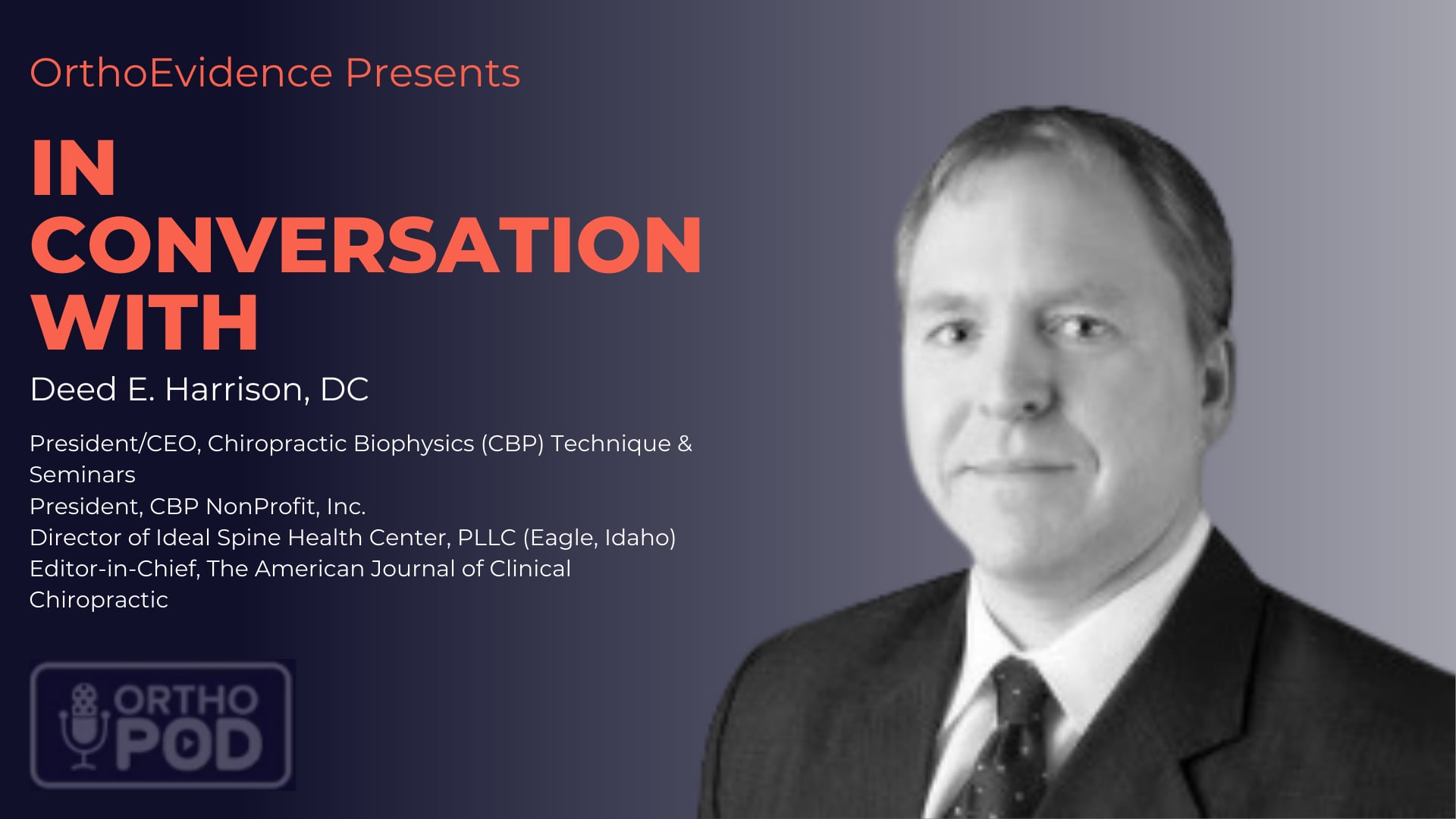
View MoreThis conversation explores a trial targeting thoracic hyperkyphosis in younger adults with chronic non-specific neck pain. Dr. Harrison outlines the international team behind the work, noting rising sagittal-plane deformities linked to sedentary behaviour. Using a novel spinal orthotic to gradually restore thoracic alignment, the study demonstrated improvements in posture, forward head position, neck pain, disability, and sensory-motor control, including balance, head repositioning, and ocular tracking. Clinically, the findings suggest a potential strategy to counteract a prevalent deformity that begins early in adulthood and may worsen with age. The team plans multiple follow-up investigations within a special issue on spinal rehabilitation, anticipating broader insights into posture-related health and deformity prevention.

DISCLAIMER
This content found on this page is for informational purposes only and is not intended to be a substitute for professional medical advice, diagnosis, or treatment. If you require medical treatment, always seek the advice of your physician or go to your nearest emergency department. The opinions, beliefs, and viewpoints expressed by the individuals on the content found on this page do not reflect the opinions, beliefs, and viewpoints of OrthoEvidence.
0 of 4 monthly FREE articles unlocked



