










ARTHROPLASTY
Metal-backed versus all-polyethylene tibial components in primary total knee arthroplasty
OrthoEvidence Journal (OE Journal) - ACE Report
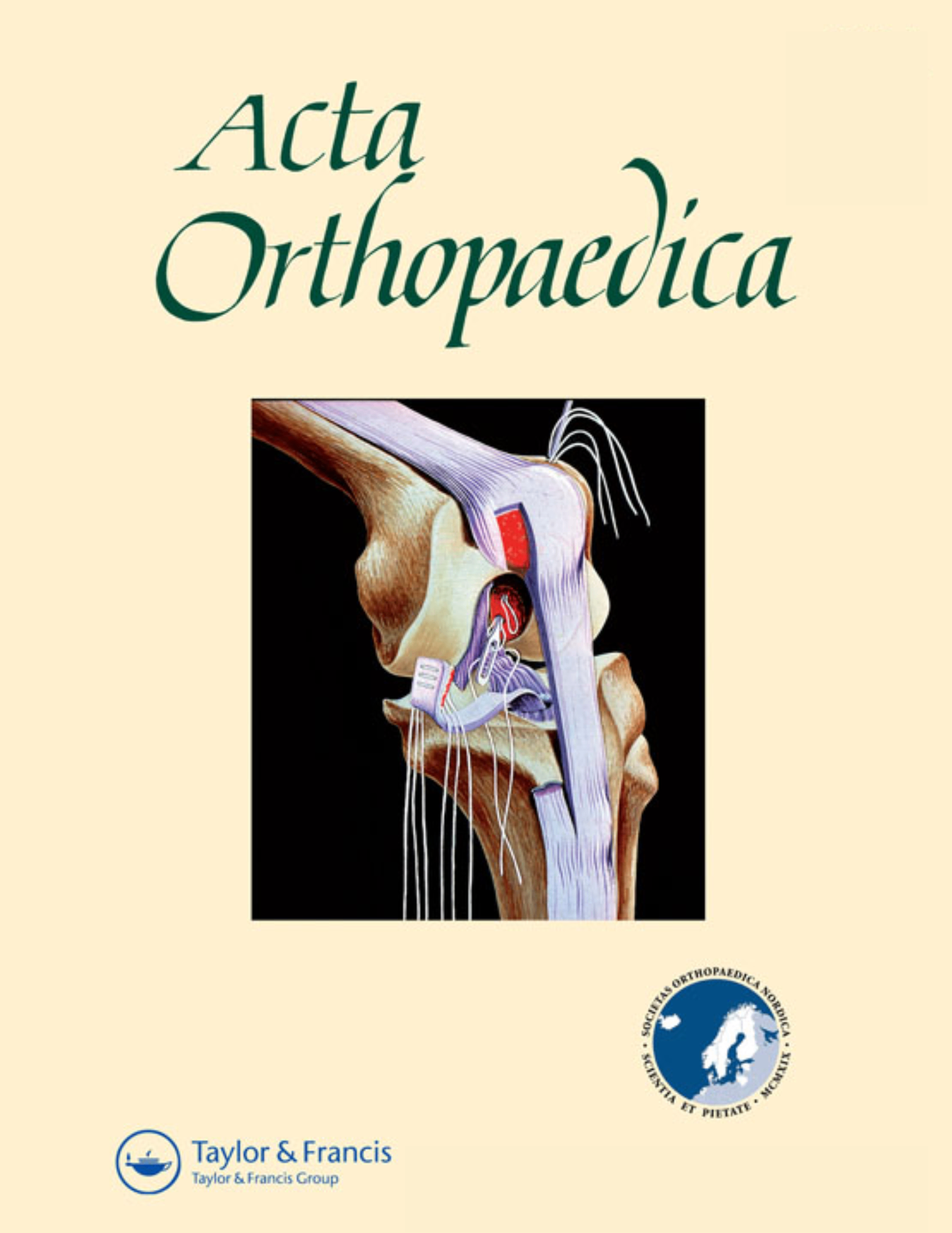
OE Journal. 2013;1(2):22 Acta Orthop. 2011 Oct;82(5):589-95. Epub 2011 Sep 6This meta-analysis and systematic review identified 9 randomized controlled trials that compared all-polyethylene (AP) tibial components to metal-backed (MB) tibial components in primary total knee arthroplasty. The results from this analysis demonstrate no significant difference in radiographic and clinical outcomes between both the AP and MB tibial component groups.
Were the search methods used to find evidence (original research) on the primary question or questions stated?
Was the search for evidence reasonably comprehensive?
Were the criteria used for deciding which studies to include in the overview reported?
Was the bias in the selection of studies avoided?
Were the criteria used for assessing the validity of the included studies reported?
Was the validity of all of the studies referred to in the text assessed with use of appropriate criteria (either in selecting the studies for inclusion or in analyzing the studies that were cited)?
Were the methods used to combine the findings of the relevant studies (to reach a conclusion) reported?
Were the findings of the relevant studies combined appropriately relative to the primary question that the overview addresses?
Were the conclusions made by the author or authors supported by the data and or analysis reported in the overview?
How would you rate the scientific quality of this evidence?
Sí = 1
Incierto = 0,5
No relevante = 0
No = 0
La evaluación de los criterios de información evalúa la transparencia con la que los autores informan de las características metodológicas y del ensayo dentro de la publicación. La evaluación se divide en cinco categorías que se presentan a continuación.
4/4
Introdução
2/4
Acesso aos dados
4/4
Análise dos dados
3/4
Resultados
2/4
Discussão
Detsky AS, Naylor CD, O'Rourke K, McGeer AJ, L'Abbé KA. J Clin Epidemiol. 1992;45:255-65
El Índice de Fragilidad es una herramienta que ayuda en la interpretación de hallazgos significativos, proporcionando una medida de fuerza para un resultado. El Índice de Fragilidad representa el número de eventos consecutivos que es necesario añadir a un resultado dicotómico para que el hallazgo deje de ser significativo. Un número pequeño representa un hallazgo más débil y un número grande un hallazgo más fuerte.
¿Por qué se necesitaba ahora este estudio?
Tibial component design is an extremely important aspect related to implant failure in total knee arthroplasty. The metal-backed (MB) tibial component design is more commonly used in TKA and is believed to result in better outcomes compared to the use of an all-polyethylene (AP) design. The MB component is thought to have several advantages; however, it is more expensive and can increase wear and tensile stresses during eccentric loading. Although several randomized trials have been performed evaluating the effectiveness of the MB component, this data has not been systematically analysed in order to determine the benefits of the MB component for patients.
¿Cuál era la pregunta principal de la investigación?
What are the outcomes of an all-polyethylene (AP) tibial component compared to a metal-back (MB) tibial component, in terms of radiographic and clinical outcomes in patients undergoing total knee arthroplasty?
¿Cuáles fueron los hallazgos importantes?
- The mean standardized Detsky score for the overall quality of the studies was 14 (SD 3).
- The pooled results from 4 studies demonstrate that the evidence of radiolucent lines adjacent to the tibial component was higher in the MB group compared to the AP group (41 (27.7%) and 16 (10%), respectively) (RR=2.8, CI: 1.7-4.6; p<0.001; I^2=47%).
- All of the studies demonstrated that there was no significant difference between the two groups with respect to functional outcomes, including Oxford Knee Score, Knee Society Score, Hospital for Special Surgery score, range of motion, quality of life and post-operative complications, as well as implant alignment.
¿Qué es lo que más debo recordar?
Similar radiologic and clinical results were observed with the use of both the AP and MB tibial components. The increase in frequency of radiolucent lines in the MB group did not lead to an increase in implant failure.
¿Cómo afectará esto al cuidado de mis pacientes?
The results from this meta-analysis indicate no functional differences between AP and MB tibial components for TKA. However, high quality randomized controlled trials are still required to validate these results.

DESCARGO DE RESPONSABILIDAD
El contenido de esta página tiene únicamente fines informativos y no pretende sustituir el consejo, diagnóstico o tratamiento médico profesional. Si necesita tratamiento médico, busque siempre el consejo de su médico o acuda al servicio de urgencias más cercano. Las opiniones, creencias y puntos de vista expresados por las personas sobre el contenido que se encuentra en esta página no reflejan las opiniones, creencias y puntos de vista de OrthoEvidence.
0 de 4 artículos mensuales GRATIS desbloqueados



