










SPINE
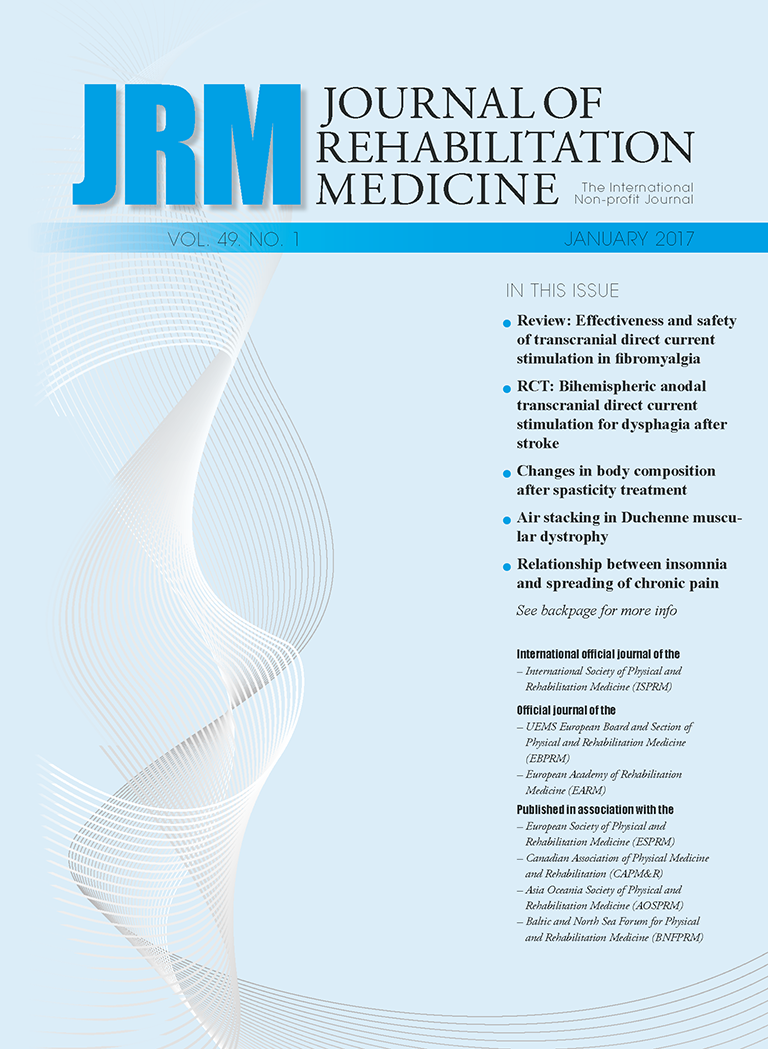
Evaluating relapse prophylaxis in addition to interdisciplinary multimodal pain therapy for back pain: a randomised controlled trial.
OrthoEvidence Journal (OE Journal) - ACE Report
OE Journal. 2025;13(22):21 J Rehabil Med . 2025 Aug 20:57:jrm42088.Résumé de l'étude
Two hundred ninety-seven employed patients with dorsopathies (ICD-10 M40–M54) and recent back pain–related work incapacity were randomized to receive either 4 weeks of outpatient interdisciplinary multimodal pain therapy (IMPT) plus a 12-month relapse prophylaxis programme (intervention; n = 150) or the same multimodal pain therapy alone (control; n = 147). The IMPT comprised team-based medical, physiotherapy, psychological, and educational components delivered in standard or complex formats, while relapse prophylaxis offered low-, medium-, or high-intensity follow-up with combinations of telephone consultations, booster sessions, and optional monthly medical training therapy. The primary outcome was the number of days of incapacity to work over the 12 months after IMPT, obtained from health insurance claims. Secondary outcomes were functional capacity (Hannover Functional Ability Questionnaire, HFAQ) and health-related quality of life (EQ-5D-5L index and EQ VAS), assessed at baseline (T0), after IMPT (4 weeks, T1), and after 12 months (T2). Outcomes were thus evaluated over 12 months, with an intermediate assessment at 4 weeks. Overall, the results of the study revealed no statistically significant reduction in sick-leave days with relapse prophylaxis, but the intervention group showed significantly greater and sustained gains in functional capacity and modest, non-significant trends toward better health-related quality of life. These findings suggest that adding relapse prophylaxis may enhance self-reported function but, as implemented, does not clearly translate into fewer days off work within one year.
Débloquez le rapport complet du CAE
Vous avez accès à 4 plus d'articles GRATUITS ce mois-ci.
Cliquez ci-dessous pour déverrouiller et visionner ce ACE Reports
Déverrouillez maintenant
Évaluations critiques des derniers essais contrôlés randomisés à fort impact et des revues systématiques en orthopédie
Accès au contenu des podcasts OrthoEvidence, y compris les collaborations avec le Journal of Bone and Joint Surgery, les entretiens avec des chirurgiens de renommée internationale et les tables rondes sur l'actualité et les sujets orthopédiques.
Abonnement à The Pulse, une lettre d'information bihebdomadaire fondée sur des données probantes, conçue pour vous aider à prendre de meilleures décisions cliniques.
Accès exclusif à des articles au contenu original, y compris des revues systématiques internes et des articles sur les méthodes de recherche en santé et les sujets d'actualité en orthopédie.
Ou mettez votre compte à niveau dès aujourd'hui et accédez à tout le contenu d'OrthoEvidence pour seulement 1,99 $ par semaine.
Vous avez déjà un compte ? Se connecter
Vous êtes affilié à l'une de nos associations partenaires ?
Cliquez ici pour bénéficier d'un accès gratuit dans le cadre des avantages réservés aux membres de votre association !


Abonnez-vous à "Le pouls"
L'orthopédie fondée sur des données probantes directement dans votre boîte de réception. S'ABONNER
0 de 4 articles mensuels GRATUITS débloqués



