










SPINE
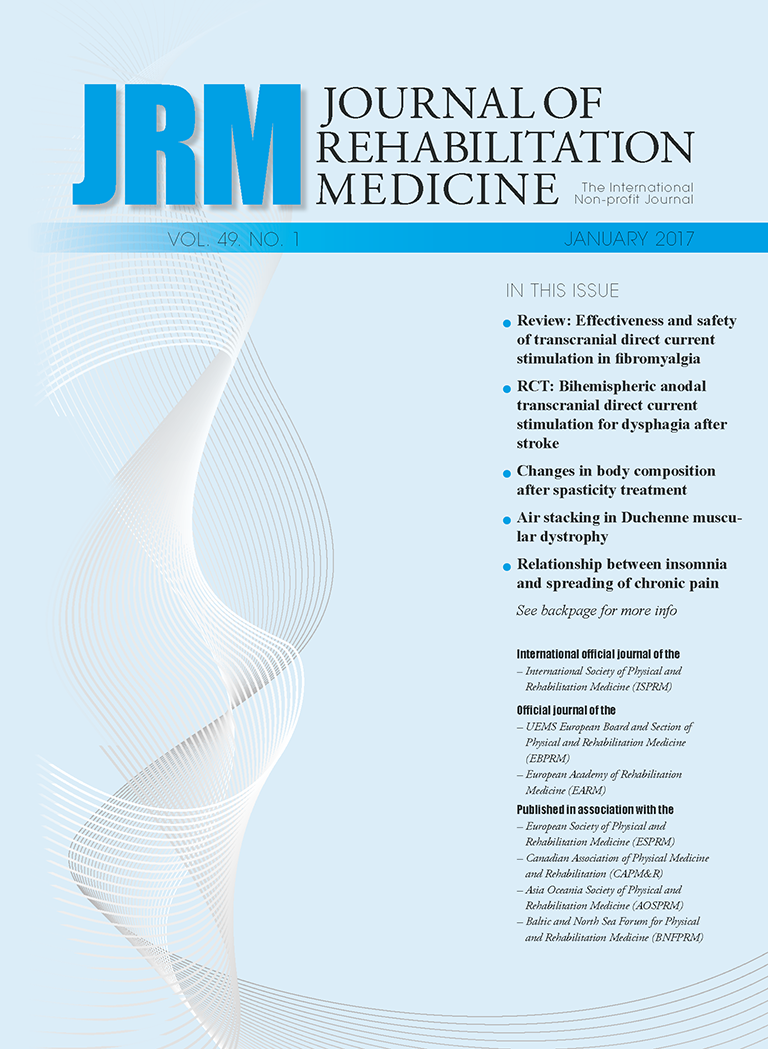
Evaluating relapse prophylaxis in addition to interdisciplinary multimodal pain therapy for back pain: a randomised controlled trial.
OrthoEvidence Journal (OE Journal) - ACE Report
OE Journal. 2025;13(22):21 J Rehabil Med . 2025 Aug 20:57:jrm42088.ملخص الدراسة
Two hundred ninety-seven employed patients with dorsopathies (ICD-10 M40–M54) and recent back pain–related work incapacity were randomized to receive either 4 weeks of outpatient interdisciplinary multimodal pain therapy (IMPT) plus a 12-month relapse prophylaxis programme (intervention; n = 150) or the same multimodal pain therapy alone (control; n = 147). The IMPT comprised team-based medical, physiotherapy, psychological, and educational components delivered in standard or complex formats, while relapse prophylaxis offered low-, medium-, or high-intensity follow-up with combinations of telephone consultations, booster sessions, and optional monthly medical training therapy. The primary outcome was the number of days of incapacity to work over the 12 months after IMPT, obtained from health insurance claims. Secondary outcomes were functional capacity (Hannover Functional Ability Questionnaire, HFAQ) and health-related quality of life (EQ-5D-5L index and EQ VAS), assessed at baseline (T0), after IMPT (4 weeks, T1), and after 12 months (T2). Outcomes were thus evaluated over 12 months, with an intermediate assessment at 4 weeks. Overall, the results of the study revealed no statistically significant reduction in sick-leave days with relapse prophylaxis, but the intervention group showed significantly greater and sustained gains in functional capacity and modest, non-significant trends toward better health-related quality of life. These findings suggest that adding relapse prophylaxis may enhance self-reported function but, as implemented, does not clearly translate into fewer days off work within one year.
افتح تقرير ACE الكامل
لديك إمكانية الوصول إلى المزيد من المقالات المجانية هذا الشهر، انقر أدناه لفتح هذا ACE Reports
افتح الآنتقييمات نقدية لأحدث التجارب المعشاة ذات الشواهد عالية التأثير والمراجعات المنهجية في جراحة العظام
الوصول إلى محتوى المدونة الصوتية OrthoEvidence، بما في ذلك التعاون مع مجلة جراحة العظام والمفاصل، ومقابلات مع جراحين معترف بهم دوليًا، ومناقشات المائدة المستديرة حول أخبار وموضوعات جراحة العظام
الاشتراك في النشرة الإخبارية The Pulse، وهي نشرة إخبارية مبنية على الأدلة مرتين أسبوعيًا مصممة لمساعدتك في اتخاذ قرارات سريرية أفضل
إمكانية الوصول الحصري إلى مقالات المحتوى الأصلي، بما في ذلك المراجعات المنهجية الداخلية، ومقالات عن طرق البحث الصحي وموضوعات جراحة العظام الساخنة
أو قم بالترقية اليوم واحصل على إمكانية الوصول إلى جميع محتويات OrthoEvidence مقابل 1.99 دولارًا أمريكيًا في الأسبوع.
هل لديك حساب بالفعل؟ تسجيل الدخول
هل أنت منتسب إلى إحدى الجمعيات الشريكة لنا؟
انقر هنا لتحصل على وصول مجاني كجزء من مزايا عضوية جمعيتك!



0 من 4 مقالات مجانية شهرية غير مقفلة



