










SPINE
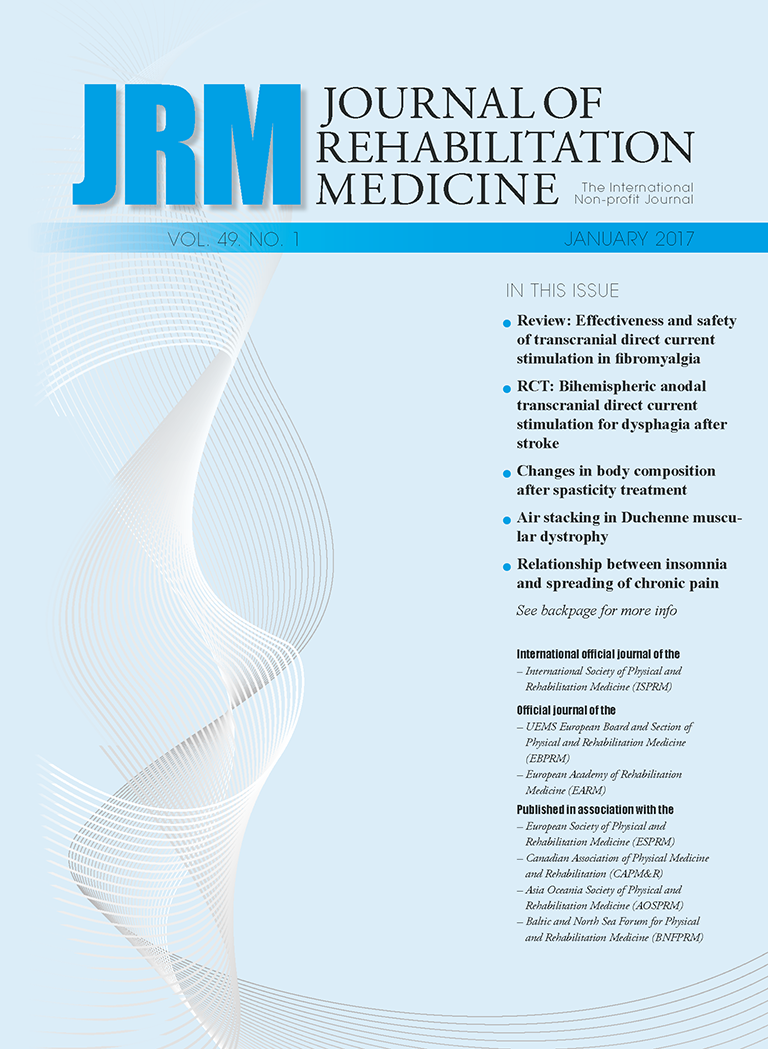
Evaluating relapse prophylaxis in addition to interdisciplinary multimodal pain therapy for back pain: a randomised controlled trial.
OrthoEvidence Journal (OE Journal) - ACE Report
OE Journal. 2025;13(22):21 J Rehabil Med . 2025 Aug 20:57:jrm42088.Resumen del estudio
Two hundred ninety-seven employed patients with dorsopathies (ICD-10 M40–M54) and recent back pain–related work incapacity were randomized to receive either 4 weeks of outpatient interdisciplinary multimodal pain therapy (IMPT) plus a 12-month relapse prophylaxis programme (intervention; n = 150) or the same multimodal pain therapy alone (control; n = 147). The IMPT comprised team-based medical, physiotherapy, psychological, and educational components delivered in standard or complex formats, while relapse prophylaxis offered low-, medium-, or high-intensity follow-up with combinations of telephone consultations, booster sessions, and optional monthly medical training therapy. The primary outcome was the number of days of incapacity to work over the 12 months after IMPT, obtained from health insurance claims. Secondary outcomes were functional capacity (Hannover Functional Ability Questionnaire, HFAQ) and health-related quality of life (EQ-5D-5L index and EQ VAS), assessed at baseline (T0), after IMPT (4 weeks, T1), and after 12 months (T2). Outcomes were thus evaluated over 12 months, with an intermediate assessment at 4 weeks. Overall, the results of the study revealed no statistically significant reduction in sick-leave days with relapse prophylaxis, but the intervention group showed significantly greater and sustained gains in functional capacity and modest, non-significant trends toward better health-related quality of life. These findings suggest that adding relapse prophylaxis may enhance self-reported function but, as implemented, does not clearly translate into fewer days off work within one year.
Desbloquear el informe ACE completo
Tiene acceso a 4 más artículos GRATUITOS este mes.
Haga clic a continuación para desbloquear y ver este ACE Reports
Desbloquear ahora
Evaluaciones críticas de los últimos ensayos controlados aleatorizados de gran impacto y revisiones sistemáticas en ortopedia
Acceso al contenido del podcast OrthoEvidence, que incluye colaboraciones con el Journal of Bone and Joint Surgery, entrevistas con cirujanos reconocidos internacionalmente y mesas redondas sobre noticias y temas ortopédicos
Suscripción a The Pulse, un boletín quincenal basado en la evidencia y diseñado para ayudarle a tomar mejores decisiones clínicas
Acceso exclusivo a artículos de contenido original, incluidas revisiones sistemáticas propias, y artículos sobre métodos de investigación sanitaria y temas ortopédicos de actualidad
O actualícese hoy mismo y obtenga acceso a todo el contenido de OrthoEvidencepor tan sólo 1,99 $ a la semana.
¿Ya tiene una cuenta? Conectarse
¿Está afiliado a una de nuestras asociaciones colaboradoras?
¡Haga clic aquí para obtener acceso gratuito como parte de los beneficios de miembro de su asociación!


Suscríbase a "El Pulso"
Ortopedia basada en la evidencia directamente a su bandeja de entrada. SUSCRIBIRSE
0 de 4 artículos mensuales GRATIS desbloqueados



