










SPINE
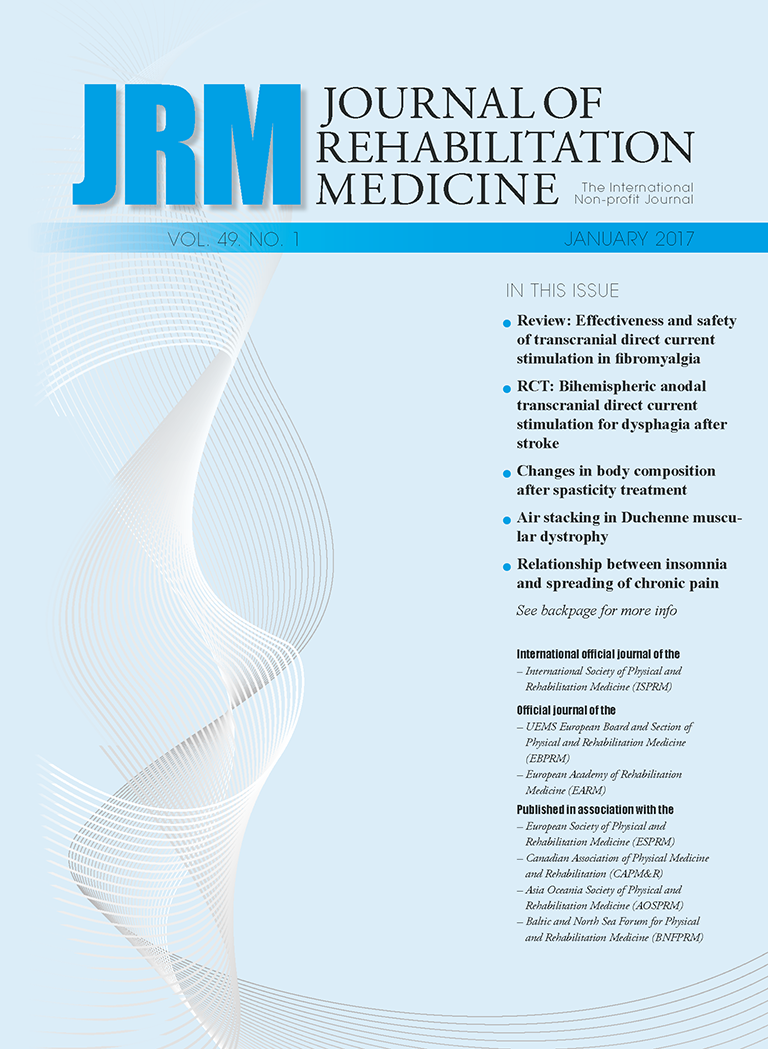
Evaluating relapse prophylaxis in addition to interdisciplinary multimodal pain therapy for back pain: a randomised controlled trial.
OrthoEvidence Journal (OE Journal) - ACE Report
OE Journal. 2025;13(22):21 J Rehabil Med . 2025 Aug 20:57:jrm42088.Zusammenfassung der Studie
Two hundred ninety-seven employed patients with dorsopathies (ICD-10 M40–M54) and recent back pain–related work incapacity were randomized to receive either 4 weeks of outpatient interdisciplinary multimodal pain therapy (IMPT) plus a 12-month relapse prophylaxis programme (intervention; n = 150) or the same multimodal pain therapy alone (control; n = 147). The IMPT comprised team-based medical, physiotherapy, psychological, and educational components delivered in standard or complex formats, while relapse prophylaxis offered low-, medium-, or high-intensity follow-up with combinations of telephone consultations, booster sessions, and optional monthly medical training therapy. The primary outcome was the number of days of incapacity to work over the 12 months after IMPT, obtained from health insurance claims. Secondary outcomes were functional capacity (Hannover Functional Ability Questionnaire, HFAQ) and health-related quality of life (EQ-5D-5L index and EQ VAS), assessed at baseline (T0), after IMPT (4 weeks, T1), and after 12 months (T2). Outcomes were thus evaluated over 12 months, with an intermediate assessment at 4 weeks. Overall, the results of the study revealed no statistically significant reduction in sick-leave days with relapse prophylaxis, but the intervention group showed significantly greater and sustained gains in functional capacity and modest, non-significant trends toward better health-related quality of life. These findings suggest that adding relapse prophylaxis may enhance self-reported function but, as implemented, does not clearly translate into fewer days off work within one year.
Vollständigen ACE-Bericht freischalten
Sie haben Zugang zu 4 weiteren KOSTENLOSEN Artikeln in diesem Monat.
Klicken Sie unten, um diese ACE Reports freizuschalten und anzusehen
Jetzt freischalten
Kritische Beurteilungen der neuesten, hochwirksamen randomisierten kontrollierten Studien und systematischen Übersichten in der Orthopädie
Zugang zu OrthoEvidence-Podcast-Inhalten, einschließlich Kooperationen mit dem Journal of Bone and Joint Surgery, Interviews mit international anerkannten Chirurgen und Diskussionsrunden zu orthopädischen Neuigkeiten und Themen
Abonnement von The Pulse, einem zweimal wöchentlich erscheinenden evidenzbasierten Newsletter, der Ihnen helfen soll, bessere klinische Entscheidungen zu treffen
Exklusiver Zugang zu Originalartikeln, einschließlich eigener systematischer Übersichten, sowie zu Artikeln über Methoden der Gesundheitsforschung und aktuelle orthopädische Themen
Oder upgraden Sie noch heute und erhalten Sie Zugang zu allen OrthoEvidence-Inhalten für nur $1,99 pro Woche.
Sie haben bereits ein Konto? Einloggen
Gehören Sie zu einem unserer Partnerverbände?
Klicken Sie hier, um im Rahmen Ihrer Verbandsmitgliedschaft kostenlosen Zugang zu erhalten!



0 von 4 monatliche KOSTENLOSE Artikel freigeschaltet



