










ARTHROPLASTY
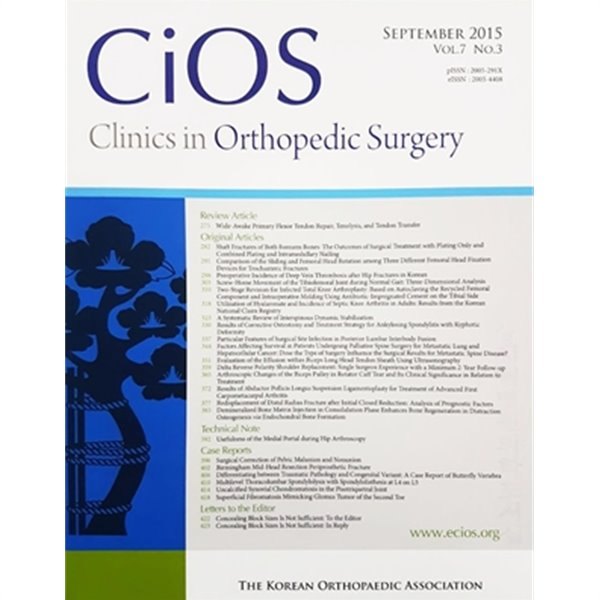
Clinical and Radiological Comparison between Asian-Type and Conventional Reverse Shoulder Arthroplasty: A Multicenter Randomized Controlled Trial.
OrthoEvidence Journal (OE Journal) - ACE Report
OE Journal. 2025;13(22):7 Clin Orthop Surg . 2025 Aug;17(4):664-672.Resumo do estudo
One hundred twenty patients with symptomatic irreparable massive rotator cuff tear, cuff tear arthropathy, or primary osteoarthritis with full-thickness rotator cuff tear were randomized 2:1 to receive an Asian-type reverse shoulder arthroplasty (RSA) implant (n = 80) or a conventional reverse shoulder arthroplasty implant (n = 40). The primary outcome of interest was shoulder function, as measured by the American Shoulder and Elbow Surgeons (ASES) score, with supporting functional measures including Constant score, pain (visual analog scale), and active range of motion. Secondary outcomes of interest included radiographic parameters (acromiohumeral distance, acromion–deltoid tuberosity distance, lateral humeral offset, center of rotation), three-dimensional CT–based baseplate and screw positioning, scapular notching, and acromial stress fracture. Outcomes were assessed preoperatively and at 3, 6, and 12 months postoperatively and at a minimum of 2 years, with CT obtained at 1 year. Overall, the results of the study revealed that both implants produced similar, clinically meaningful improvements in function and pain without significant between-group differences, while the Asian-type implant allowed a more central positioning of the glenoid baseplate on CT. These findings suggest that an Asian-type RSA implant provides equivalent short-term clinical and radiological outcomes to a conventional system in Asian patients, while potentially improving baseplate placement in smaller glenoids.
Desbloqueie o relatório completo da ACE
Tem acesso a 4 mais artigos GRATUITOS este mês.
Clique abaixo para desbloquear e ver este ACE Reports
Desbloqueie agora
Avaliações críticas dos mais recentes ensaios clínicos aleatórios de alto impacto e revisões sistemáticas em ortopedia
Acesso ao conteúdo do podcast OrthoEvidence, incluindo colaborações com o Journal of Bone and Joint Surgery, entrevistas com cirurgiões reconhecidos internacionalmente e discussões em mesa redonda sobre notícias e tópicos ortopédicos
Subscrição do The Pulse, um boletim informativo duas vezes por semana baseado em evidências, concebido para o ajudar a tomar melhores decisões clínicas
Acesso exclusivo a artigos de conteúdo original, incluindo revisões sistemáticas internas e artigos sobre métodos de investigação em saúde e tópicos ortopédicos importantes
Ou actualize hoje e obtenha acesso a todo o conteúdo da OrthoEvidence por apenas $1,99 por semana.
Já tem uma conta? Inicie sessão
Está afiliado a uma das nossas associações parceiras?
Clique aqui para obter acesso gratuito como parte dos benefícios de membro da sua associação!


Subscreva a "O Pulso"
Ortopedia baseada em evidências diretamente para a sua caixa de correio. SUBSCREVA-SE
0 de 4 artigos mensais GRATUITOS desbloqueados



