










ARTHROPLASTY
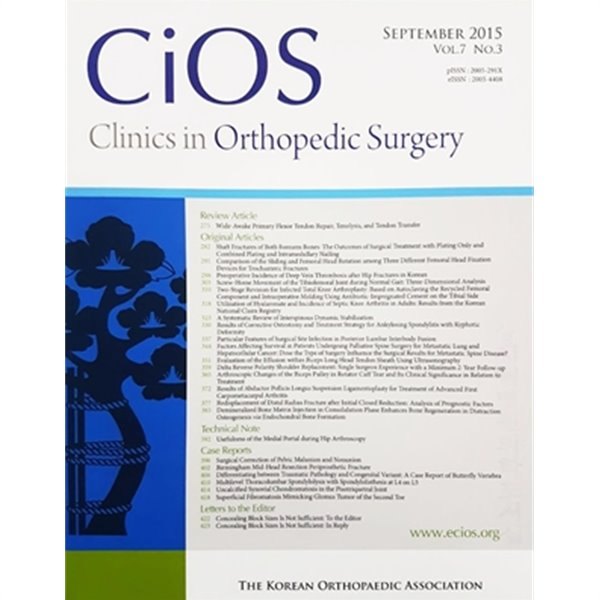
Clinical and Radiological Comparison between Asian-Type and Conventional Reverse Shoulder Arthroplasty: A Multicenter Randomized Controlled Trial.
OrthoEvidence Journal (OE Journal) - ACE Report
OE Journal. 2025;13(22):7 Clin Orthop Surg . 2025 Aug;17(4):664-672.Zusammenfassung der Studie
One hundred twenty patients with symptomatic irreparable massive rotator cuff tear, cuff tear arthropathy, or primary osteoarthritis with full-thickness rotator cuff tear were randomized 2:1 to receive an Asian-type reverse shoulder arthroplasty (RSA) implant (n = 80) or a conventional reverse shoulder arthroplasty implant (n = 40). The primary outcome of interest was shoulder function, as measured by the American Shoulder and Elbow Surgeons (ASES) score, with supporting functional measures including Constant score, pain (visual analog scale), and active range of motion. Secondary outcomes of interest included radiographic parameters (acromiohumeral distance, acromion–deltoid tuberosity distance, lateral humeral offset, center of rotation), three-dimensional CT–based baseplate and screw positioning, scapular notching, and acromial stress fracture. Outcomes were assessed preoperatively and at 3, 6, and 12 months postoperatively and at a minimum of 2 years, with CT obtained at 1 year. Overall, the results of the study revealed that both implants produced similar, clinically meaningful improvements in function and pain without significant between-group differences, while the Asian-type implant allowed a more central positioning of the glenoid baseplate on CT. These findings suggest that an Asian-type RSA implant provides equivalent short-term clinical and radiological outcomes to a conventional system in Asian patients, while potentially improving baseplate placement in smaller glenoids.
Vollständigen ACE-Bericht freischalten
Sie haben Zugang zu 4 weiteren KOSTENLOSEN Artikeln in diesem Monat.
Klicken Sie unten, um diese ACE Reports freizuschalten und anzusehen
Jetzt freischalten
Kritische Beurteilungen der neuesten, hochwirksamen randomisierten kontrollierten Studien und systematischen Übersichten in der Orthopädie
Zugang zu OrthoEvidence-Podcast-Inhalten, einschließlich Kooperationen mit dem Journal of Bone and Joint Surgery, Interviews mit international anerkannten Chirurgen und Diskussionsrunden zu orthopädischen Neuigkeiten und Themen
Abonnement von The Pulse, einem zweimal wöchentlich erscheinenden evidenzbasierten Newsletter, der Ihnen helfen soll, bessere klinische Entscheidungen zu treffen
Exklusiver Zugang zu Originalartikeln, einschließlich eigener systematischer Übersichten, sowie zu Artikeln über Methoden der Gesundheitsforschung und aktuelle orthopädische Themen
Oder upgraden Sie noch heute und erhalten Sie Zugang zu allen OrthoEvidence-Inhalten für nur $1,99 pro Woche.
Sie haben bereits ein Konto? Einloggen
Gehören Sie zu einem unserer Partnerverbände?
Klicken Sie hier, um im Rahmen Ihrer Verbandsmitgliedschaft kostenlosen Zugang zu erhalten!



0 von 4 monatliche KOSTENLOSE Artikel freigeschaltet



