










ARTHROPLASTY
Clinical and Radiological Comparison between Asian-Type and Conventional Reverse Shoulder Arthroplasty: A Multicenter Randomized Controlled Trial.
OrthoEvidence Journal (OE Journal) - ACE Report
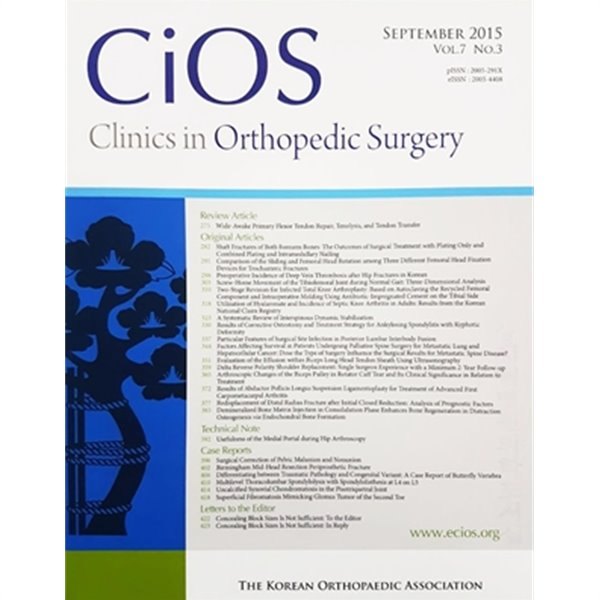
OE Journal. 2025;13(22):7 Clin Orthop Surg . 2025 Aug;17(4):664-672.Study Summary
One hundred twenty patients with symptomatic irreparable massive rotator cuff tear, cuff tear arthropathy, or primary osteoarthritis with full-thickness rotator cuff tear were randomized 2:1 to receive an Asian-type reverse shoulder arthroplasty (RSA) implant (n = 80) or a conventional reverse shoulder arthroplasty implant (n = 40). The primary outcome of interest was shoulder function, as measured by the American Shoulder and Elbow Surgeons (ASES) score, with supporting functional measures including Constant score, pain (visual analog scale), and active range of motion. Secondary outcomes of interest included radiographic parameters (acromiohumeral distance, acromion–deltoid tuberosity distance, lateral humeral offset, center of rotation), three-dimensional CT–based baseplate and screw positioning, scapular notching, and acromial stress fracture. Outcomes were assessed preoperatively and at 3, 6, and 12 months postoperatively and at a minimum of 2 years, with CT obtained at 1 year. Overall, the results of the study revealed that both implants produced similar, clinically meaningful improvements in function and pain without significant between-group differences, while the Asian-type implant allowed a more central positioning of the glenoid baseplate on CT. These findings suggest that an Asian-type RSA implant provides equivalent short-term clinical and radiological outcomes to a conventional system in Asian patients, while potentially improving baseplate placement in smaller glenoids.
Unlock the Full ACE Report
You have access to 4 more FREE articles this month.
Click below to unlock and view this ACE Reports
Unlock Now
Critical appraisals of the latest, high-impact randomized controlled trials and systematic reviews in orthopaedics
Access to OrthoEvidence podcast content, including collaborations with the Journal of Bone and Joint Surgery, interviews with internationally recognized surgeons, and roundtable discussions on orthopaedic news and topics
Subscription to The Pulse, a twice-weekly evidence-based newsletter designed to help you make better clinical decisions
Exclusive access to original content articles, including in-house systematic reviews, and articles on health research methods and hot orthopaedic topics
Or upgrade today and gain access to all OrthoEvidencecontent for as little as $1.99 per week.
Already have an account? Log in
Are you affiliated with one of our partner associations?
Click here to gain complimentary access as part your association member benefits!


0 of 4 monthly FREE articles unlocked



