










ARTHROPLASTY
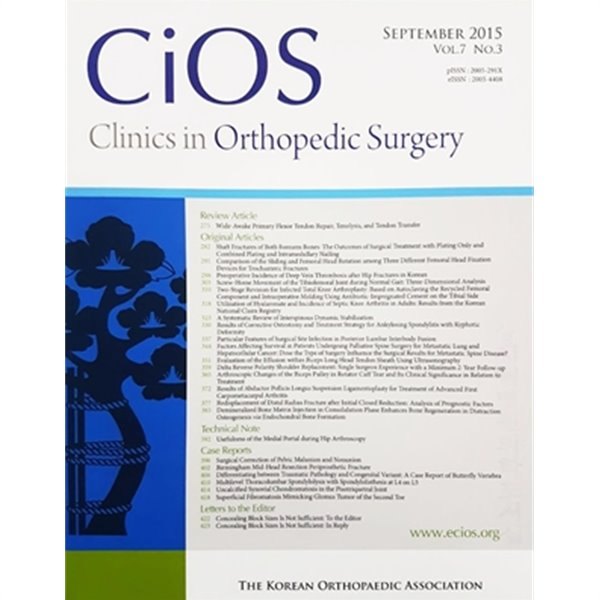
Clinical and Radiological Comparison between Asian-Type and Conventional Reverse Shoulder Arthroplasty: A Multicenter Randomized Controlled Trial.
OrthoEvidence Journal (OE Journal) - ACE Report
OE Journal. 2025;13(22):7 Clin Orthop Surg . 2025 Aug;17(4):664-672.Résumé de l'étude
One hundred twenty patients with symptomatic irreparable massive rotator cuff tear, cuff tear arthropathy, or primary osteoarthritis with full-thickness rotator cuff tear were randomized 2:1 to receive an Asian-type reverse shoulder arthroplasty (RSA) implant (n = 80) or a conventional reverse shoulder arthroplasty implant (n = 40). The primary outcome of interest was shoulder function, as measured by the American Shoulder and Elbow Surgeons (ASES) score, with supporting functional measures including Constant score, pain (visual analog scale), and active range of motion. Secondary outcomes of interest included radiographic parameters (acromiohumeral distance, acromion–deltoid tuberosity distance, lateral humeral offset, center of rotation), three-dimensional CT–based baseplate and screw positioning, scapular notching, and acromial stress fracture. Outcomes were assessed preoperatively and at 3, 6, and 12 months postoperatively and at a minimum of 2 years, with CT obtained at 1 year. Overall, the results of the study revealed that both implants produced similar, clinically meaningful improvements in function and pain without significant between-group differences, while the Asian-type implant allowed a more central positioning of the glenoid baseplate on CT. These findings suggest that an Asian-type RSA implant provides equivalent short-term clinical and radiological outcomes to a conventional system in Asian patients, while potentially improving baseplate placement in smaller glenoids.
Débloquez le rapport complet du CAE
Vous avez accès à 4 plus d'articles GRATUITS ce mois-ci.
Cliquez ci-dessous pour déverrouiller et visionner ce ACE Reports
Déverrouillez maintenant
Évaluations critiques des derniers essais contrôlés randomisés à fort impact et des revues systématiques en orthopédie
Accès au contenu des podcasts OrthoEvidence, y compris les collaborations avec le Journal of Bone and Joint Surgery, les entretiens avec des chirurgiens de renommée internationale et les tables rondes sur l'actualité et les sujets orthopédiques.
Abonnement à The Pulse, une lettre d'information bihebdomadaire fondée sur des données probantes, conçue pour vous aider à prendre de meilleures décisions cliniques.
Accès exclusif à des articles au contenu original, y compris des revues systématiques internes et des articles sur les méthodes de recherche en santé et les sujets d'actualité en orthopédie.
Ou mettez votre compte à niveau dès aujourd'hui et accédez à tout le contenu d'OrthoEvidence pour seulement 1,99 $ par semaine.
Vous avez déjà un compte ? Se connecter
Vous êtes affilié à l'une de nos associations partenaires ?
Cliquez ici pour bénéficier d'un accès gratuit dans le cadre des avantages réservés aux membres de votre association !


Abonnez-vous à "Le pouls"
L'orthopédie fondée sur des données probantes directement dans votre boîte de réception. S'ABONNER
0 de 4 articles mensuels GRATUITS débloqués



