










ARTHROPLASTY
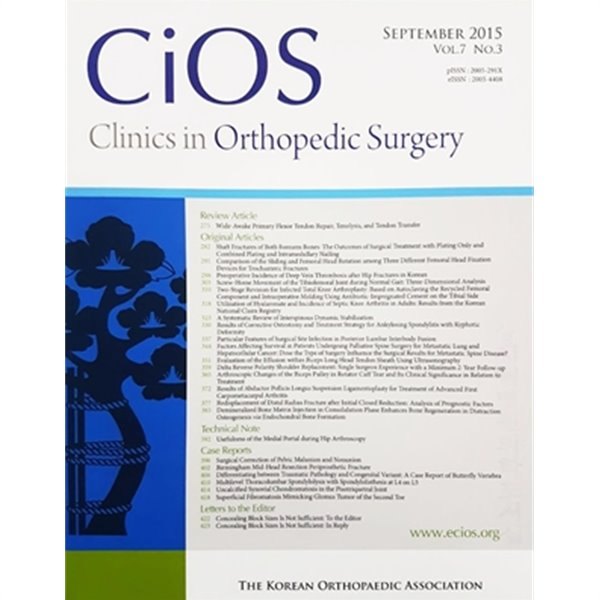
Clinical and Radiological Comparison between Asian-Type and Conventional Reverse Shoulder Arthroplasty: A Multicenter Randomized Controlled Trial.
OrthoEvidence Journal (OE Journal) - ACE Report
OE Journal. 2025;13(22):7 Clin Orthop Surg . 2025 Aug;17(4):664-672.Resumen del estudio
One hundred twenty patients with symptomatic irreparable massive rotator cuff tear, cuff tear arthropathy, or primary osteoarthritis with full-thickness rotator cuff tear were randomized 2:1 to receive an Asian-type reverse shoulder arthroplasty (RSA) implant (n = 80) or a conventional reverse shoulder arthroplasty implant (n = 40). The primary outcome of interest was shoulder function, as measured by the American Shoulder and Elbow Surgeons (ASES) score, with supporting functional measures including Constant score, pain (visual analog scale), and active range of motion. Secondary outcomes of interest included radiographic parameters (acromiohumeral distance, acromion–deltoid tuberosity distance, lateral humeral offset, center of rotation), three-dimensional CT–based baseplate and screw positioning, scapular notching, and acromial stress fracture. Outcomes were assessed preoperatively and at 3, 6, and 12 months postoperatively and at a minimum of 2 years, with CT obtained at 1 year. Overall, the results of the study revealed that both implants produced similar, clinically meaningful improvements in function and pain without significant between-group differences, while the Asian-type implant allowed a more central positioning of the glenoid baseplate on CT. These findings suggest that an Asian-type RSA implant provides equivalent short-term clinical and radiological outcomes to a conventional system in Asian patients, while potentially improving baseplate placement in smaller glenoids.
Desbloquear el informe ACE completo
Tiene acceso a 4 más artículos GRATUITOS este mes.
Haga clic a continuación para desbloquear y ver este ACE Reports
Desbloquear ahora
Evaluaciones críticas de los últimos ensayos controlados aleatorizados de gran impacto y revisiones sistemáticas en ortopedia
Acceso al contenido del podcast OrthoEvidence, que incluye colaboraciones con el Journal of Bone and Joint Surgery, entrevistas con cirujanos reconocidos internacionalmente y mesas redondas sobre noticias y temas ortopédicos
Suscripción a The Pulse, un boletín quincenal basado en la evidencia y diseñado para ayudarle a tomar mejores decisiones clínicas
Acceso exclusivo a artículos de contenido original, incluidas revisiones sistemáticas propias, y artículos sobre métodos de investigación sanitaria y temas ortopédicos de actualidad
O actualícese hoy mismo y obtenga acceso a todo el contenido de OrthoEvidencepor tan sólo 1,99 $ a la semana.
¿Ya tiene una cuenta? Conectarse
¿Está afiliado a una de nuestras asociaciones colaboradoras?
¡Haga clic aquí para obtener acceso gratuito como parte de los beneficios de miembro de su asociación!


Suscríbase a "El Pulso"
Ortopedia basada en la evidencia directamente a su bandeja de entrada. SUSCRIBIRSE
0 de 4 artículos mensuales GRATIS desbloqueados



