






Share


Download


Cite


+ Favorites
Share
Download
Cite
+ Favorites
RESEARCH
Does the treatment of hip fractures with intramedullary nails kill patients ?
OrthoEvidence Journal (OE Journal) - OE Original
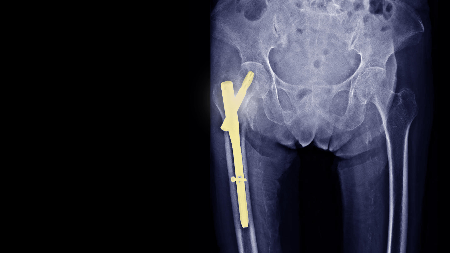
OE Journal. 2020;8(13):3A huge UK registry study (Whitehouse 2019) suggested intramedullary nails (IMN) for trochanteric hip fractures increase 30-day mortality by ~12.5% versus sliding hip screws (SHS). That sounds alarming—until you look at the randomized data. A meta-analysis of 15 RCTs (2363 patients) shows no clear mortality difference at 30 days or longer term between IMN and SHS; CIs in both directions sit close to no effect. The discrepancy highlights classic limits of observational data: residual confounding, imperfect adjustment, and “statistically significant but clinically trivial” effects driven by massive sample sizes. RCTs, especially when pooled, still sit at the top of the treatment-effect hierarchy. Best current reading: IM nails don’t “kill patients,” and the registry signal should be treated as hypothesis-generating, not practice-changing.
Already have an account? Log in
Part of an association? Click here, you may already have full access!
Unlock the Full original article
You have access to 4 more FREE articles this month.
Click below to unlock and view this original article
Unlock Now
Critical appraisals of the latest, high-impact randomized controlled trials and systematic reviews in orthopaedics
Access to OrthoEvidence podcast content, including collaborations with the Journal of Bone and Joint Surgery, interviews with internationally recognized surgeons, and roundtable discussions on orthopaedic news and topics
Subscription to The Pulse, a twice-weekly evidence-based newsletter designed to help you make better clinical decisions
Exclusive access to original content articles, including in-house systematic reviews, and articles on health research methods and hot orthopaedic topics
Or upgrade today and gain access to all OrthoEvidencecontent for as little as $1.99 per week.
Already have an account? Log in
Are you affiliated with one of our partner associations?
Click here to gain complimentary access as part your association member benefits!



0 of 4 monthly FREE articles unlocked



