











ARTHROPLASTY
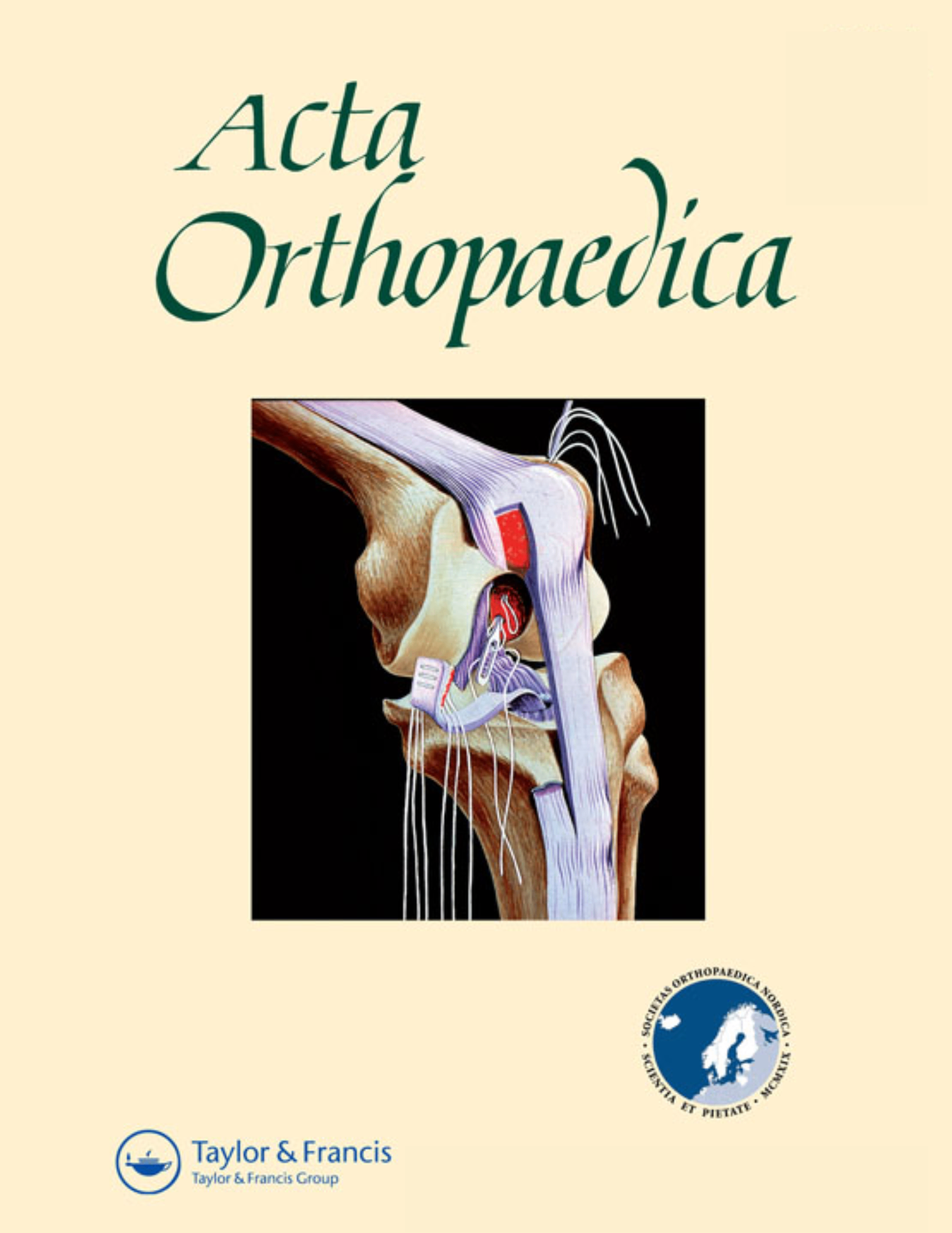
Similar outcome after retention or sacrifice of the posterior cruciate ligament in total knee arthroplasty
 This report has been verified
by one or more authors of the
original publication.
This report has been verified
by one or more authors of the
original publication.
OrthoEvidence Journal (OE Journal) - ACE Report
OE Journal. 2015;3(12):13 Acta Orthop. 2015 Apr;86(2):195-201.Posterior cruciate ligament (PCL) retention or sacrifice was compared in 20 studies. A total of 2347 knees from 1877 patients were considered. Statistically significant differences in postoperative flexion and KSS scores were observed in favor of sacrifice, however these differences did not reach clinical significance. Due to the lack of patient-important differences between these treatments neither can be recommended over the other.
Were the search methods used to find evidence (original research) on the primary question or questions stated?
Was the search for evidence reasonably comprehensive?
Were the criteria used for deciding which studies to include in the overview reported?
Was the bias in the selection of studies avoided?
Were the criteria used for assessing the validity of the included studies reported?
Was the validity of all of the studies referred to in the text assessed with use of appropriate criteria (either in selecting the studies for inclusion or in analyzing the studies that were cited)?
Were the methods used to combine the findings of the relevant studies (to reach a conclusion) reported?
Were the findings of the relevant studies combined appropriately relative to the primary question that the overview addresses?
Were the conclusions made by the author or authors supported by the data and or analysis reported in the overview?
How would you rate the scientific quality of this evidence?
Yes = 1
Uncertain = 0.5
Not Relevant = 0
No = 0
The Reporting Criteria Assessment evaluates the transparency with which authors report the methodological and trial characteristics of the trial within the publication. The assessment is divided into five categories which are presented below.
4/4
Introduction
3/4
Accessing Data
4/4
Analysing Data
4/4
Results
3/4
Discussion
Detsky AS, Naylor CD, O'Rourke K, McGeer AJ, L'Abbé KA. J Clin Epidemiol. 1992;45:255-65
The Fragility Index is a tool that aids in the interpretation of significant findings, providing a measure of strength for a result. The Fragility Index represents the number of consecutive events that need to be added to a dichotomous outcome to make the finding no longer significant. A small number represents a weaker finding and a large number represents a stronger finding.
Why was this study needed now?
Retention of the posterior cruciate ligament (PCL) is a point of disagreement in total knee arthroplasty (TKA). The PCL has been found to provide normal proprioception and kinesthesia, as well as natural knee function. However, if the PCL is not balanced appropriately, many complications can arise. A previous meta-analysis was unable to determine if PCL retention or sacrifice provides better clinical outcomes. Since the publication of this meta-analysis a number of new trials have been completed. This meta-analysis will provide an update of previous work, giving an up to date view on the topic.
What was the principal research question?
Are there differences in functional, clinical, and radiological outcomes at a minimum of one year follow-up when comparing PCL-retaining and PCL-sacrificing total knee arthroplasty?
What were the important findings?
- 5 studies had low risk of bias, 5 studies had high risk of bias, and 10 studies had an unclear risk of bias
- There was a mean difference in postoperative flexion angle of 2.11 degrees (12 studies: [95% CI 0.23, 3.98]; p=0.03; I^2=29%)
- Knee Society functional score had a statistically significant increase of 2.36 points when PCL was sacrificed (9 studies: [95% CI 0.41, 4.3]; p=0.02; I^2=0.0%)
- WOMAC score had a non-significant difference between PCL sacrifice and retention (5 studies: [95% CI -0.35, 1.79]; p=0.19)
- No significant differences were found in the KSS pain, clinical or overall score, HSS score, SF-12, and radiolucent lines (p>0.05)
What should I remember most?
There were no clinically relevant differences in clinical and functional outcomes between posterior cruciate ligament sacrifice and retention in TKA.
How will this affect the care of my patients?
No clinical difference was found between PCL sacrifice and retention in terms of functional and clinical scores. Results should be interpreted with caution, as many reports had either high risk of bias or an unclear risk of bias. Future studies should focus on additional outcomes, more preoperative information, cost effectiveness, and larger populations.

DISCLAIMER
This content found on this page is for informational purposes only and is not intended to be a substitute for professional medical advice, diagnosis, or treatment. If you require medical treatment, always seek the advice of your physician or go to your nearest emergency department. The opinions, beliefs, and viewpoints expressed by the individuals on the content found on this page do not reflect the opinions, beliefs, and viewpoints of OrthoEvidence.
0 of 4 monthly FREE articles unlocked



