




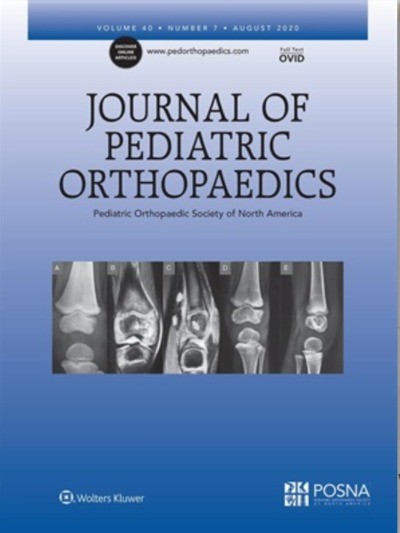






PEDIATRIC ORTHOPAEDICS
Comparison of Iliac and Femoral Autograft Practices in Pemberton Pelvic Osteotomy
OrthoEvidence Journal (OE Journal) - ACE Report
OE Journal. 2021;9(4):13 J Pediatr Orthop. 2021 Jan;41(1):46-50.Resumen del estudio
Fifty patients (60 hips) aged >18 months to 6 years old with developmental dysplasia of the hip (DDH) scheduled for an open reduction, Pemberton pelvic osteotomy (PPO), and femoral shortening osteotomy were randomized to receive either iliac autograft (n=30 hips) or femoral autograft (n=30 hips) after PPO. Outcomes of interest included the following: acetabular index angle (AIA), time of surgery, mean blood loss, mean time to graft union, mean graft height and width, mean loss of graft height and width, and the incidence of complications (i.e. loss of graft position, graft resorption). AIA was evaluated at 1-day, 45-days, and 1-year post-surgery, whilst mean graft height, was assessed at 45-days and 1-year post-surgery. All other outcomes, excluding mean loss of graft height which was evaluated at 90-days follow-up, were measured peri-operatively. Results of this study demonstrated that the mean AIA, mean surgical time, and incidence of adverse events were not statistically significantly different between the two graft groups (p>0.05 for all). Furthermore, mean peri-operative graft width, mean graft height, mean loss of graft height, and mean blood loss were all statistically significantly in favour of the femoral autograft group (p<0.001 for all). Yet, mean time to graft union was statistically significantly in favour of the iliac autograft group (p=0.0001). Two patients experienced loss of graft position, and 1 patient experienced graft resorption. No cases of superficial/deep infections, neurovascular injury, or nonunion at the osteotomy line were observed in either group.
Desbloquear el informe ACE completo
Tiene acceso a 4 más artículos GRATUITOS este mes.
Haga clic a continuación para desbloquear y ver este ACE Reports
Desbloquear ahora
Evaluaciones críticas de los últimos ensayos controlados aleatorizados de gran impacto y revisiones sistemáticas en ortopedia
Acceso al contenido del podcast OrthoEvidence, que incluye colaboraciones con el Journal of Bone and Joint Surgery, entrevistas con cirujanos reconocidos internacionalmente y mesas redondas sobre noticias y temas ortopédicos
Suscripción a The Pulse, un boletín quincenal basado en la evidencia y diseñado para ayudarle a tomar mejores decisiones clínicas
Acceso exclusivo a artículos de contenido original, incluidas revisiones sistemáticas propias, y artículos sobre métodos de investigación sanitaria y temas ortopédicos de actualidad
O actualícese hoy mismo y obtenga acceso a todo el contenido de OrthoEvidencepor tan sólo 1,99 $ a la semana.
¿Ya tiene una cuenta? Conectarse
¿Está afiliado a una de nuestras asociaciones colaboradoras?
¡Haga clic aquí para obtener acceso gratuito como parte de los beneficios de miembro de su asociación!


Suscríbase a "El Pulso"
Ortopedia basada en la evidencia directamente a su bandeja de entrada. SUSCRIBIRSE
0 de 4 artículos mensuales GRATIS desbloqueados



