










ARTHROPLASTY
Elevation of circulating HLA DR(+) CD8(+) T-cells and correlation with chromium and cobalt concentrations 6 years after metal-on-metal hip arthroplasty
OrthoEvidence Journal (OE Journal) - ACE Report
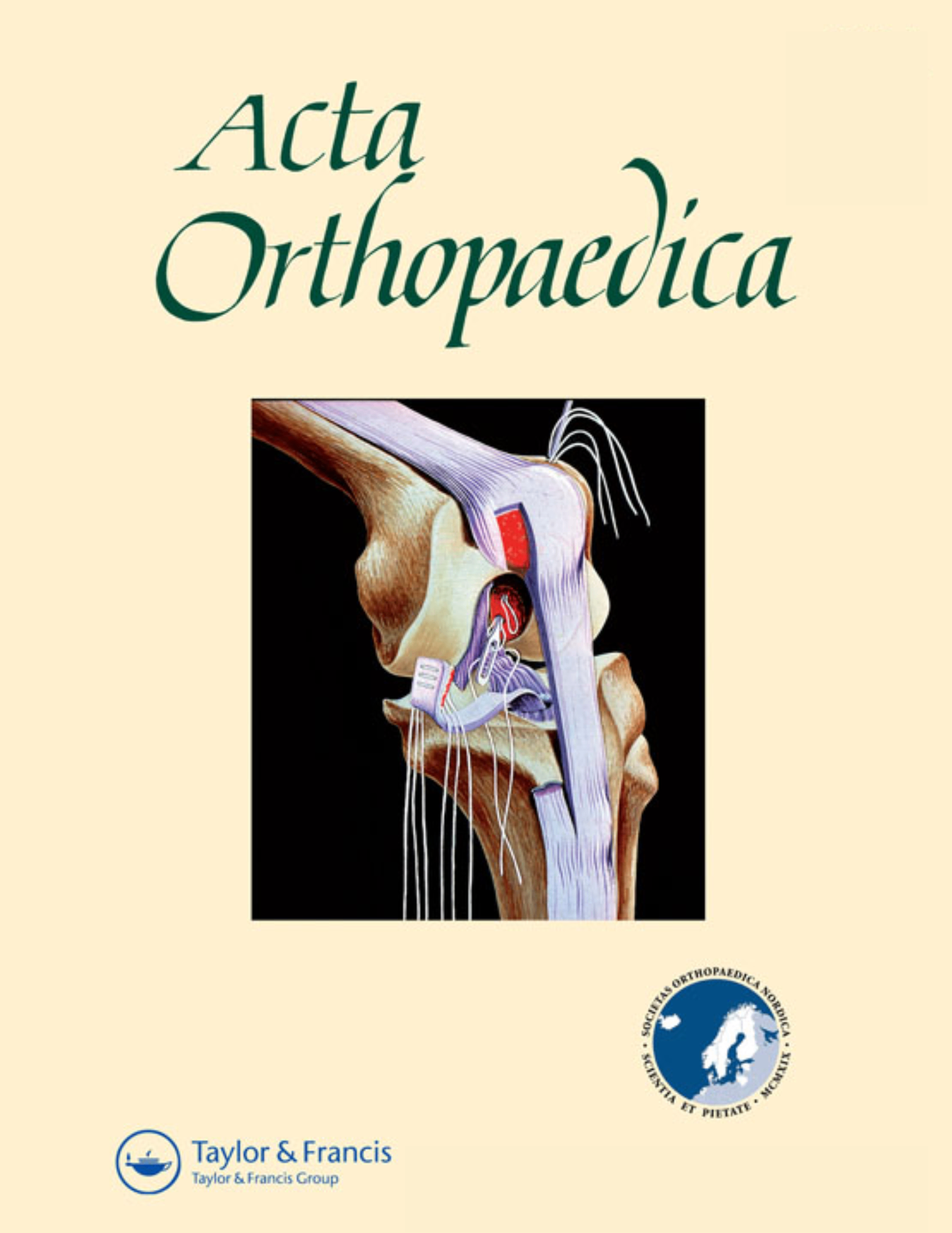
OE Journal. 2025;13(20):1 Acta Orthop. 2011 Feb;82(1):6-12. Epub 2010 Dec 2985 patients undergoing total hip arthroplasty (THA) were randomized to receive either a metal-on-metal bearing or a metal-on-polyethylene bearing. The primary outcome was elevation of circulating HLA DR+ CD8+ T-cells and correlation with chromium and cobalt concentrations. Results indicated that metal-on-metal THA increased chromium and cobalt concentrations which resulted in a correlation with immunological reactions. This was associated with the increase in HLA DR+CD8+ T-cells and a decrease in B-cells.
Was the allocation sequence adequately generated?
Was allocation adequately concealed?
Blinding Treatment Providers: Was knowledge of the allocated interventions adequately prevented?
Blinding Outcome Assessors: Was knowledge of the allocated interventions adequately prevented?
Blinding Patients: Was knowledge of the allocated interventions adequately prevented?
Was loss to follow-up (missing outcome data) infrequent?
Are reports of the study free of suggestion of selective outcome reporting?
Were outcomes objective, patient-important and assessed in a manner to limit bias (ie. duplicate assessors, Independent assessors)?
Was the sample size sufficiently large to assure a balance of prognosis and sufficiently large number of outcome events?
Was investigator expertise/experience with both treatment and control techniques likely the same (ie.were criteria for surgeon participation/expertise provided)?
Sim = 1
Incerto = 0,5
Não relevante = 0
Não = 0
A Avaliação dos Critérios de Relato avalia a transparência com que os autores relatam as caraterísticas metodológicas e do ensaio na publicação. A avaliação está dividida em cinco categorias que são apresentadas de seguida.
1/4
Randomization
3/4
Outcome Measurements
4/4
Inclusion / Exclusion
4/4
Therapy Description
4/4
Statistics
Detsky AS, Naylor CD, O'Rourke K, McGeer AJ, L'Abbé KA. J Clin Epidemiol. 1992;45:255-65
O Índice de Fragilidade é uma ferramenta que auxilia na interpretação de achados significativos, fornecendo uma medida de força para um resultado. O Índice de Fragilidade representa o número de eventos consecutivos que precisam de ser adicionados a um resultado dicotómico para que o resultado deixe de ser significativo. Um número pequeno representa um resultado mais fraco e um número grande representa um resultado mais forte.
Porque é que este estudo era necessário agora?
Elevated metal ion concentrations from metal-on-metal arthroplasties have been associated with immunological reactions. It is hypothesized that an increased concentration of metal ions causes changes in the lymphocyte sub-populations. This study examines the change in concentration of HLA DR+ CD8+ T-cells and the correlation with chromium and cobalt concentrations in patients undergoing metal-on-metal or metal-on-polyethylene total hip arthroplasty (THA).
Qual era a principal questão de investigação?
What are the outcomes in HLA DR+ CD8+ T-cell elevation and its correlation with chromium and cobalt concentrations in patients, 6 years after undergoing metal-on-metal total hip arthroplasty (THA) compared to metal-on-polyethylene THA?
Quais foram os resultados importantes?
- Serum concentrations of chromium and cobalt were higher in patients who received the metal-on-metal total hip arthroplasty (THA) compared to patients who underwent metal-on-polyethylene THA when examined at follow-up. (Chromium: 1.05 vs. 0.36 ug/L; p<0.001; Cobalt: 0.86 vs. 0.24 ug/L; p<0.001)
- The metal-on-metal group had a higher percentage of HLA DR+ CD8+ T-cells. (10.6 vs. 6.7%; p=0.03) This had a positive correlation with cobalt and chromium concentrations in patient blood (Pearson's correlation coefficient for cobalt: 0.36, p=0.03; Chromium: 0.39, p=0.02).
- The metal-on-metal group had a lower percentage of B-cells.(9.3% compared to 12.9% in the metal-on-polyethylene group) (p=0.01)
- Comparable immunoglobulin concentrations and Harris hip scores were seen between the two groups. No radiographic signs of loosening, wear or periprosthetic osteolysis were seen with either group at follow-up.
- Both groups of patients had similar concentrations of immunoglobulins IgG (and subgroups 1-4), IgM, and IgA.
De que é que me devo lembrar mais?
Metal-on-metal THA increases cobalt and chromium concentrations at 6-years and produces immunological alterations. There is also a positive correlation with HLA DR+ CD8+ T-cells and chromium and cobalt concentrations. Finally, the metal-on-metal group had a reduction in the percentage of B-cells.
Como é que isto afectará o tratamento dos meus doentes?
There is still a lack of evidence that the increase in HLA DR+ CD8+ T-cells, associated with metal-on-metal THA, causes allergic reactions, aseptic loosening, or periprosthetic pseudotumors. Further studies with a larger population are required to examine these potential associations.

AVISO LEGAL
O conteúdo desta página destina-se apenas a fins informativos e não pretende substituir o aconselhamento, diagnóstico ou tratamento médico profissional. Se necessitar de tratamento médico, procure sempre o conselho do seu médico ou dirija-se ao serviço de urgência mais próximo. As opiniões, crenças e pontos de vista expressos pelos indivíduos no conteúdo encontrado nesta página não reflectem as opiniões, crenças e pontos de vista da OrthoEvidence.
0 de 4 artigos mensais GRATUITOS desbloqueados



