

OE JOURNAL
OE Journal
Vol. 14 | Iss. 21 | November 2026 - 51 Studies
Questions This Issue Explores
In young adults undergoing anterior cruciate ligament reconstruction, did an attachment-sparing hamstring autograft, compared with a conventional free hamstring autograft, result in earlier graft maturation on MRI and improved knee function, stability, and activity levels during the first 12 months after surgery?
In adults with obesity without diabetes, did once-weekly subcutaneous retatrutide (4 mg, 9 mg, or 12 mg), compared with placebo, produce greater reductions in body weight, knee osteoarthritis pain, and obstructive sleep apnea severity over 80 weeks?
In experienced orthopaedic surgeons performing total hip and knee arthroplasty, does robotic assistance, compared to conventional surgical techniques, reduce intraoperative cognitive load and physiological stress, as measured by brain activity, functional connectivity, and heart rate variability during surgery?
In children aged 4–10 years with severely displaced distal radial fractures, was non-surgical casting non-inferior to surgical reduction in improving upper limb function at 3 months, while reducing complications and health-care costs over 12 months?
In adults with Mason type II radial head fractures, does operative treatment, compared with nonoperative management, improve elbow function, ROM, complication rates, reinterventions, and quality of life at 12 months or longer follow-up?
ORIGINAL ANALYSIS
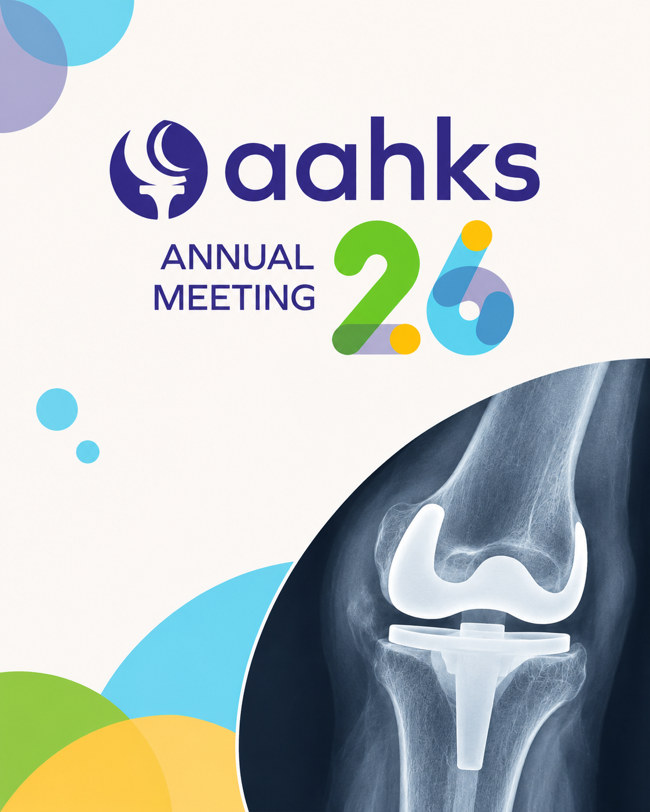
AAHKS 2026: Shaping the Future of Arthroplasty
November 5th - 8th Dallas, Texas From promising innovations to practice-changing evidence, AAHKS 2026 delivered plenty to talk about. Against a backdrop of mounting reimbursement pressures, this year’s meeting showcased groundbreaking research in joint replacement, including novel approaches to pain management, advances in treating periprosthetic joint infection, and randomized trials challenging established surgical practices. We highlight six standout studies that could help shape the future of hip and knee arthroplasty.
Read OriginalEDITOR'S PICK 
Retatrutide, a Triple Hormone Receptor Agonist, for Treatment of Obesity
2339 adults with obesity without diabetes were randomized to receive once-weekly subcutaneous retatrutide (4 mg, 9 mg, or 12 mg) or placebo. The primary outcomes of interest were percentage change in body weight, change in Western Ontario and McMaster Universities Osteoarthritis Index (WOMAC) pain scores among patients with knee osteoarthritis, and change in the apnea–hypopnea index (AHI) among patients with obstructive sleep apnea. Secondary outcomes included weight reduction thresholds, waist circumference, cardiometabolic measures, physical functioning, quality of life, and adverse events. Outcomes were assessed at 80 weeks, with an extension phase evaluating weight loss at 104 weeks. Overall, the results revealed that retatrutide produced significantly greater weight loss than placebo, with reductions reaching 25.0% at the 12-mg dose compared with 3.9% with placebo. Retatrutide also significantly reduced knee osteoarthritis pain and obstructive sleep apnea severity. These findings suggested that retatrutide was effective for substantial weight reduction while improving important obesity-related complications.
View ACE ReportStart Here
Full Issue Content