










HAND & WRIST
Wrist function recovers more rapidly after volar locked plating than after external fixation but the outcomes are similar after 1 year
OrthoEvidence Journal (OE Journal) - ACE Report
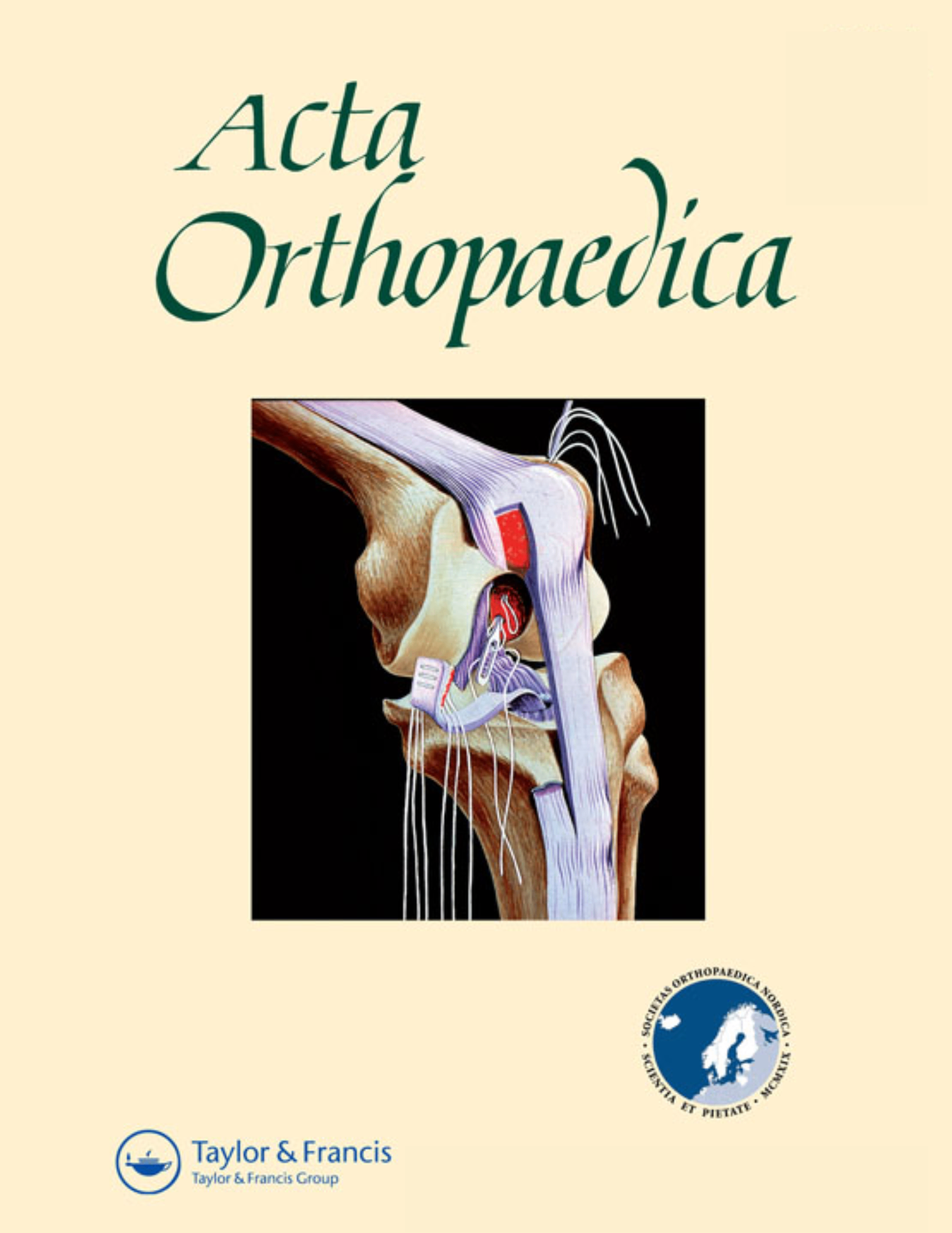
OE Journal. 2013;1(2):97 Acta Orthop. 2011 Feb;82(1):76-81.63 patients with distal radius fractures were randomized to treatment with either volar locked plating or bridging external fixation, to compare functional and radiographic outcomes. Short-term outcomes at 3 and 6 months favored the volar locked plating group in terms of Disabilities of the Arm, Shoulder, and Hand (DASH) scores,Patient related wrist evaluation (PRWE) scores, grip strength and range of motion. However, by 12 months, many of the outcomes between the two groups had become similar.
Was the allocation sequence adequately generated?
Was allocation adequately concealed?
Blinding Treatment Providers: Was knowledge of the allocated interventions adequately prevented?
Blinding Outcome Assessors: Was knowledge of the allocated interventions adequately prevented?
Blinding Patients: Was knowledge of the allocated interventions adequately prevented?
Was loss to follow-up (missing outcome data) infrequent?
Are reports of the study free of suggestion of selective outcome reporting?
Were outcomes objective, patient-important and assessed in a manner to limit bias (ie. duplicate assessors, Independent assessors)?
Was the sample size sufficiently large to assure a balance of prognosis and sufficiently large number of outcome events?
Was investigator expertise/experience with both treatment and control techniques likely the same (ie.were criteria for surgeon participation/expertise provided)?
Oui = 1
Incertain = 0,5
Non pertinent = 0
Non = 0
L'évaluation des critères de rapport permet d'évaluer la transparence avec laquelle les auteurs rapportent les caractéristiques méthodologiques et les caractéristiques de l'essai dans la publication. L'évaluation est divisée en cinq catégories qui sont présentées ci-dessous.
3/4
Asignación aleatoria
3/4
Criterios de resultado
4/4
Criterios de inclusión/exclusión
4/4
Descripción del tratamiento
4/4
Estadística
Detsky AS, Naylor CD, O'Rourke K, McGeer AJ, L'Abbé KA. J Clin Epidemiol. 1992;45:255-65
L'indice de fragilité est un outil qui aide à l'interprétation des résultats significatifs, en fournissant une mesure de la force d'un résultat. L'indice de fragilité représente le nombre d'événements consécutifs qui doivent être ajoutés à un résultat dichotomique pour que le résultat ne soit plus significatif. Un petit nombre représente un résultat plus faible et un grand nombre un résultat plus fort.
Pourquoi cette étude était-elle nécessaire maintenant ?
Recent studies have indicated promising patient outcomes for open reduction and internal fixation with volar locked plating of unstable distal radius fractures with dorsal displacement. Proposed benefits include adequate fracture stabilization and anatomic reduction, expediting early range of motion. However, the choice of internal fixation over external fixation remains unsupported in the literature. Thus, this study was required to investigate the functional and radiographic outcomes of volar locked plating.
Quelle était la principale question de recherche ?
Does internal fixation with volar locked plating provide superior outcomes in terms of function and radiographic measures compared to external fixation, in patients with dorsally displaced fracture of the distal radius?
Quels sont les résultats importants ?
- Statistically significant improvements in DASH scores were observed in the volar-plated group versus the external fixation group at the 3 month (9 vs. 27; p<0.001) and 6 month follow-ups (6 vs. 14; p=0.008). This result failed to achieve significance at the 12 month follow-up (7 vs. 11; p=0.1).
- Statistically significant improvements in PRWE were similarly observed in the volar-plated group over the external fixation group at the 3 (12 vs. 31; p<0.001) and 6 month follow-ups (9 vs. 17; p=0.02). This result failed to achieve significance at the 12 month follow-up (11 vs. 15; p=0.3).
- Grip strength and range of motion (extension, supination, and pronation) were statistically superior in the volar plated group versus the external fixation group at the 3 month and 6 month follow-up points (p<0.05)
- The volar group demonstrated significantly reduced axial shortening (at all time points; p<0.001) and dorsal angulation (at 12 months; p=0.05) of the radius following radiographic analysis.
- 12 patients in the external fixation group and 7 patients in the volar locked plate group experienced complications over 1 year.
De quoi dois-je me souvenir en priorité ?
The volar plated group demonstrated superior patient perceived functional outcomes (DASH) and patient related wrist evaluation (PRWE) scores during early follow-up (up to 6 months); however, these benefits diminished in comparison to external fixation over time (12 months). Similar trends were observed for grip strength, whereas extension, supination, and pronation, and reduction in axial shortening remained significantly better at all follow-up periods.
Comment cela affectera-t-il les soins prodigués à mes patients ?
The authors conclude that volar plating should be preferentially implemented for patients seeking rapid recovery of wrist function. The use of an external method is still applicable and offers advantages, such as cost and invasiveness. However, the possibility of late future complications with plating needs to be investigated, and the small sample size of the study should be taken into consideration.

AVIS DE NON-RESPONSABILITÉ
Le contenu de cette page est fourni à titre d'information uniquement et n'est pas destiné à remplacer un avis médical, un diagnostic ou un traitement professionnel. Si vous avez besoin d'un traitement médical, demandez toujours l'avis de votre médecin ou rendez-vous au service des urgences le plus proche. Les opinions, croyances et points de vue exprimés par les individus sur le contenu de cette page ne reflètent pas les opinions, croyances et points de vue d'OrthoEvidence.
0 de 4 articles mensuels GRATUITS débloqués



