










HAND & WRIST
Wrist function recovers more rapidly after volar locked plating than after external fixation but the outcomes are similar after 1 year
OrthoEvidence Journal (OE Journal) - ACE Report
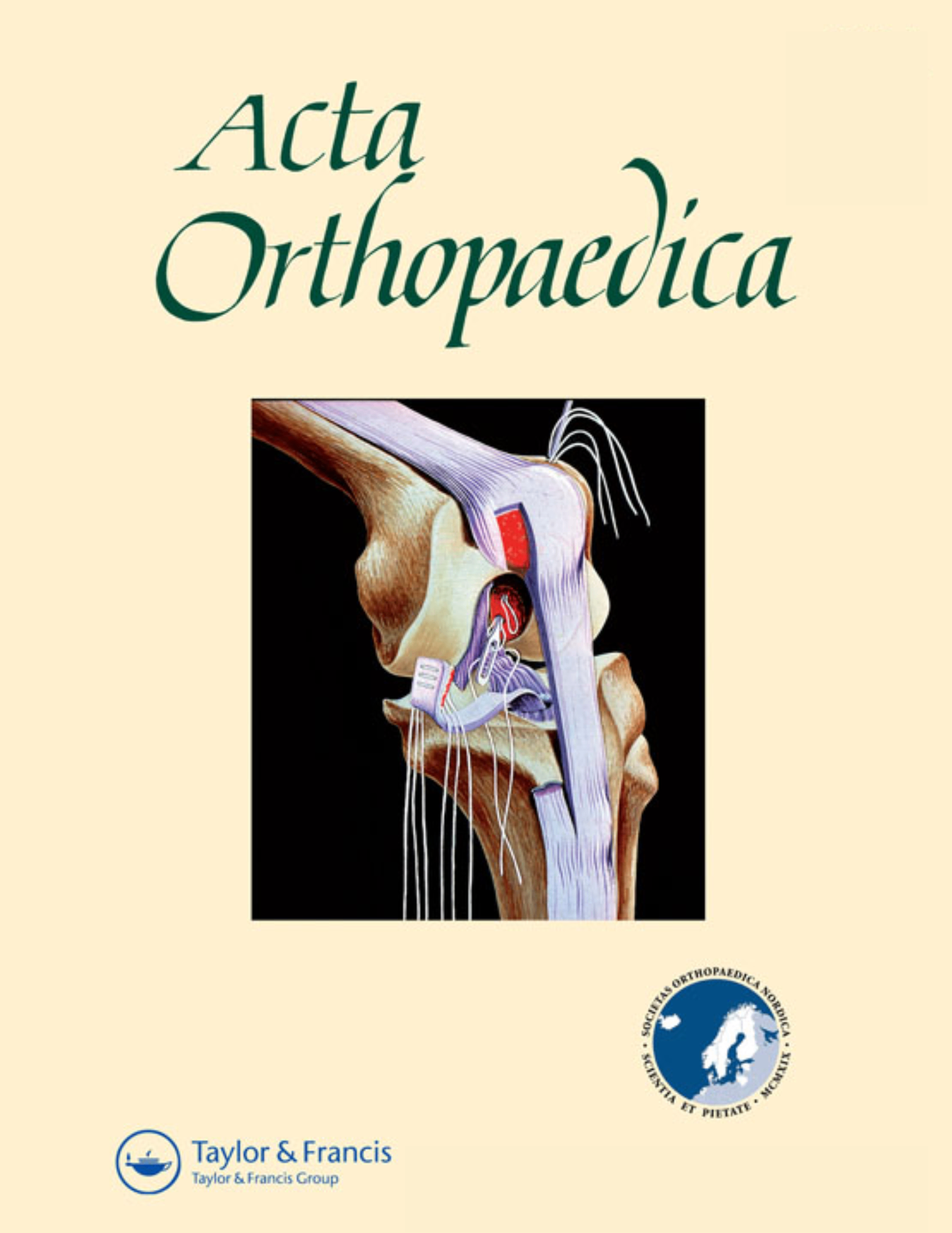
OE Journal. 2013;1(2):97 Acta Orthop. 2011 Feb;82(1):76-81.63 patients with distal radius fractures were randomized to treatment with either volar locked plating or bridging external fixation, to compare functional and radiographic outcomes. Short-term outcomes at 3 and 6 months favored the volar locked plating group in terms of Disabilities of the Arm, Shoulder, and Hand (DASH) scores,Patient related wrist evaluation (PRWE) scores, grip strength and range of motion. However, by 12 months, many of the outcomes between the two groups had become similar.
Was the allocation sequence adequately generated?
Was allocation adequately concealed?
Blinding Treatment Providers: Was knowledge of the allocated interventions adequately prevented?
Blinding Outcome Assessors: Was knowledge of the allocated interventions adequately prevented?
Blinding Patients: Was knowledge of the allocated interventions adequately prevented?
Was loss to follow-up (missing outcome data) infrequent?
Are reports of the study free of suggestion of selective outcome reporting?
Were outcomes objective, patient-important and assessed in a manner to limit bias (ie. duplicate assessors, Independent assessors)?
Was the sample size sufficiently large to assure a balance of prognosis and sufficiently large number of outcome events?
Was investigator expertise/experience with both treatment and control techniques likely the same (ie.were criteria for surgeon participation/expertise provided)?
Sí = 1
Incierto = 0,5
No relevante = 0
No = 0
La evaluación de los criterios de información evalúa la transparencia con la que los autores informan de las características metodológicas y del ensayo dentro de la publicación. La evaluación se divide en cinco categorías que se presentan a continuación.
3/4
Asignación aleatoria
3/4
Criterios de resultado
4/4
Criterios de inclusión/exclusión
4/4
Descripción del tratamiento
4/4
Estadística
Detsky AS, Naylor CD, O'Rourke K, McGeer AJ, L'Abbé KA. J Clin Epidemiol. 1992;45:255-65
El Índice de Fragilidad es una herramienta que ayuda en la interpretación de hallazgos significativos, proporcionando una medida de fuerza para un resultado. El Índice de Fragilidad representa el número de eventos consecutivos que es necesario añadir a un resultado dicotómico para que el hallazgo deje de ser significativo. Un número pequeño representa un hallazgo más débil y un número grande un hallazgo más fuerte.
¿Por qué se necesitaba ahora este estudio?
Recent studies have indicated promising patient outcomes for open reduction and internal fixation with volar locked plating of unstable distal radius fractures with dorsal displacement. Proposed benefits include adequate fracture stabilization and anatomic reduction, expediting early range of motion. However, the choice of internal fixation over external fixation remains unsupported in the literature. Thus, this study was required to investigate the functional and radiographic outcomes of volar locked plating.
¿Cuál era la pregunta principal de la investigación?
Does internal fixation with volar locked plating provide superior outcomes in terms of function and radiographic measures compared to external fixation, in patients with dorsally displaced fracture of the distal radius?
¿Cuáles fueron los hallazgos importantes?
- Statistically significant improvements in DASH scores were observed in the volar-plated group versus the external fixation group at the 3 month (9 vs. 27; p<0.001) and 6 month follow-ups (6 vs. 14; p=0.008). This result failed to achieve significance at the 12 month follow-up (7 vs. 11; p=0.1).
- Statistically significant improvements in PRWE were similarly observed in the volar-plated group over the external fixation group at the 3 (12 vs. 31; p<0.001) and 6 month follow-ups (9 vs. 17; p=0.02). This result failed to achieve significance at the 12 month follow-up (11 vs. 15; p=0.3).
- Grip strength and range of motion (extension, supination, and pronation) were statistically superior in the volar plated group versus the external fixation group at the 3 month and 6 month follow-up points (p<0.05)
- The volar group demonstrated significantly reduced axial shortening (at all time points; p<0.001) and dorsal angulation (at 12 months; p=0.05) of the radius following radiographic analysis.
- 12 patients in the external fixation group and 7 patients in the volar locked plate group experienced complications over 1 year.
¿Qué es lo que más debo recordar?
The volar plated group demonstrated superior patient perceived functional outcomes (DASH) and patient related wrist evaluation (PRWE) scores during early follow-up (up to 6 months); however, these benefits diminished in comparison to external fixation over time (12 months). Similar trends were observed for grip strength, whereas extension, supination, and pronation, and reduction in axial shortening remained significantly better at all follow-up periods.
¿Cómo afectará esto al cuidado de mis pacientes?
The authors conclude that volar plating should be preferentially implemented for patients seeking rapid recovery of wrist function. The use of an external method is still applicable and offers advantages, such as cost and invasiveness. However, the possibility of late future complications with plating needs to be investigated, and the small sample size of the study should be taken into consideration.

DESCARGO DE RESPONSABILIDAD
El contenido de esta página tiene únicamente fines informativos y no pretende sustituir el consejo, diagnóstico o tratamiento médico profesional. Si necesita tratamiento médico, busque siempre el consejo de su médico o acuda al servicio de urgencias más cercano. Las opiniones, creencias y puntos de vista expresados por las personas sobre el contenido que se encuentra en esta página no reflejan las opiniones, creencias y puntos de vista de OrthoEvidence.
0 de 4 artículos mensuales GRATIS desbloqueados



