










SPINE
Effect of Adding Neural Mobilization Versus Myofascial Release to Stabilization Exercises after Lumbar Spine Fusion: A Randomized Controlled Trial
OrthoEvidence Journal (OE Journal) - ACE Report
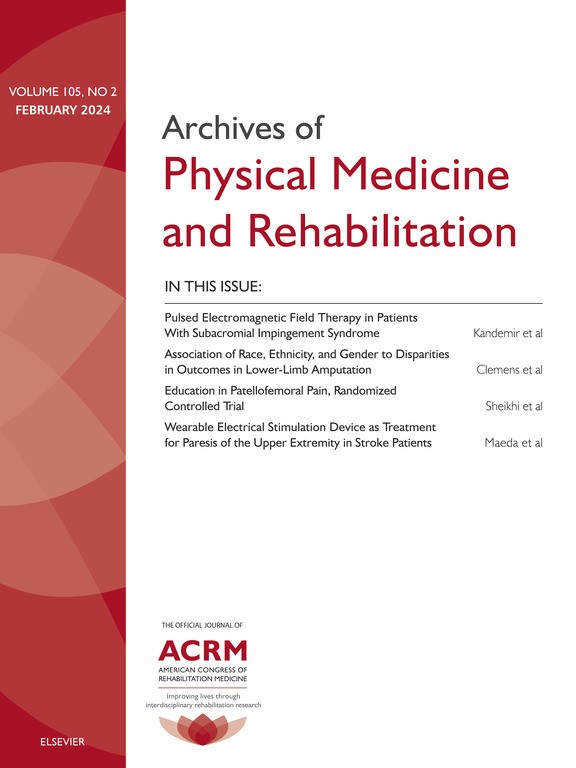
OE Journal. 2021;9(5):25 Arch Phys Med Rehabil . 2021 Feb;102(2):251-260Zusammenfassung der Studie
Sixty patients who were diagnosed with degenerative disc disease with or without spinal stenosis who underwent lumbar spine fusion (LSF) were randomized to undergo 4 weeks of physical therapy consisting of stabilization exercises alone (n=20), stabilization exercises combined with neural mobilization (NM; n=20), or stabilization exercises combined with myofascial release (MFR; n=20). Outcomes of interest included the following: pain scores on a Visual Analogue Scale (VAS), disability evaluated on the Oswestry Disability Index (ODI), and lumbar range of motion (ROM) (i.e. left lateral flexion, left rotation, right rotation, right lateral flexion). All outcomes were measured at the completion of intervention and 1 month post-intervention. Results revealed that VAS pain and ODI scores were statistically significantly in favour of the NM group compared to the MFR group, as well as in NM group when compared to stabilization exercise alone group, at all timepoints (p<0.05 for all). ODI and VAS pain scores were statistically significantly favored in the MFR group when compared to stabilization exercise alone group at all timepoints (p<0.05 for all). All other outcomes were not statistically significantly different between groups at all time periods (p>0.05 for all).
Vollständigen ACE-Bericht freischalten
Sie haben Zugang zu 4 weiteren KOSTENLOSEN Artikeln in diesem Monat.
Klicken Sie unten, um diese ACE Reports freizuschalten und anzusehen
Jetzt freischalten
Kritische Beurteilungen der neuesten, hochwirksamen randomisierten kontrollierten Studien und systematischen Übersichten in der Orthopädie
Zugang zu OrthoEvidence-Podcast-Inhalten, einschließlich Kooperationen mit dem Journal of Bone and Joint Surgery, Interviews mit international anerkannten Chirurgen und Diskussionsrunden zu orthopädischen Neuigkeiten und Themen
Abonnement von The Pulse, einem zweimal wöchentlich erscheinenden evidenzbasierten Newsletter, der Ihnen helfen soll, bessere klinische Entscheidungen zu treffen
Exklusiver Zugang zu Originalartikeln, einschließlich eigener systematischer Übersichten, sowie zu Artikeln über Methoden der Gesundheitsforschung und aktuelle orthopädische Themen
Oder upgraden Sie noch heute und erhalten Sie Zugang zu allen OrthoEvidence-Inhalten für nur $1,99 pro Woche.
Sie haben bereits ein Konto? Einloggen
Gehören Sie zu einem unserer Partnerverbände?
Klicken Sie hier, um im Rahmen Ihrer Verbandsmitgliedschaft kostenlosen Zugang zu erhalten!



0 von 4 monatliche KOSTENLOSE Artikel freigeschaltet



