










ARTHROPLASTY
Mobile- vs. fixed-bearing total knee replacement
OrthoEvidence Journal (OE Journal) - ACE Report
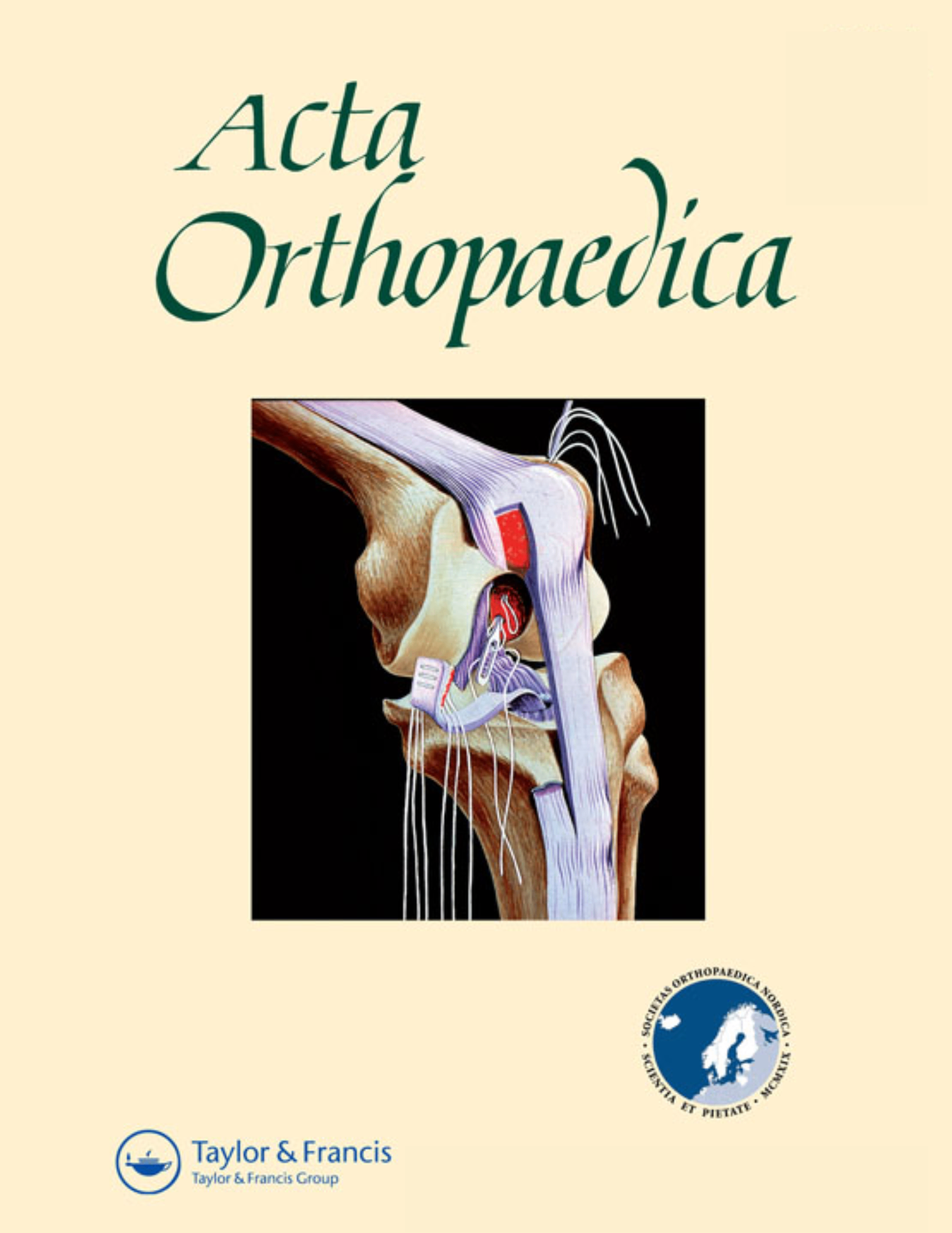
OE Journal. 2015;3(12):8 Acta Orthop. 2015 Apr;86(2):208-1463 patients with uni- or bilateral osteoarthritis were randomized to 2 groups that underwent mobile-bearing (MB) total knee arthroplasty (TKA) or fixed-bearing (FB) TKA. Over a 2 year follow-up period, total translation (TT) via radiostereometric analysis (RSA), bone mineral density (BMD), correlation between implant migration and BMD, and Oxford knee scores (OKS) were evaluated. Results indicated that FB tibial implants migrated a significantly greater degree than MB implants. Within both groups, the majority of migration occurred within the first 3 months after surgery. Both groups displayed similar loss of BMD, which did not correlate to implant migration. OKS was significantly increased in both groups, with no significant between-group differences observed.
Was the allocation sequence adequately generated?
Was allocation adequately concealed?
Blinding Treatment Providers: Was knowledge of the allocated interventions adequately prevented?
Blinding Outcome Assessors: Was knowledge of the allocated interventions adequately prevented?
Blinding Patients: Was knowledge of the allocated interventions adequately prevented?
Was loss to follow-up (missing outcome data) infrequent?
Are reports of the study free of suggestion of selective outcome reporting?
Were outcomes objective, patient-important and assessed in a manner to limit bias (ie. duplicate assessors, Independent assessors)?
Was the sample size sufficiently large to assure a balance of prognosis and sufficiently large number of outcome events?
Was investigator expertise/experience with both treatment and control techniques likely the same (ie.were criteria for surgeon participation/expertise provided)?
Sì = 1
Incerto = 0,5
Non rilevante = 0
No = 0
La valutazione dei criteri di segnalazione valuta la trasparenza con cui gli autori riportano le caratteristiche metodologiche e sperimentali dello studio all'interno della pubblicazione. La valutazione è suddivisa in cinque categorie che vengono presentate di seguito.
3/4
Randomização
3/4
Medidas de resultado
4/4
Inclusão/Exclusão
4/4
Descrição do tratamento
4/4
Estatística
Detsky AS, Naylor CD, O'Rourke K, McGeer AJ, L'Abbé KA. J Clin Epidemiol. 1992;45:255-65
L'Indice di Fragilità è uno strumento che aiuta l'interpretazione dei risultati significativi, fornendo una misura della forza di un risultato. L'Indice di Fragilità rappresenta il numero di eventi consecutivi che devono essere aggiunti a un risultato dicotomico per rendere il risultato non più significativo. Un numero piccolo rappresenta un risultato più debole, mentre un numero grande rappresenta un risultato più forte.
Perché questo studio era necessario ora?
Mobile-bearing (MB) total knee arthroplasty (TKA) devices have been developed with the theoretical advantages related to contact stress, wear, and loosening of components, although the expected advantages of MB TKA have not been established in prior trials. It has previously been indicated that MB and fixed-bearing (FB) implant designs perform equally well, and thus it is unclear whether MB TKA provides any significant benefit over FB designs. Hence, the purpose of this study was to compare MB and FB designs by investigating implant migration, periprosthetic bone mineral density (BMD) and patient reported outcomes at 2 years for the posterior cruciate ligament (PCL) retaining press-fit condylar (P.F.C) TKA.
Qual era la domanda di ricerca principale?
Do mobile-bearing designs improve tibial component fixation compared to fixed-bearing designs in total knee arthroplasty patients, assessed at 3, 6, 12, and 24-months follow-up?
Quali erano i risultati importanti?
- Total translational migration (TT) was significantly higher in the FB group (24-months mean = 0.30 mm +/- 0.22) than the MB group (24-month mean = 0.17 mm +/- 0.09) at all 4 follow-up times (24 months, p= 0.04). Migration predominantly occurred within the first 3 months postoperatively in both groups.
- Excessive migration (>0.2mm) between the 12 and 24 month follow-up periods was noted in two knees of each group.
- Total rotational migration (TR) was similar between groups at all 4 follow-up times (24 months, p= 0.1)
- The maximum total point motion (MTPM) was not significantly different between the FB group (24-month mean = 0.69 mm +/- 0.37) and the MB group (24-month mean = 0.55 mm +/- 0.28) at all follow-up times (p= 0.1)
- Percent BMD loss on anterior/posterior images was a mean -8.8% at 12 months (p=0.04) and -0.8% at 24 months (p=0.4) in the MB group, and -2.3% (p=0.02) and -1.1% (p=0.4), respectively, in the FB group. Percent BMD loss on lateral images was a mean -11.8% at 12 months (p<0.01) and -6.2% at 24 months (p<0.01) in the MB group, and -11.5% (p<0.01) and -4.1% (p=0.1), respectively, in the FB group.
- No correlation was noted between total translation and the change in BMD for either group at 24-month follow-up
- Both groups demonstrated a significant increase in OKS scores between baseline and 6-month follow-up, and maintained through to 24 month follow-up. There were no significant between-group differences in OKS score at either the 6, 12, or 24-month follow-up periods.
Che cosa devo ricordare di più?
In total knee arthroplasty, total translational migration of cruciate-retaining, fixed-bearing tibial implants was significantly greater than that of cruciate-retaining, mobile-bearing tibial implants, that majority of which occurred within the first 3 months postoperatively in both groups. Both groups displayed similar bone mineral density loss over 24 months, and no significant correlation between migration and BMD loss was observed. Both tibial implants led to significant, and similar, increase in clinical scores.
Come influenzerà l'assistenza ai miei pazienti?
Despite the difference between fixed- and mobile-bearing tibial implants in migration, total migration was low in both groups, and relatively unchanged past 3 months. Thus the decision between fixed- and mobile-bearing is still open for discussion, as the current results depict good fixation with similar clinical scores within the first 2 years after surgery. Future studies should analyze stability between implants over the longer term, providing a more accurate look at implant survivorship and longevity.

DISCLAIMER
Il contenuto di questa pagina è solo a scopo informativo e non intende sostituire la consulenza, la diagnosi o il trattamento medico professionale. Se ha bisogno di cure mediche, si rivolga sempre al suo medico o al pronto soccorso più vicino. Le opinioni, le convinzioni e i punti di vista espressi dalle persone sui contenuti presenti in questa pagina non riflettono le opinioni, le convinzioni e i punti di vista di OrthoEvidence.
0 di 4 articoli mensili GRATUITI sbloccati



