










ARTHROPLASTY
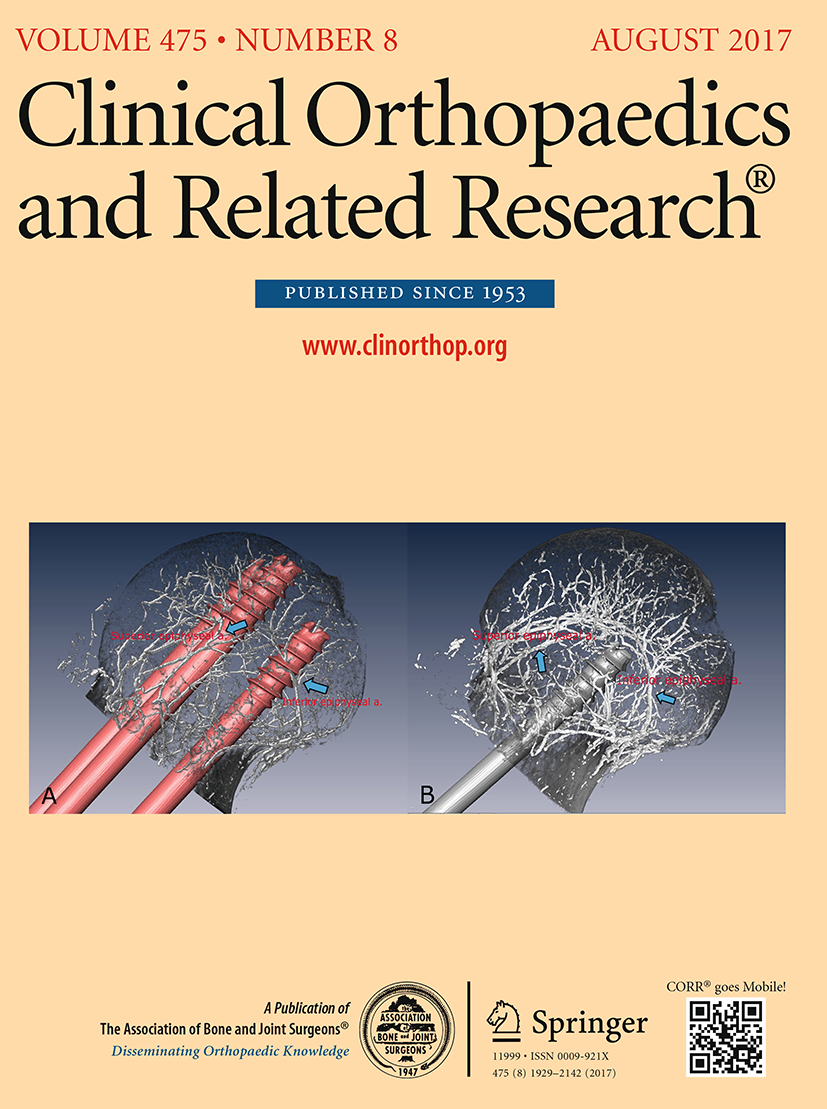
The Frank Stinchfield Award: Dislocation in revision THA: do large heads (36 and 40 mm) result in reduced dislocation rates in a randomized clinical trial?
 This report has been verified
by one or more authors of the
original publication.
This report has been verified
by one or more authors of the
original publication.
OrthoEvidence Journal (OE Journal) - ACE Report
OE Journal. 2013;1(9):15 Clin Orthop Relat Res. 2012 Feb;470(2):351-6. doi: 10.1007/s11999-011-2146-x184 patients were randomized to examine the potential of large femoral heads in decreasing the dislocation rate following revision total hip arthroplasty (THA). Patients received either a standard head (32 mm) or a large head (36 or 40 mm), and were assessed at a mean follow-up of 5 years for dislocation and 2.2 years for quality of life (QOL). Results indicated that dislocation rates were lower in patients who received the large head, while there was no difference in QOL between the two groups.
Was the allocation sequence adequately generated?
Was allocation adequately concealed?
Blinding Treatment Providers: Was knowledge of the allocated interventions adequately prevented?
Blinding Outcome Assessors: Was knowledge of the allocated interventions adequately prevented?
Blinding Patients: Was knowledge of the allocated interventions adequately prevented?
Was loss to follow-up (missing outcome data) infrequent?
Are reports of the study free of suggestion of selective outcome reporting?
Were outcomes objective, patient-important and assessed in a manner to limit bias (ie. duplicate assessors, Independent assessors)?
Was the sample size sufficiently large to assure a balance of prognosis and sufficiently large number of outcome events?
Was investigator expertise/experience with both treatment and control techniques likely the same (ie.were criteria for surgeon participation/expertise provided)?
Ja = 1
Ungewiss = 0.5
Nicht relevant = 0
Nein = 0
Die Bewertung der Berichtskriterien bewertet die Transparenz, mit der die Autoren die methodischen und studienspezifischen Merkmale der Studie in der Veröffentlichung angeben. Die Bewertung ist in fünf Kategorien unterteilt, die im Folgenden vorgestellt werden.
3/4
Randomization
2/4
Outcome Measurements
4/4
Inclusion / Exclusion
2/4
Therapy Description
4/4
Statistics
Detsky AS, Naylor CD, O'Rourke K, McGeer AJ, L'Abbé KA. J Clin Epidemiol. 1992;45:255-65
Der Fragilitätsindex ist ein Instrument, das bei der Interpretation signifikanter Ergebnisse hilft und ein Maß für die Stärke eines Ergebnisses liefert. Der Fragilitätsindex gibt die Anzahl der aufeinanderfolgenden Ereignisse an, die zu einem dichotomen Ergebnis hinzugefügt werden müssen, damit das Ergebnis nicht mehr signifikant ist. Eine kleine Zahl steht für ein schwächeres Ergebnis und eine große Zahl für ein stärkeres Ergebnis.
Warum wurde diese Studie jetzt benötigt?
Dislocation following revision THA is one of the most common complications. While larger heads have become available to surgeons (where it's head-to-neck ratio could prevent dislocation), there are very few studies that address the effect of head size in revision THA. Hence, this study aimed to determine whether a large femoral head (36 or 40 mm) would result in a decreased dislocation rate compared to a standard head (32 mm) in revision THA.
Was war die wichtigste Forschungsfrage?
Will a large femoral head result in a reduction in dislocation rates after revision THA compared to a standard head, assessed over 5 years?
Was waren die wichtigsten Ergebnisse?
- The rate of dislocation was lower for the large-head group (1.1% or 1 of 92) than for the standard-head group (8.7% or 8 of 92) (p = 0.035).
- Of the 8 patients with dislocations in the standard-head group, 5 required no further surgery while the other 3 required further surgery to stabilize the hips; the one patient in the large-head group who was dislocated required further surgery to stabilize the hips.
- Improvements in all QOL scores from preoperative values were observed in both groups; the only score that was different between the two groups at follow-up was the SF-36 mental component, with the large-head group scoring higher than the standard-head group (p = 0.043).
Was sollte ich mir besonders merken?
This study demonstrated that there was a significant decrease in dislocation rates when larger 36- or 40-mm heads were used in comparison to standard 32 mm heads. However, no significant difference was observed in terms of quality of life between both groups (except the SF-36 mental component, which favoured the large-head group).
Wie wird sich dies auf die Behandlung meiner Patienten auswirken?
The results of this study suggest that large-heads should be routinely selected when performing revision THA. However, the effects of using larger heads must be further studied to better understand long-term outcomes of these prostheses.

HAFTUNGSAUSSCHLUSS
Der Inhalt dieser Seite dient nur zu Informationszwecken und ist nicht als Ersatz für professionelle medizinische Beratung, Diagnose oder Behandlung gedacht. Wenn Sie eine medizinische Behandlung benötigen, wenden Sie sich immer an Ihren Arzt oder suchen Sie die nächstgelegene Notaufnahme auf. Die Meinungen, Überzeugungen und Standpunkte, die von den Personen auf dieser Seite geäußert werden, spiegeln nicht die Meinungen, Überzeugungen und Standpunkte von OrthoEvidence wider.
0 von 4 monatliche KOSTENLOSE Artikel freigeschaltet



