










OSTEOARTHRITIS
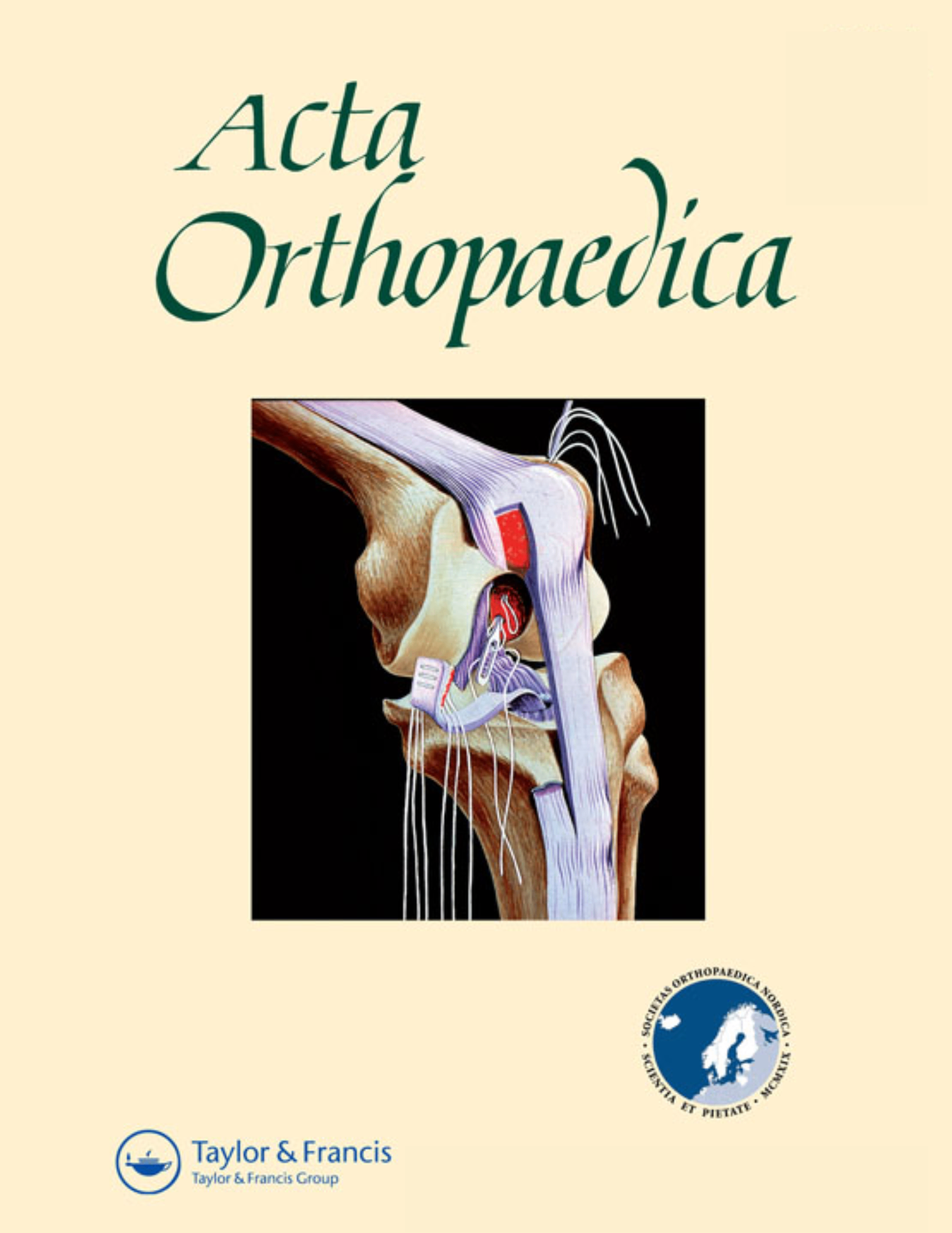
Design modifications of the uncemented Furlong hip stem result in minor early subsidence but do not affect further stability: a randomized controlled RSA study with 5-year follow-up.
OrthoEvidence Journal (OE Journal) - ACE Report
OE Journal. 2015;3(6):29 Acta Orthop. 2014 Dec;85(6):556-61.50 patients with primary osteoarthritis undergoing total hip arthroplasty were randomized to receive either the Furlong Active femoral stem or the traditional Furlong HAC femoral stem. The purpose of this study was to evaluate the 3-D migratory patterns of the two stems using radiostereometry. Results after 3 months demonstrated significantly greater subsidence of the Furlong Active stem compared to the Furlong HAC stem, though subsidence of each stem plateaued after 3 months and displayed minor changes through to 5 years. Both groups displayed initial retroversion of the implant at 3 months, though minimal differences through to 5 years thereafter. Clinical outcome significantly improved in both groups over 5 years, with no significant differences detected between groups at 1, 2, or 5 year follow-up.
Was the allocation sequence adequately generated?
Was allocation adequately concealed?
Blinding Treatment Providers: Was knowledge of the allocated interventions adequately prevented?
Blinding Outcome Assessors: Was knowledge of the allocated interventions adequately prevented?
Blinding Patients: Was knowledge of the allocated interventions adequately prevented?
Was loss to follow-up (missing outcome data) infrequent?
Are reports of the study free of suggestion of selective outcome reporting?
Were outcomes objective, patient-important and assessed in a manner to limit bias (ie. duplicate assessors, Independent assessors)?
Was the sample size sufficiently large to assure a balance of prognosis and sufficiently large number of outcome events?
Was investigator expertise/experience with both treatment and control techniques likely the same (ie.were criteria for surgeon participation/expertise provided)?
Sí = 1
Incierto = 0,5
No relevante = 0
No = 0
La evaluación de los criterios de información evalúa la transparencia con la que los autores informan de las características metodológicas y del ensayo dentro de la publicación. La evaluación se divide en cinco categorías que se presentan a continuación.
1/4
Randomization
2/4
Outcome Measurements
4/4
Inclusion / Exclusion
4/4
Therapy Description
3/4
Statistics
Detsky AS, Naylor CD, O'Rourke K, McGeer AJ, L'Abbé KA. J Clin Epidemiol. 1992;45:255-65
El Índice de Fragilidad es una herramienta que ayuda en la interpretación de hallazgos significativos, proporcionando una medida de fuerza para un resultado. El Índice de Fragilidad representa el número de eventos consecutivos que es necesario añadir a un resultado dicotómico para que el hallazgo deje de ser significativo. Un número pequeño representa un hallazgo más débil y un número grande un hallazgo más fuerte.
¿Por qué se necesitaba ahora este estudio?
The Furlong HAC stem is a well-proven femoral implant that has recently undergone modifications to the lateral fin to prevent fracture of the greater trochanter during insertion. The new stem - the Furlong Active stem - is a shorter cone-shape, double-tapered, and has more rounded medial and lateral edges. Using radiostereometry, this study aimed to compare the migratory patterns of the Furlong HAC and Furlong Active stem as a surrogate for osseointegration and long-term survival of the arthroplasty.
¿Cuál era la pregunta principal de la investigación?
Do design modifications to the Furlong HAC stem to give the Furlong Active stem affect the migratory behaviour, osseointegration and long-term result of total hip arthroplasty up to 5 years after surgery?
¿Cuáles fueron los hallazgos importantes?
- Significantly greater subsidence of the implant was noted in the Furlong Active group (0.99mm distally) compared to the Furlong HAC group (0.31mm distally) (p=0.0.46). Subsequent subsidence from 3 months to 5 years was not statistically significant in the Furlong Active (p=0.5) or HAC (p=0.06) stem.
- There was one case of extreme subsidence reported in the Furlong Active group (6.5mm after 3 months) in a patient with BMI 41. Exclusion of this outlier case from the main analysis resulted in a non-significant difference in subsidence between groups (p>0.05).
- Mean retroversion of the femoral stem was measured at 1.18deg in the Furlong Active group and 0.80deg in the Furlong HAC group after 3 months; the difference between groups was not statistically significant. (p=0.46). From 3 month to 5 years, no significant changes in mean retroversion were noted in either the Furlong Active (p=0.1) or HAC group (p=0.1).
- Two patients, one in the Furlong HAC group (4.2 degrees) and one in the Furlong Active group (5.1 degree), demonstrated significant retroversion of the stem within the first 3 months after surgery. Between 3 months and 5 years, no further retroversion was noted in either patient.
- No stem in either group was judged to be loose over the 5 year follow-up period.
- HOOS scores improved significantly within both groups, without significant difference between groups at 1, 2, or 5 years after surgery.
- Minor X- and Z-plane translation and rotation of the stem were noted in both groups, and differences were small between groups.
¿Qué es lo que más debo recordar?
In total hip arthroplasty, subsidence of the uncemented Furlong Active femoral stem was significantly greater than the Furlong HAC stem in the first 3 months after surgery, although subsidence in both groups thereafter plateaued, with minimal subsidence occurring in either group from 3 months to 5 years. Both stems displayed initial retroversion of the femoral implant in the first 3 months, but minor changes thereafter to 5 years. No stem in either group was considered loose. Clinical outcome was similar between the Furlong Active and HAC stem throughout the 5-year follow-up.
¿Cómo afectará esto al cuidado de mis pacientes?
Though subsidence of the Furlong Active stem was greater than that of the Furlong HAC stem, early migration did not appear to negatively impact 5-year outcome. Namely, osseointegration of the implant was observed to occur after 3 months, with minimal subsidence migration of either implant from 3 month to 5 years, and no loose components observed. Additionally, retroversion did not appear to substantial differ between stem designs. These findings suggest that similar results may be attained with the new Furlong Active stem relative the standard Furlong HAC stem, and that the new design modifications do not negatively affect integration of the component or clinical results. Nevertheless, additional research in a larger cohort of trials should be considered to confirm the the findings of the current study.

DESCARGO DE RESPONSABILIDAD
El contenido de esta página tiene únicamente fines informativos y no pretende sustituir el consejo, diagnóstico o tratamiento médico profesional. Si necesita tratamiento médico, busque siempre el consejo de su médico o acuda al servicio de urgencias más cercano. Las opiniones, creencias y puntos de vista expresados por las personas sobre el contenido que se encuentra en esta página no reflejan las opiniones, creencias y puntos de vista de OrthoEvidence.
0 de 4 artículos mensuales GRATIS desbloqueados



