










TRAUMA
Antegrade intramedullary nailing for fifth metacarpal neck fractures: a systematic review and meta-analysis
OrthoEvidence Journal (OE Journal) - ACE Report
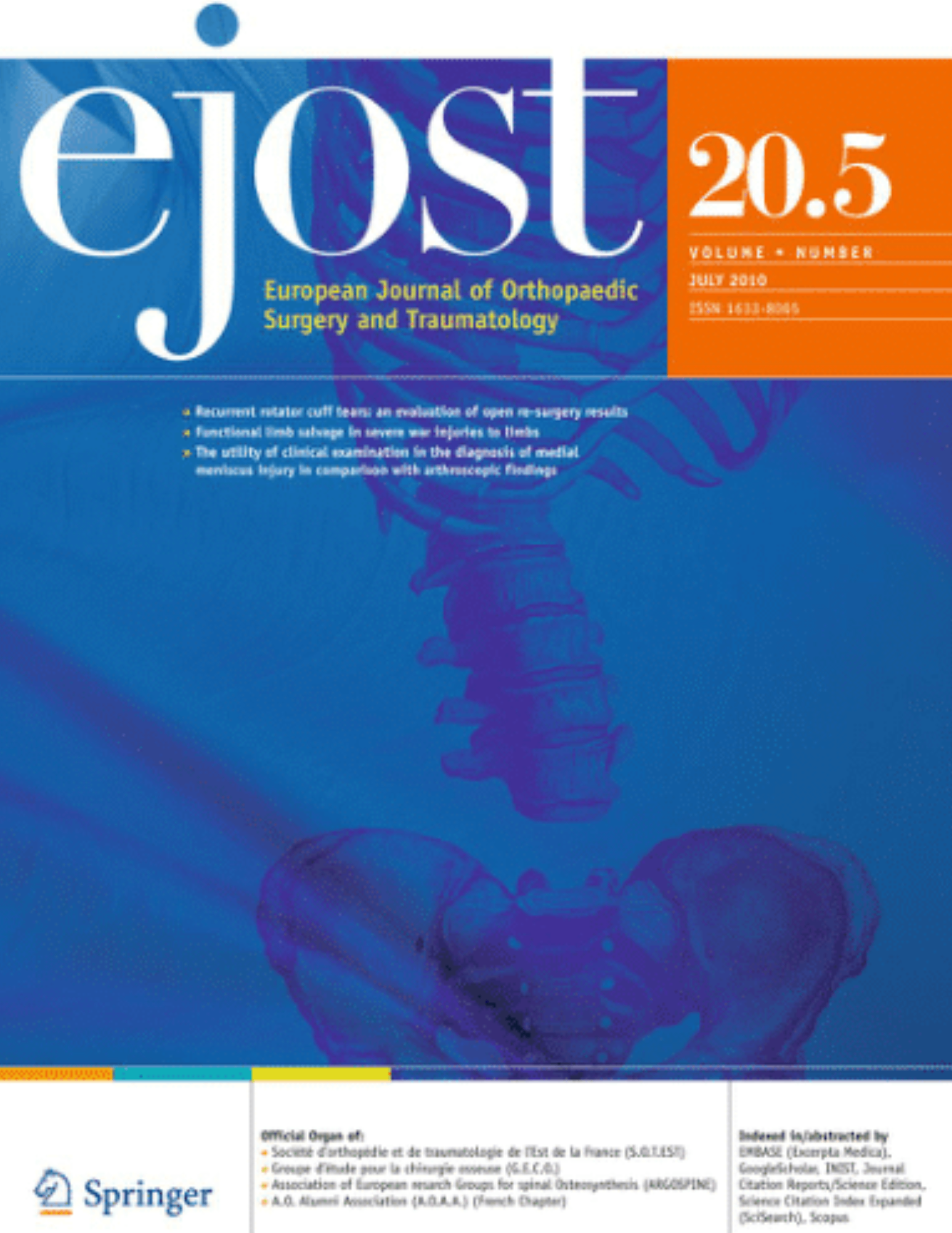
OE Journal. 2014;2(10):39 Eur J Orthop Surg Traumatol. 2014 Apr;24(3):273-8. doi: 10.1007/s00590-013-1344-5. Epub 2013 Oct 27.4 studies (3 quasi-randomized trials and 1 randomized controlled trial) comparing antegrade intramedullary nailing (AIMN) with other surgical interventions for fifth metacarpal neck fractures were included in this review to compare treatment efficacy. Pooled data demonstrated trends favouring AIMN for pain scores, the incidence of complications and mean residual angulation at the site of fracture. Additionally, AIMN yielded significantly greater grip strength at 12 months and improved range of motion of the metacarpophalangeal joint. When compared to transverse pinning (TP) with K-wires, AIMN yielded significantly better total active motion and greater patient satisfaction.
Were the search methods used to find evidence (original research) on the primary question or questions stated?
Was the search for evidence reasonably comprehensive?
Were the criteria used for deciding which studies to include in the overview reported?
Was the bias in the selection of studies avoided?
Were the criteria used for assessing the validity of the included studies reported?
Was the validity of all of the studies referred to in the text assessed with use of appropriate criteria (either in selecting the studies for inclusion or in analyzing the studies that were cited)?
Were the methods used to combine the findings of the relevant studies (to reach a conclusion) reported?
Were the findings of the relevant studies combined appropriately relative to the primary question that the overview addresses?
Were the conclusions made by the author or authors supported by the data and or analysis reported in the overview?
How would you rate the scientific quality of this evidence?
Sim = 1
Incerto = 0,5
Não relevante = 0
Não = 0
A Avaliação dos Critérios de Relato avalia a transparência com que os autores relatam as caraterísticas metodológicas e do ensaio na publicação. A avaliação está dividida em cinco categorias que são apresentadas de seguida.
4/4
Introducción
4/4
Acceso a los datos
4/4
Análisis de los datos
3/4
Resultados
3/4
Discusión
Detsky AS, Naylor CD, O'Rourke K, McGeer AJ, L'Abbé KA. J Clin Epidemiol. 1992;45:255-65
O Índice de Fragilidade é uma ferramenta que auxilia na interpretação de achados significativos, fornecendo uma medida de força para um resultado. O Índice de Fragilidade representa o número de eventos consecutivos que precisam de ser adicionados a um resultado dicotómico para que o resultado deixe de ser significativo. Um número pequeno representa um resultado mais fraco e um número grande representa um resultado mais forte.
Porque é que este estudo era necessário agora?
Fractures of the neck of the fifth metacarpal, also known as boxer's fractures, are common and may require surgical intervention. The clinical recommendations regarding the optimal conditions for surgical intervention, however, are inconsistent in the literature. Operative procedures to treat this type of fracture include antegrade intramedullary nailing (AIMN), retrograde pinning (RP) or transverse pinning (TP) using intramedullary K-wires, external fixation, and standard plates. Although AIMN is less invasive and is commonly used in clinical practice, evidence is conflicted regarding the superiority of its efficacy over other surgical treatment approaches.
Qual era a principal questão de investigação?
When treating fifth metacarpal neck fractures, is antegrade intramedullary nailing (AIMN) more efficacious than other surgical interventions?
Quais foram os resultados importantes?
- 4 studies (3 quasi-randomized trials and one randomized controlled trial) were included in this meta-analysis. In total, 163 patients were included (mean age 29.1 years [range 18-65]).
- There was no significant difference between groups with respect to pooled pain scores from 3 studies (n=133; MD -0.18; 95% CI -0.528 to 0.154; p=0.2; I-squared 0%).
- Quick DASH scores were reported in one study, demonstrating no significant difference between AIMN and plates.
- Although there was no significant difference between AIMN and plates in grip strength at 3-6 months (2 studies; MD -0.28; 95% CI -0.773 to 0.204; p=0.2), AIMN yielded significantly greater grip strength at 12 months compared to either plates or transverse pinning (3 studies; MD 0.84; 95% CI 0.468 to 1.206; p<0.0001; I-squared 54.5%).
- When compared to transverse pinning (TP) with K-wires, AIMN resulted in significantly greater total active motion at 12 months (2 studies; pooled effect size 0.5; 95% CI 0.087 to 0.904; p=0.01; Q: p=0.316). In the only study reporting patient satisfaction following TP and AIMN, 15/16 patients (94%) in the AIMN group were either "satisfied" or "very satisfied", which was likewise displayed by 13/17 patients (76.5%) in the TP group.
- With respect to range of motion of the metacarpophalangeal joint, one study, at a follow-up of <6 months, reported a significant difference in favour of AIMN (p=0.001). At 12 months, pooled data from three studies also found a significant difference in favour of AIMN (pooled effect size 1.45; 95% CI 0.787 to 2.106; p<0.0001; I-squared 55.9%).
- The incidence of complications was lower with AIMN compared to all other surgical interventions, with this difference being borderline-significant (OR 0.4; 95% CI 0.155 to 1.028; p=0.05; I-squared 0%).
- Pooled data on mean residual angulation at the site of fracture from 3 studies favoured AIMN, with the difference being borderline significant (pooled effect size -0.4; 95% CI -0.779 to 0.000042; p=0.05; I-squared 0%).
De que é que me devo lembrar mais?
Trends favouring antegrade intramedullary nailing (AIMN) were found for pain scores, the incidence of complications and mean residual angulation at the site of fracture. Additionally, AIMN yielded significantly greater grip strength at 12 months and range of motion of the metacarpophalangeal joint. When compared to transverse pinning (TP) with K-wires, AIMN yielded significantly better total active motion and greater patient satisfaction.
Como é que isto afectará o tratamento dos meus doentes?
Results from this study suggest antegrade intramedullary nailing (AIMN) may provide additional clinical benefits when compared to other forms of surgical intervention for patients with fifth metacarpal neck fractures. Future studies are needed to conduct head-to-head comparisons between various surgical interventions and AIMN, as opposed to grouping surgical approaches as one comparison group.

AVISO LEGAL
O conteúdo desta página destina-se apenas a fins informativos e não pretende substituir o aconselhamento, diagnóstico ou tratamento médico profissional. Se necessitar de tratamento médico, procure sempre o conselho do seu médico ou dirija-se ao serviço de urgência mais próximo. As opiniões, crenças e pontos de vista expressos pelos indivíduos no conteúdo encontrado nesta página não reflectem as opiniões, crenças e pontos de vista da OrthoEvidence.
0 de 4 artigos mensais GRATUITOS desbloqueados



