










PHYSICAL THERAPY & REHAB
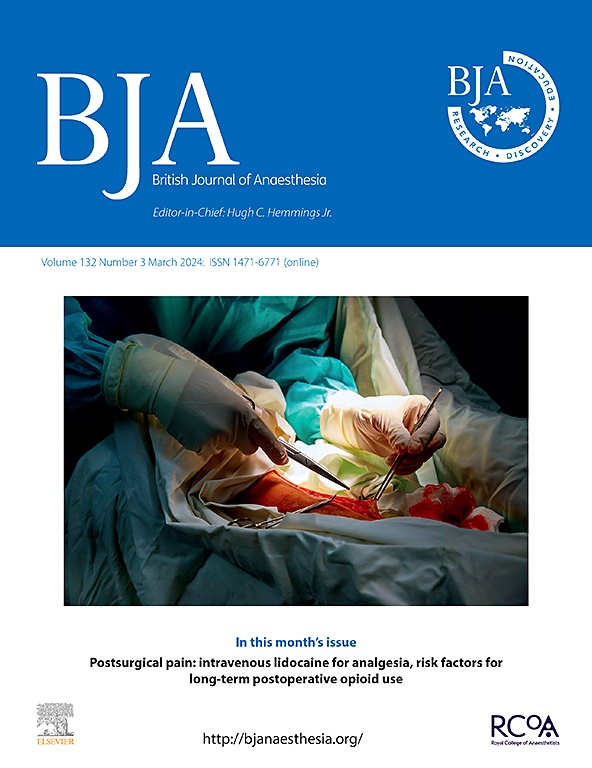
Multicentre randomised controlled clinical trial of electroacupuncture with usual care for patients with non-acute pain after back surgery
 Este estudio ha sido identificado como potencialmente de alto impacto.
La métrica de alto impacto de OE, basada en la inteligencia artificial, estima la influencia que puede tener un artículo integrando señales procedentes tanto de la revista en la que se publica como del contenido científico del propio artículo.
Desarrollado mediante el procesamiento del lenguaje natural más avanzado, el modelo de Alto Impacto de OE predice con mayor precisión el futuro rendimiento de las citas de un estudio que el factor de impacto de la revista por sí solo.
Esto permite reconocer antes las investigaciones clínicamente significativas y ayuda a los lectores a centrarse en los artículos con más probabilidades de configurar la práctica futura.
Este estudio ha sido identificado como potencialmente de alto impacto.
La métrica de alto impacto de OE, basada en la inteligencia artificial, estima la influencia que puede tener un artículo integrando señales procedentes tanto de la revista en la que se publica como del contenido científico del propio artículo.
Desarrollado mediante el procesamiento del lenguaje natural más avanzado, el modelo de Alto Impacto de OE predice con mayor precisión el futuro rendimiento de las citas de un estudio que el factor de impacto de la revista por sí solo.
Esto permite reconocer antes las investigaciones clínicamente significativas y ayuda a los lectores a centrarse en los artículos con más probabilidades de configurar la práctica futura.
OrthoEvidence Journal (OE Journal) - ACE Report
OE Journal. 2021;9(7):19 Br J Anaesth. 2021 Mar;126(3): 692-699.Resumen del estudio
One hundred and eight patients with non-acute low back pain after back surgery were randomized to receive 4 weeks of physical therapy and education with electroacupuncture treatment (n=54) or without acupuncture treatment (n=54). The primary outcome of interest was pain scores on a 100 point Visual Analog Scale (VAS). Secondary outcomes of interest included the Oswestry Disability Index (ODI), the Euro Quality of Life 5 Dimension (EQ-5D) quality of life questionnaire, and the incidence of adverse events. Outcomes were assessed at 3, 5, 8 and 12 weeks follow-up for VAS pain scores and ODI scores, as well as 5, 8 and 12 weeks for EQ-5D scores. Adverse events were assessed at each follow-up time-point. Results revealed statistically significantly lower VAS pain scores in the electroacupuncture group compared to the control group at 3 weeks (p=0.0063) and 5 weeks (p=0.0311) follow-up. Additionally, ODI scores were statistically significantly in favour of the electroacupuncture group at 3, 5 and 8 weeks follow-up (p<0.05 for all). No statistically significant differences were observed between the two groups in EQ-5D scores at all timepoints (p>0.05 for all). Moreover, 1 patient in the electroacupuncture group and 3 patients in the control group required additional treatment (p=0.6179). In the electroacupuncture group, 29 adverse events were reported, as well as 2 cases of hospitalization for traffic accidents. In the control group, 24 adverse events were reported, as well as 1 cases of hospitalization for appendicitis, 1 case of cystitis, and 3 cases of pain aggravation.
Desbloquear el informe ACE completo
Tiene acceso a 4 más artículos GRATUITOS este mes.
Haga clic a continuación para desbloquear y ver este ACE Reports
Desbloquear ahora
Evaluaciones críticas de los últimos ensayos controlados aleatorizados de gran impacto y revisiones sistemáticas en ortopedia
Acceso al contenido del podcast OrthoEvidence, que incluye colaboraciones con el Journal of Bone and Joint Surgery, entrevistas con cirujanos reconocidos internacionalmente y mesas redondas sobre noticias y temas ortopédicos
Suscripción a The Pulse, un boletín quincenal basado en la evidencia y diseñado para ayudarle a tomar mejores decisiones clínicas
Acceso exclusivo a artículos de contenido original, incluidas revisiones sistemáticas propias, y artículos sobre métodos de investigación sanitaria y temas ortopédicos de actualidad
O actualícese hoy mismo y obtenga acceso a todo el contenido de OrthoEvidencepor tan sólo 1,99 $ a la semana.
¿Ya tiene una cuenta? Conectarse
¿Está afiliado a una de nuestras asociaciones colaboradoras?
¡Haga clic aquí para obtener acceso gratuito como parte de los beneficios de miembro de su asociación!


Suscríbase a "El Pulso"
Ortopedia basada en la evidencia directamente a su bandeja de entrada. SUSCRIBIRSE
0 de 4 artículos mensuales GRATIS desbloqueados



