










FOOT & ANKLE
Effect of accelerated rehabilitation on function after ankle sprain: randomised controlled trial
 This report has been verified
by one or more authors of the
original publication.
This report has been verified
by one or more authors of the
original publication.
 Este estudio ha sido identificado como potencialmente de alto impacto.
La métrica de alto impacto de OE, impulsada por la IA, estima la influencia que probablemente tendrá un artículo integrando señales tanto de la revista en la que se publica como del contenido científico del propio artículo.
Desarrollado mediante el procesamiento del lenguaje natural más avanzado, el modelo de Alto Impacto de OE predice con mayor precisión el futuro rendimiento de las citas de un estudio que el factor de impacto de la revista por sí solo.
Esto permite reconocer antes las investigaciones clínicamente significativas y ayuda a los lectores a centrarse en los artículos con más probabilidades de configurar la práctica futura.
Este estudio ha sido identificado como potencialmente de alto impacto.
La métrica de alto impacto de OE, impulsada por la IA, estima la influencia que probablemente tendrá un artículo integrando señales tanto de la revista en la que se publica como del contenido científico del propio artículo.
Desarrollado mediante el procesamiento del lenguaje natural más avanzado, el modelo de Alto Impacto de OE predice con mayor precisión el futuro rendimiento de las citas de un estudio que el factor de impacto de la revista por sí solo.
Esto permite reconocer antes las investigaciones clínicamente significativas y ayuda a los lectores a centrarse en los artículos con más probabilidades de configurar la práctica futura.
OrthoEvidence Journal (OE Journal) - ACE Report
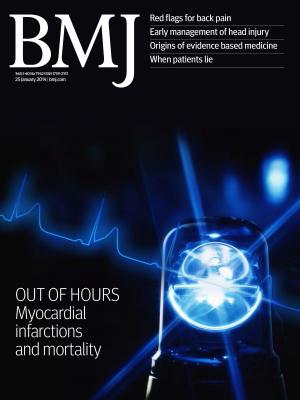
OE Journal. 2013;1(9):21 BMJ. 2010 May 10;340:c1964. doi: 10.1136/bmj.c1964101 patients with an acute grade 1 or 2 ankle sprain were randomized to be managed with an early therapeutic exercise program or a conventional PRICE (protection, rest, ice, compression and elevation) protocol. It was observed that after early incorporating therapeutic exercises during the first week after an ankle sprain brings about significant improvements in physical activity and improved functional status compared to the standard treatment at weeks 1 and 2. At 16-week follow-up, both groups had good and comparable ankle function.
Was the allocation sequence adequately generated?
Was allocation adequately concealed?
Blinding Treatment Providers: Was knowledge of the allocated interventions adequately prevented?
Blinding Outcome Assessors: Was knowledge of the allocated interventions adequately prevented?
Blinding Patients: Was knowledge of the allocated interventions adequately prevented?
Was loss to follow-up (missing outcome data) infrequent?
Are reports of the study free of suggestion of selective outcome reporting?
Were outcomes objective, patient-important and assessed in a manner to limit bias (ie. duplicate assessors, Independent assessors)?
Was the sample size sufficiently large to assure a balance of prognosis and sufficiently large number of outcome events?
Was investigator expertise/experience with both treatment and control techniques likely the same (ie.were criteria for surgeon participation/expertise provided)?
Sí = 1
Incierto = 0,5
No relevante = 0
No = 0
La evaluación de los criterios de información evalúa la transparencia con la que los autores informan de las características metodológicas y del ensayo dentro de la publicación. La evaluación se divide en cinco categorías que se presentan a continuación.
4/4
Randomização
3/4
Medidas de resultado
4/4
Inclusão/Exclusão
4/4
Descrição do tratamento
4/4
Estatística
Detsky AS, Naylor CD, O'Rourke K, McGeer AJ, L'Abbé KA. J Clin Epidemiol. 1992;45:255-65
El Índice de Fragilidad es una herramienta que ayuda en la interpretación de hallazgos significativos, proporcionando una medida de fuerza para un resultado. El Índice de Fragilidad representa el número de eventos consecutivos que es necesario añadir a un resultado dicotómico para que el hallazgo deje de ser significativo. Un número pequeño representa un hallazgo más débil y un número grande un hallazgo más fuerte.
¿Por qué se necesitaba ahora este estudio?
Ankle sprains are very common musculoskeletal injuries with acute side affects, such as pain and loss of function. A passive treatment approach involves protection, rest, ice, compression and elevation. This approach is common for all soft tissue injuries, which raises the question as to whether a more accelerated protocol would be effective in improving recovery and long term outcomes from ankle sprains.
¿Cuál era la pregunta principal de la investigación?
Does an accelerated intervention involving exercise confer additional benefit compared to the standard treatment of protection, rest, ice, compression and elevation in patients with ankle sprains, 16 weeks after treatment?
¿Cuáles fueron los hallazgos importantes?
- Overall treatment effect favoured the exercise group for improved physical activity at week 1 (baseline adjusted difference in treatment 5.28, 98.75% CI 0.31-10.26, p=0.008) and week 2 (baseline adjusted difference in treatment 4.92, 98.5%CI 0.27-9.57, p=0.0083)
- The exercise group was found to be significantly more active when analyzed through time spent walking (p=0.029), average number of steps taken daily (p=0.021), and numbers of steps taken daily (p=0.047).
- At weeks 3, 4, and 16, there were no significant differences in pain at rest, pain on activity, or swelling, and the re-injury rate was the same between groups (4%).
¿Qué es lo que más debo recordar?
At the first and second week, the group receiving the accelerated intervention reported increased amounts of physical activity, had improved ankle function, lesser swelling, and pain compared to the group receiving standard care. At 16-week follow-up, there was no significant difference in ankle function between the two groups, and the reinjury rate was the same between groups.
¿Cómo afectará esto al cuidado de mis pacientes?
Accelerated exercise rehabilitation received during the first week after an ankle sprain is an effective method to improve early ankle function. Patients who partake in the accelerated interventions are more physically active than those receiving standard treatment.

DESCARGO DE RESPONSABILIDAD
El contenido de esta página tiene únicamente fines informativos y no pretende sustituir el consejo, diagnóstico o tratamiento médico profesional. Si necesita tratamiento médico, busque siempre el consejo de su médico o acuda al servicio de urgencias más cercano. Las opiniones, creencias y puntos de vista expresados por las personas sobre el contenido que se encuentra en esta página no reflejan las opiniones, creencias y puntos de vista de OrthoEvidence.
0 de 4 artículos mensuales GRATIS desbloqueados



