










SPORTS MEDICINE
Hamstring pain and muscle strains following anterior cruciate ligament reconstruction: a prospective, randomized trial comparing hamstring graft harvest techniques
 This report has been verified
by one or more authors of the
original publication.
This report has been verified
by one or more authors of the
original publication.
OrthoEvidence Journal (OE Journal) - ACE Report
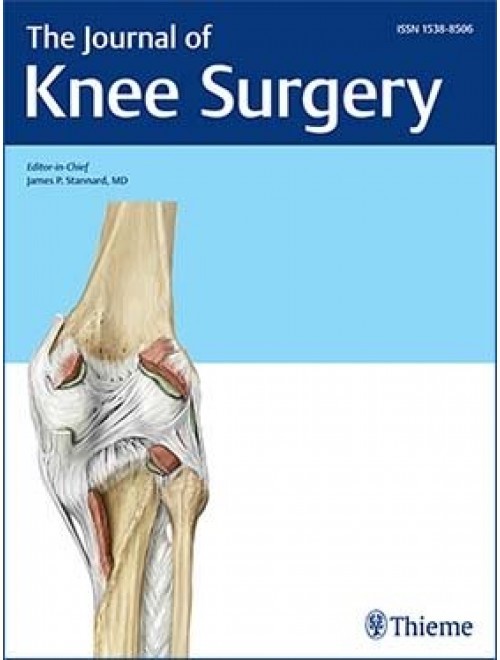
OE Journal. 2013;1(8):28 J Knee Surg. 2013 Apr;26(2):139-44. doi: 10.1055/s-0032-1324811. Epub 2012 Sep 1034 patients were randomized to undergo anterior cruciate ligament (ACL) reconstruction using either the "Cut" or "Push" hamstring graft harvest technique to compare which method was more effective in lowering pain and the occurrence of hamstring muscle strain post-operatively. Following evaluations over a minimum of 24 months, it was observed that postoperative hamstring pain and the occurrence of hamstring strain were significantly lower in those patients who underwent ACL reconstruction using the "Cut" graft harvest technique versus the "Push" method.
Was the allocation sequence adequately generated?
Was allocation adequately concealed?
Blinding Treatment Providers: Was knowledge of the allocated interventions adequately prevented?
Blinding Outcome Assessors: Was knowledge of the allocated interventions adequately prevented?
Blinding Patients: Was knowledge of the allocated interventions adequately prevented?
Was loss to follow-up (missing outcome data) infrequent?
Are reports of the study free of suggestion of selective outcome reporting?
Were outcomes objective, patient-important and assessed in a manner to limit bias (ie. duplicate assessors, Independent assessors)?
Was the sample size sufficiently large to assure a balance of prognosis and sufficiently large number of outcome events?
Was investigator expertise/experience with both treatment and control techniques likely the same (ie.were criteria for surgeon participation/expertise provided)?
Yes = 1
Uncertain = 0.5
Not Relevant = 0
No = 0
The Reporting Criteria Assessment evaluates the transparency with which authors report the methodological and trial characteristics of the trial within the publication. The assessment is divided into five categories which are presented below.
4/4
Asignación aleatoria
3/4
Criterios de resultado
3/4
Criterios de inclusión/exclusión
4/4
Descripción del tratamiento
3/4
Estadística
Detsky AS, Naylor CD, O'Rourke K, McGeer AJ, L'Abbé KA. J Clin Epidemiol. 1992;45:255-65
The Fragility Index is a tool that aids in the interpretation of significant findings, providing a measure of strength for a result. The Fragility Index represents the number of consecutive events that need to be added to a dichotomous outcome to make the finding no longer significant. A small number represents a weaker finding and a large number represents a stronger finding.
Why was this study needed now?
Although the use of hamstring tendon autografts during ACL reconstruction has become popular, there has been debate on which hamstring graft harvest technique is most effective in improving functional outcomes following the procedure. This study aimed to compare whether cutting hamstring tendons distal to the musculotendinous junction ("Cut" technique) was more effective in reducing pain and increasing leg flexion strength compared to pushing the tendons away from the muscle belly during graft harvesting ("Push" technique).
What was the principal research question?
Which hamstring graft harvesting technique - "Cut" or "Push" - was more effective in reducing postoperative pain and hamstring muscle strain, when measured over a minimum period of 24 months?
What were the important findings?
- Mean VAS pain score was significantly lower in the "Cut" group (10.05 mm; Range: 0-27 mm), in comparison to the "Push" group (24.66 mm; Range: 3-42.5 mm) when measured at 24 months (p=0.0398).
- At 24 months, no significant difference was noted for mean leg flexion deficit between the "Push" group (5.8%; Range: 2-11.3%) and the "Cut" group (5.6%; Range: 1.5-10.2%) (p=0.6).
- Significantly fewer patients in the "Cut" group experienced hamstring strain (>/= Grade 1; Hamstring Strain Classification) (5/20 patients; 25%), compared to the "Push" group (7/14 patients; 50%), when measured at 24 months (p=0.045).
- The median hamstring strain grade was 2 for the affected patients of both groups.
- There was no significant difference in mean Cincinnati SARS scores (p=0.35), mean Lysholm scores (p=0.71), median IKDC scores, and side-to-side difference of AP translation (p=0.302) at 24 months between the two groups.
- At 24 months the mean Cincinnati symptoms and ADL scores were significantly better in the "Push" group (Symptoms: 85; ADL: 107.5), in comparison to the "Cut" group (Symptoms: 80; ADL: 105) (Symptoms: p=0.016; ADL: p=0.0239).
What should I remember most?
The results of this study exhibited that postoperative hamstring pain and incidence of hamstring strain were significantly lower in those patients who underwent anterior cruciate ligament reconstruction using the "Cut" graft harvest technique when compared to the "Push" method. It should be noted that at 24 months though the mean Cincinnati symptoms and ADL scores were superior in the "Push" group.
How will this affect the care of my patients?
As the "Cut" graft harvest technique provides a significant reduction in postoperative hamstring pain and incidence of hamstring strain, this harvest method is recommended. Lower pain may help reduce the recovery time, thus, allowing an athlete to return to full activity faster. The clinical relevance of the better Cincinnati symptoms and activities of daily living scores in the "Push" group has yet to be determined. Future studies should consider using radiological analysis as an outcome measurement in order to expand the amount of evidence available on this topic.

DISCLAIMER
This content found on this page is for informational purposes only and is not intended to be a substitute for professional medical advice, diagnosis, or treatment. If you require medical treatment, always seek the advice of your physician or go to your nearest emergency department. The opinions, beliefs, and viewpoints expressed by the individuals on the content found on this page do not reflect the opinions, beliefs, and viewpoints of OrthoEvidence.
0 of 4 monthly FREE articles unlocked



