






RESEARCH | Mar 28, 2024
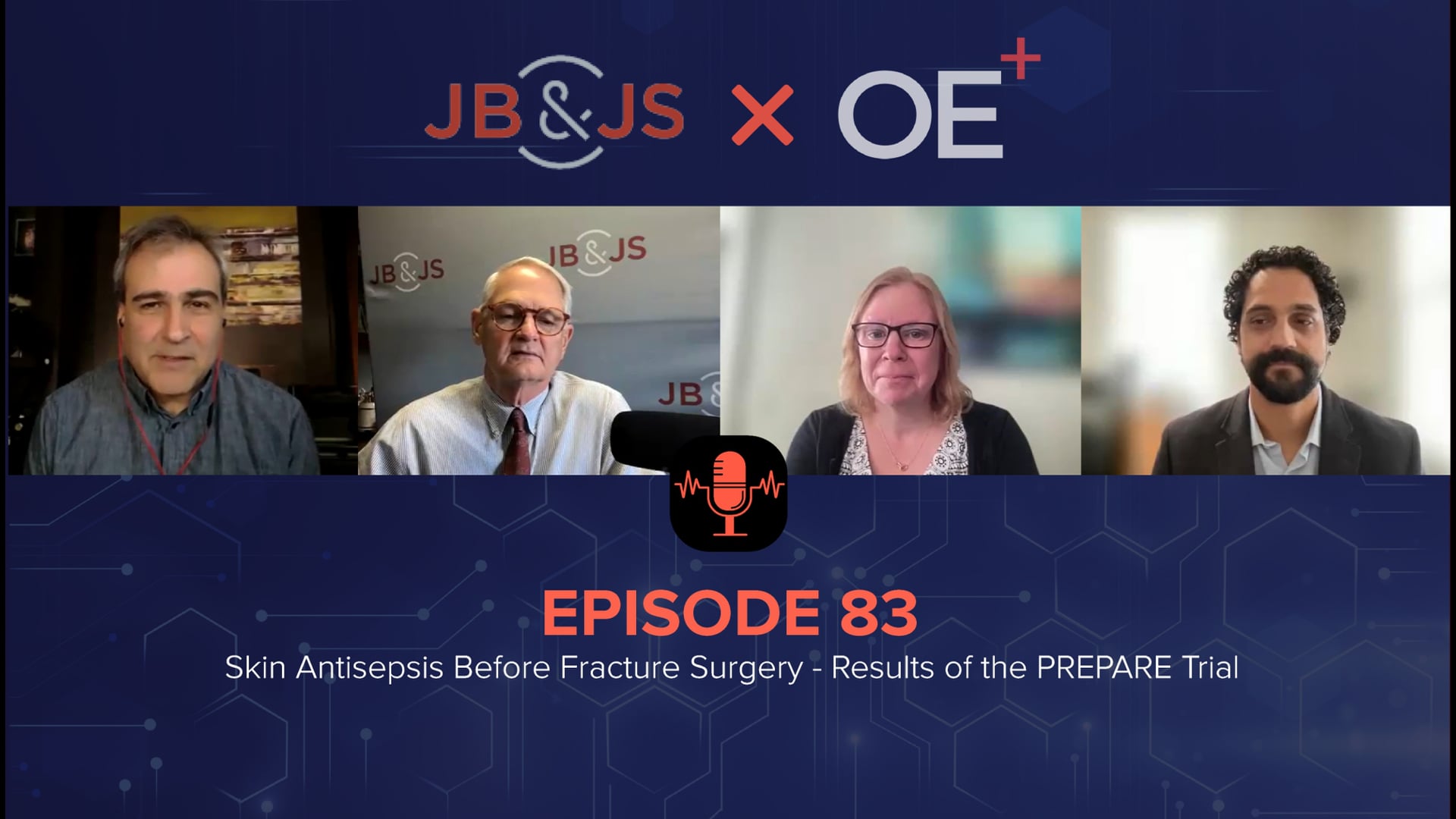
Skin Antisepsis Before Fracture Surgery - Results of the PREPARE Trial.
Unlock this Podcast
You have access to 4 more FREE articles this month.
Click below to unlock and view this Videos
Unlock Now
Critical appraisals of the latest, high-impact randomized controlled trials and systematic reviews in orthopaedics
Access to OrthoEvidence podcast content, including collaborations with the Journal of Bone and Joint Surgery, interviews with internationally recognized surgeons, and roundtable discussions on orthopaedic news and topics
Subscription to The Pulse, a twice-weekly evidence-based newsletter designed to help you make better clinical decisions
Exclusive access to original content articles, including in-house systematic reviews, and articles on health research methods and hot orthopaedic topics
Or upgrade today and gain access to all OrthoEvidencecontent for as little as $1.99 per week.
Already have an account? Log in
Are you affiliated with one of our partner associations?
Click here to gain complimentary access as part your association member benefits!

Gerard Slobogean
MD, MPH
Associate Professor and Director of Clinical Research, University of Maryland
View More


This episode examines a landmark NEJM trial comparing iodine–alcohol and chlorhexidine–alcohol for antisepsis in extremity fracture surgery. The investigators describe a large, pragmatic, cluster-crossover RCT enrolling over 8,500 patients, powered to assess open and closed fractures separately. Iodine–alcohol lowered surgical site infection rates in closed fractures with a meaningful relative reduction, prompting discussion on implementation, behavioral nudges, and stepped-wedge designs to accelerate practice change. The conversation highlights evolving trial methods, stakeholder engagement, and the challenge of translating strong evidence into widespread adoption.

DISCLAIMER
This content found on this page is for informational purposes only and is not intended to be a substitute for professional medical advice, diagnosis, or treatment. If you require medical treatment, always seek the advice of your physician or go to your nearest emergency department. The opinions, beliefs, and viewpoints expressed by the individuals on the content found on this page do not reflect the opinions, beliefs, and viewpoints of OrthoEvidence.
0 of 4 monthly FREE articles unlocked



