






Share


Download


Cite


+ Favorites
Share
Download
Cite
+ Favorites
RESEARCH
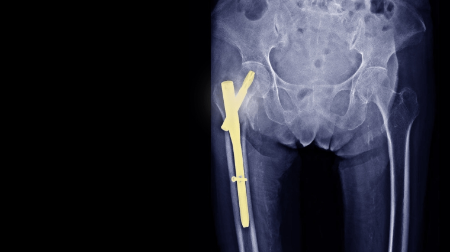
Hitting the Nail on the Head? Evolution of the cephalomedullary nail in the fixation of intertrochanteric hip fractures .
OrthoEvidence Journal (OE Journal) - OE Original
OE Journal. 2020;8(5):1New insights into fixation for intertrochanteric hip fractures highlight how device evolution has reshaped outcomes. Earlier studies raised concerns about higher revision rates with older cephalomedullary nails, but pooled data from randomized trials show that newer-generation designs no longer carry that elevated risk when compared with sliding hip screws. Across multiple timepoints, CMNs consistently produced quicker gains in mobility, with functional advantages emerging as early as 1–2 months and persisting at later follow-up, particularly with modern implants. Variation in study quality and heterogeneity limits absolute certainty, yet the overall trend suggests that improvements in implant engineering and surgical familiarity have narrowed historical gaps and may now favour CMN use for both early and longer-term recovery.
Already have an account? Log in
Part of an association? Click here, you may already have full access!
Unlock the Full original article
You have access to 4 more FREE articles this month.
Click below to unlock and view this original article
Unlock Now
Critical appraisals of the latest, high-impact randomized controlled trials and systematic reviews in orthopaedics
Access to OrthoEvidence podcast content, including collaborations with the Journal of Bone and Joint Surgery, interviews with internationally recognized surgeons, and roundtable discussions on orthopaedic news and topics
Subscription to The Pulse, a twice-weekly evidence-based newsletter designed to help you make better clinical decisions
Exclusive access to original content articles, including in-house systematic reviews, and articles on health research methods and hot orthopaedic topics
Or upgrade today and gain access to all OrthoEvidencecontent for as little as $1.99 per week.
Already have an account? Log in
Are you affiliated with one of our partner associations?
Click here to gain complimentary access as part your association member benefits!



0 of 4 monthly FREE articles unlocked



