










SHOULDER & ELBOW
Biceps Tenodesis Versus Tenotomy in the Treatment of Lesions of the Long Head of the Biceps Tendon in Patients Undergoing Arthroscopic Shoulder Surgery: A Prospective Double-Blinded Randomized Controlled Trial
 Ce rapport a été vérifié
par un ou plusieurs auteurs de la
publication originale.
Ce rapport a été vérifié
par un ou plusieurs auteurs de la
publication originale.
 Cette étude a été identifiée comme étant potentiellement à fort impact.
L'indicateur High Impact de l'ENP, basé sur l'IA, estime l'influence qu'un article est susceptible d'avoir en intégrant des signaux provenant à la fois de la revue dans laquelle il est publié et du contenu scientifique de l'article lui-même.
Développé à l'aide d'un traitement du langage naturel de pointe, le modèle High Impact de l'ENP prédit avec plus de précision les futures citations d'une étude que le seul facteur d'impact de la revue.
Cela permet d'identifier plus tôt les recherches cliniquement significatives et aide les lecteurs à se concentrer sur les articles les plus susceptibles de façonner la pratique future.
Cette étude a été identifiée comme étant potentiellement à fort impact.
L'indicateur High Impact de l'ENP, basé sur l'IA, estime l'influence qu'un article est susceptible d'avoir en intégrant des signaux provenant à la fois de la revue dans laquelle il est publié et du contenu scientifique de l'article lui-même.
Développé à l'aide d'un traitement du langage naturel de pointe, le modèle High Impact de l'ENP prédit avec plus de précision les futures citations d'une étude que le seul facteur d'impact de la revue.
Cela permet d'identifier plus tôt les recherches cliniquement significatives et aide les lecteurs à se concentrer sur les articles les plus susceptibles de façonner la pratique future.
OrthoEvidence Journal (OE Journal) - ACE Report
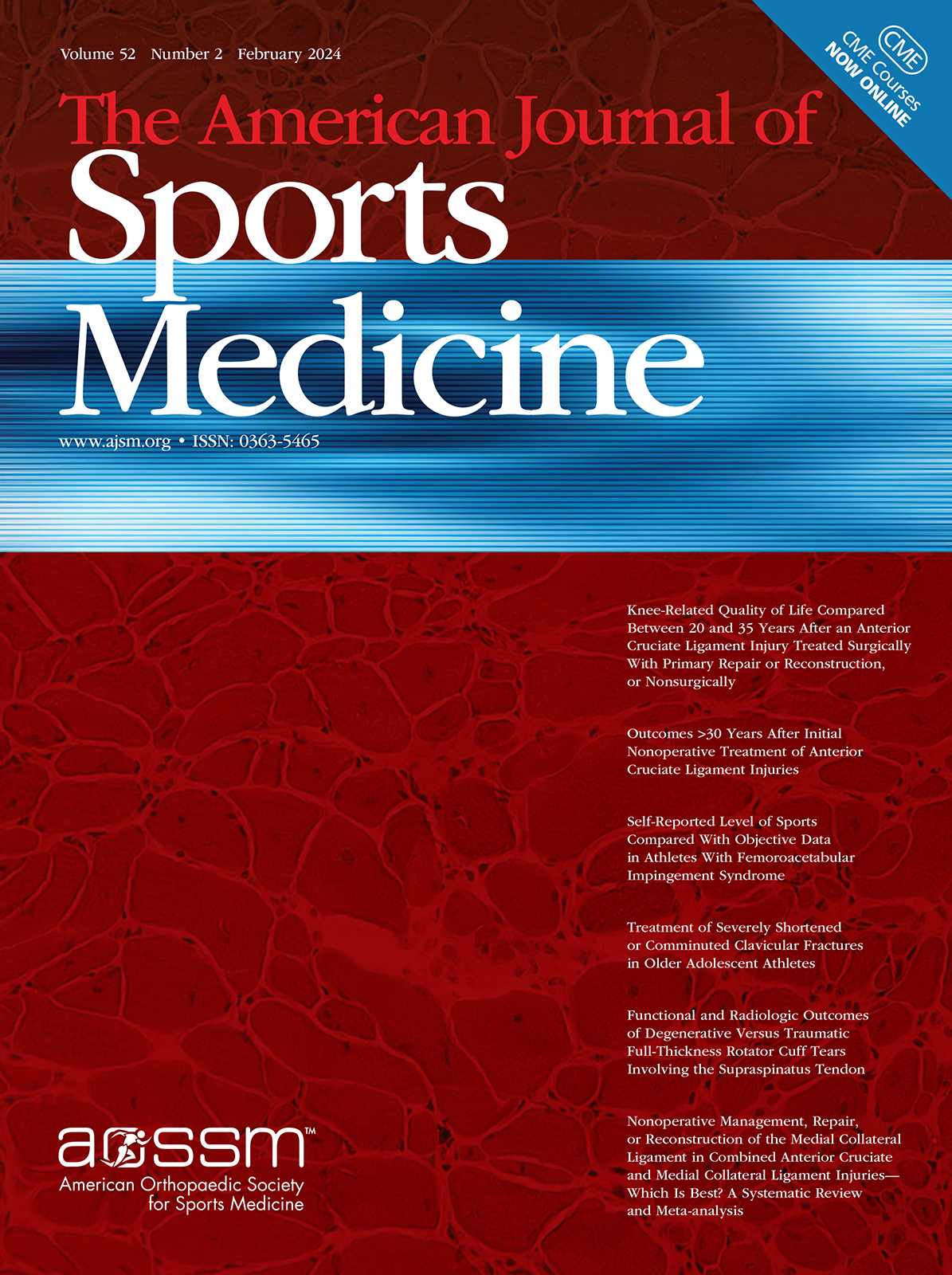
OE Journal. 2021;9(4):15 Am J Sports Med . 2020 May;48(6):1439-1449Résumé de l'étude
One hundred and fourteen patients scheduled to undergo arthroscopic shoulder surgery to treat peri-operatively confirmed lesion of the long head of the biceps tendon were randomized to undergo a bicep tenodesis (n=57) or tenotomy (n=57). The primary outcome of interest was disease specific progression measured by the American Shoulder and Elbow Surgeons (ASES) at 3, 6, 12, and 24months follow-up. Secondary outcomes of interest included time of surgery, shoulder function evaluated by the Western Ontario Rotator Cuff Index (WORC) score, shoulder and elbow strength, incidence of complications, incidence of revision surgery, pain evaluated using the Visual Analogue Scale (VAS), severity of cramping on a VAS, and incidence of a Popeye deformity. All secondary outcomes were measured at 3, 6, 12, and 24 months follow-up except for incidence of Popeye deformity, which was evaluated only and 3 and 24 months. The incidence of complications and revision surgery was evaluated at 24 months. Moreover, a sub-group analysis was conducted by tenodesis type for outcomes including ASES, WORC, VAS pain, VAS cramping, and strength of the elbow and shoulder at 24 months follow-up. The results of this randomized controlled trial revealed that no statistically significant differences were observed for any of the outcomes at any of the timepoints (p>0.05 for all), except for the incidence of Popeye deformity. Popeye deformity was statistically significantly less frequent in the tenodesis group vs the tenotomy group (11.4% vs. 39%, p=0.003) at 3 months follow-up. Furthermore, the same pattern was demonstrated at 24 months follow-up, with 10% in the tenodesis group and 33% in the tenotomy group reporting popeye deformity (p=0.016). 4 patients in the tenodesis group and 5 patients in the tenotomy group required revision surgery. Two patients in the tenotomy group developed adhesive capsulitis and 1 patient developed postoperative capsulitis. The subgroup analysis did not reveal any statistical significant different between the 2 groups for any of the outcomes (p>0.05 for all).
Débloquez le rapport complet du CAE
Vous avez accès à 4 plus d'articles GRATUITS ce mois-ci.
Cliquez ci-dessous pour déverrouiller et visionner ce ACE Reports
Déverrouillez maintenant
Évaluations critiques des derniers essais contrôlés randomisés à fort impact et des revues systématiques en orthopédie
Accès au contenu des podcasts OrthoEvidence, y compris les collaborations avec le Journal of Bone and Joint Surgery, les entretiens avec des chirurgiens de renommée internationale et les tables rondes sur l'actualité et les sujets orthopédiques.
Abonnement à The Pulse, une lettre d'information bihebdomadaire fondée sur des données probantes, conçue pour vous aider à prendre de meilleures décisions cliniques.
Accès exclusif à des articles au contenu original, y compris des revues systématiques internes et des articles sur les méthodes de recherche en santé et les sujets d'actualité en orthopédie.
Ou mettez votre compte à niveau dès aujourd'hui et accédez à tout le contenu d'OrthoEvidence pour seulement 1,99 $ par semaine.
Vous avez déjà un compte ? Se connecter
Vous êtes affilié à l'une de nos associations partenaires ?
Cliquez ici pour bénéficier d'un accès gratuit dans le cadre des avantages réservés aux membres de votre association !


Abonnez-vous à "Le pouls"
L'orthopédie fondée sur des données probantes directement dans votre boîte de réception. S'ABONNER
0 de 4 articles mensuels GRATUITS débloqués



