










ARTHROPLASTY
Periarticular Knee Injection With Liposomal Bupivacaine and Continuous Femoral Nerve Block for Postoperative Pain Management After Total Knee Arthroplasty: A Randomized Controlled Trial
OrthoEvidence Journal (OE Journal) - ACE Report
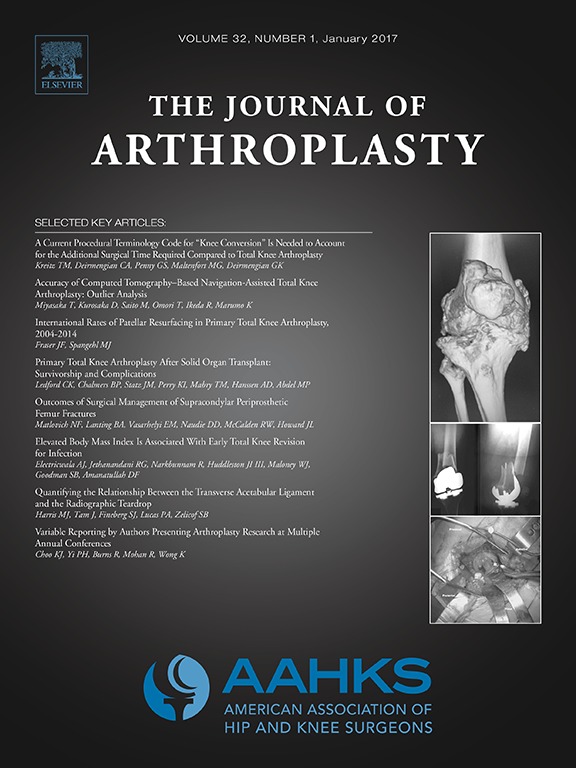
OE Journal. 2019;7(8):4 J Arthroplasty. 2019 Mar;34(3):495-500.65 patients scheduled for a unilateral total knee arthroplasty were randomized to receive a continuous femoral nerve block (FNB) with bupivacaine or a peri-articular injection with liposomal bupivacaine (EXPAREL). The primary outcome of interest was the pain intensity during maximal knee flexion, specifically at 24 hours. Secondary outcomes included pain intensity at rest, during movement and during axial load, knee flexion, proportion of patients requiring knee immobilization during physical therapy, time to first use of patient controlled analgesia, narcotic consumption, post-operative nausea and vomiting, patient satisfaction, as well as peak and mean serum bupivacaine concentrations. Follow up was performed up to 72 hours post-operation. The results from this study found no significant differences in pain scores at rest, during motion, or during maximal flexion at all time points. Pain scores were significantly higher during axial load at 24 hours in the liposomal bupivacaine group. Time to first use of patient controlled analgesia, as well as the proportion of patients requiring knee immobilization during physical therapy at 24 hours, was significantly favourable in the liposomal bupivacaine group. Lastly, knee flexion range of motion at 48 hours was significantly favourable in the continuous femoral nerve block group. Otherwise, there were no significant differences between groups in the remaining outcomes.
Desbloqueie o relatório completo da ACE
Tem acesso a 4 mais artigos GRATUITOS este mês.
Clique abaixo para desbloquear e ver este ACE Reports
Desbloqueie agora
Avaliações críticas dos mais recentes ensaios clínicos aleatórios de alto impacto e revisões sistemáticas em ortopedia
Acesso ao conteúdo do podcast OrthoEvidence, incluindo colaborações com o Journal of Bone and Joint Surgery, entrevistas com cirurgiões reconhecidos internacionalmente e discussões em mesa redonda sobre notícias e tópicos ortopédicos
Subscrição do The Pulse, um boletim informativo duas vezes por semana baseado em evidências, concebido para o ajudar a tomar melhores decisões clínicas
Acesso exclusivo a artigos de conteúdo original, incluindo revisões sistemáticas internas e artigos sobre métodos de investigação em saúde e tópicos ortopédicos importantes
Ou actualize hoje e obtenha acesso a todo o conteúdo da OrthoEvidence por apenas $1,99 por semana.
Já tem uma conta? Inicie sessão
Está afiliado a uma das nossas associações parceiras?
Clique aqui para obter acesso gratuito como parte dos benefícios de membro da sua associação!


Subscreva a "O Pulso"
Ortopedia baseada em evidências diretamente para a sua caixa de correio. SUBSCREVA-SE
0 de 4 artigos mensais GRATUITOS desbloqueados



