










ARTHROPLASTY
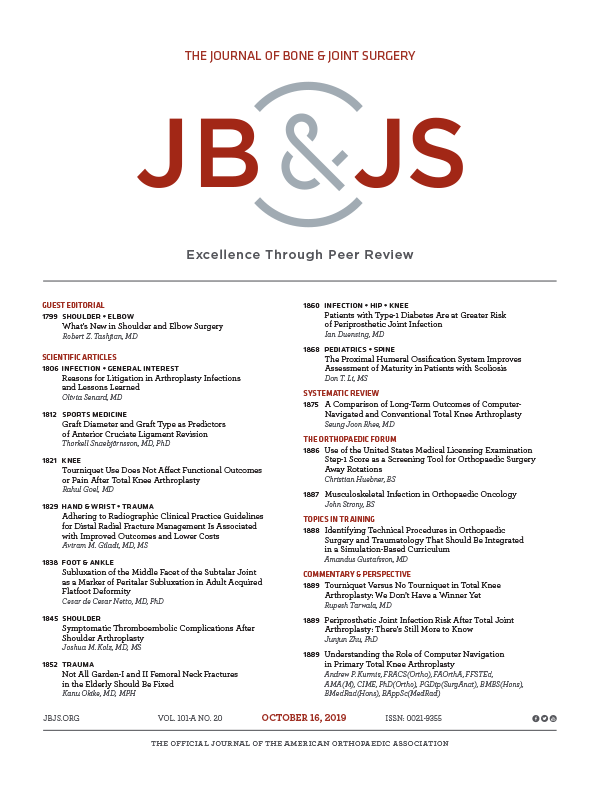
Comparison of Intravenous and Periarticular Administration of Corticosteroids in Total Knee Arthroplasty: A Prospective, Randomized Controlled Study
 تم التحقق من هذا التقرير
من قبل واحد أو أكثر من مؤلفي
المنشور الأصلي.
تم التحقق من هذا التقرير
من قبل واحد أو أكثر من مؤلفي
المنشور الأصلي.
 تم تحديد هذه الدراسة على أنها ذات تأثير كبير محتمل.
يقدّر مقياس التأثير العالي الذي يعتمد على الذكاء الاصطناعي من OE التأثير المحتمل لورقة بحثية ما من خلال دمج إشارات من كل من المجلة التي نُشرت فيها والمحتوى العلمي للمقالة نفسها.
تم تطوير نموذج OE High Impact باستخدام أحدث تقنيات معالجة اللغة الطبيعية، ويتنبأ نموذج OE High Impact بدقة أكبر بأداء الاقتباس المستقبلي للدراسة أكثر من معامل تأثير المجلة وحده.
وهذا يتيح التعرف المبكر على الأبحاث ذات المغزى السريري ويساعد القراء على التركيز على المقالات التي من المرجح أن تشكل الممارسة المستقبلية.
تم تحديد هذه الدراسة على أنها ذات تأثير كبير محتمل.
يقدّر مقياس التأثير العالي الذي يعتمد على الذكاء الاصطناعي من OE التأثير المحتمل لورقة بحثية ما من خلال دمج إشارات من كل من المجلة التي نُشرت فيها والمحتوى العلمي للمقالة نفسها.
تم تطوير نموذج OE High Impact باستخدام أحدث تقنيات معالجة اللغة الطبيعية، ويتنبأ نموذج OE High Impact بدقة أكبر بأداء الاقتباس المستقبلي للدراسة أكثر من معامل تأثير المجلة وحده.
وهذا يتيح التعرف المبكر على الأبحاث ذات المغزى السريري ويساعد القراء على التركيز على المقالات التي من المرجح أن تشكل الممارسة المستقبلية.
OrthoEvidence Journal (OE Journal) - ACE Report
OE Journal. 2021;9(6):5 J Bone Joint Surg Am. 2021 Feb 17;103(4): 319-325ملخص الدراسة
One hundred patients with knee osteoarthritis (OA) scheduled for a unilateral total knee arthroplasty (TKA) were randomized to receive an intra-articular injection of dexamethasone (n=50) or peri-articular injection of triamcinolone acetonide (n=50). Outcomes of interest included the following: pain which was evaluated using the Numeric Rating Scale (NRS) at rest and during walking, nausea measured on NRS, incidence of vomiting, mean number of uses of rescue analgesia, number of patients with a fever, and mean number of uses of metoclopramide. Furthermore, inflammatory and serum markers were measured including levels of interleukin-6 (IL-6), C-reactive protein (CRP), and prothrombin fragment 1.2 (PF1.2), fasting blood glucose, and D-dimer. Pain at rest was measured at 4, 8, 16, 24, 48, and 72 hours and 1 week follow-up whereas pain during walking was measured at 24, 48, and 72 hours and 1 week follow-up. The number of uses of metoclopramide and rescue analgesia, and the incidence of vomiting were measured at 24-hours post-surgery. Nausea severity on a NRS was measured at 8, 24, and 48 hours post-surgery. Levels of IL-6 and CRP were measured at 24 and 48 hours, and CRP was measured at 1 week follow-up. Lastly, PF1.2 was only evaluated at 4 hours whereas D-dimer was measured at 24 and 48 hours and 1 week post-surgery. Results revealed that mean NRS pain during rest and pain during walking at 24 hours were statistically significantly reduced in the peri-articular injection group compared to the intravenous injection group(p<0.01 for both). Also, PF1.2 was also statistically significantly higher in the peri-articular injection group vs. the intravenous injection group at 4 hours post-surgery (p=0.006). CRP levels were statistically significantly lower in the intravenous injection group at 24 and 48 hours post-surgery, but statistically significantly higher at 1 week follow-up when compared to the peri-articular injection group (p<0.05 for all). All other outcomes at all other timepoints were not statistically significantly different between the 2 groups (p>0.05 for all). Two cases of deep vein thrombosis were observed in each arm, and no incidence of infection or delayed wound healing were observed in either group.
افتح تقرير ACE الكامل
لديك إمكانية الوصول إلى المزيد من المقالات المجانية هذا الشهر، انقر أدناه لفتح هذا ACE Reports
افتح الآنتقييمات نقدية لأحدث التجارب المعشاة ذات الشواهد عالية التأثير والمراجعات المنهجية في جراحة العظام
الوصول إلى محتوى المدونة الصوتية OrthoEvidence، بما في ذلك التعاون مع مجلة جراحة العظام والمفاصل، ومقابلات مع جراحين معترف بهم دوليًا، ومناقشات المائدة المستديرة حول أخبار وموضوعات جراحة العظام
الاشتراك في النشرة الإخبارية The Pulse، وهي نشرة إخبارية مبنية على الأدلة مرتين أسبوعيًا مصممة لمساعدتك في اتخاذ قرارات سريرية أفضل
إمكانية الوصول الحصري إلى مقالات المحتوى الأصلي، بما في ذلك المراجعات المنهجية الداخلية، ومقالات عن طرق البحث الصحي وموضوعات جراحة العظام الساخنة
أو قم بالترقية اليوم واحصل على إمكانية الوصول إلى جميع محتويات OrthoEvidence مقابل 1.99 دولارًا أمريكيًا في الأسبوع.
هل لديك حساب بالفعل؟ تسجيل الدخول
هل أنت منتسب إلى إحدى الجمعيات الشريكة لنا؟
انقر هنا لتحصل على وصول مجاني كجزء من مزايا عضوية جمعيتك!


0 من 4 مقالات مجانية شهرية غير مقفلة



