










ARTHROPLASTY
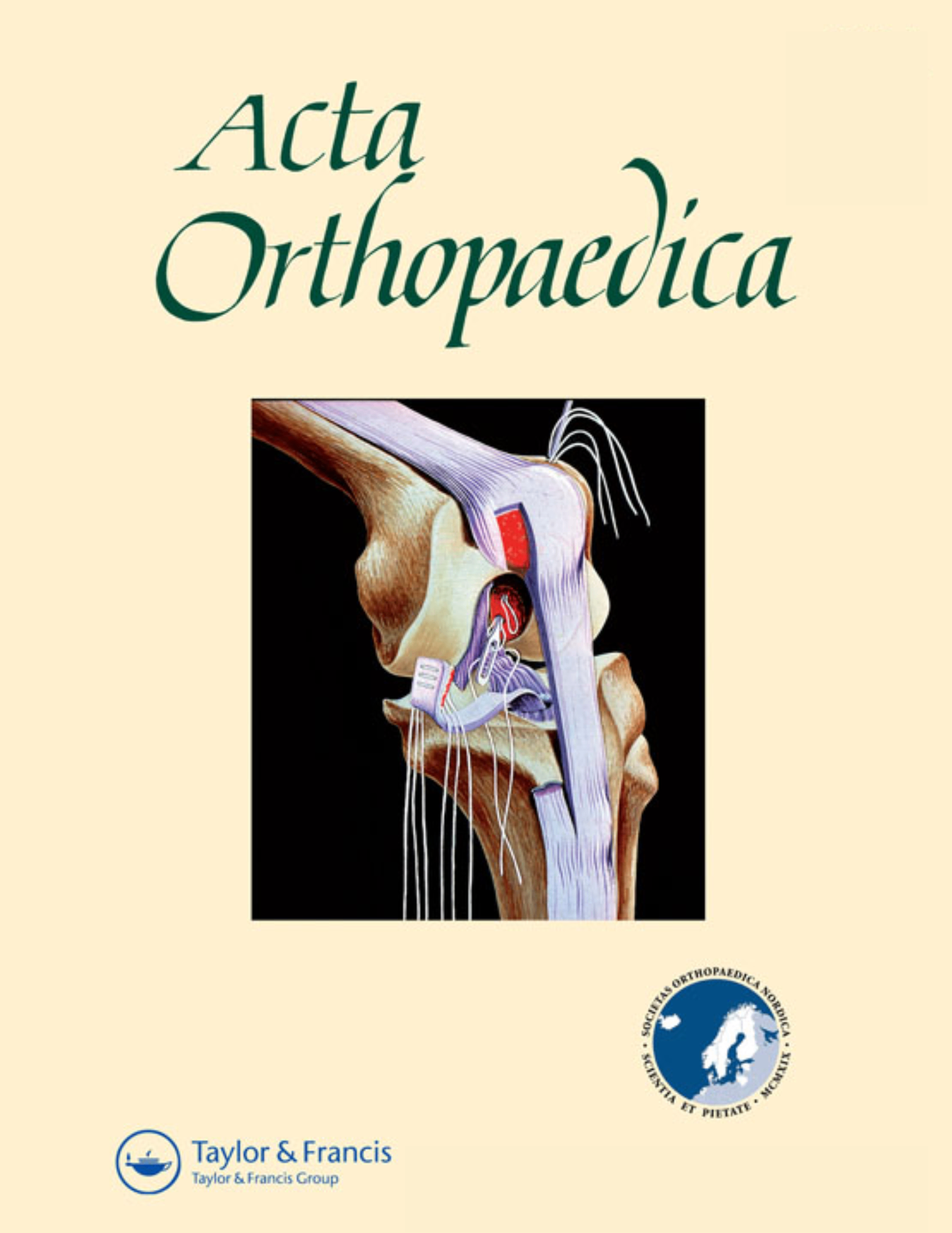
Comparison of peri- and intraarticular analgesia with femoral nerve block after total knee arthroplasty: A randomized clinical trial
 Questo studio è stato identificato come potenzialmente ad alto impatto.
La metrica High Impact di OE, guidata dall'AI, stima l'influenza che un articolo potrebbe avere integrando i segnali della rivista in cui è stato pubblicato e il contenuto scientifico dell'articolo stesso.
Sviluppato utilizzando un'elaborazione del linguaggio naturale all'avanguardia, il modello High Impact di OE prevede in modo più accurato la futura performance citazionale di uno studio rispetto al solo fattore di impatto della rivista.
Ciò consente di riconoscere prima le ricerche clinicamente significative e aiuta i lettori a concentrarsi sugli articoli che hanno maggiori probabilità di influenzare la pratica futura.
Questo studio è stato identificato come potenzialmente ad alto impatto.
La metrica High Impact di OE, guidata dall'AI, stima l'influenza che un articolo potrebbe avere integrando i segnali della rivista in cui è stato pubblicato e il contenuto scientifico dell'articolo stesso.
Sviluppato utilizzando un'elaborazione del linguaggio naturale all'avanguardia, il modello High Impact di OE prevede in modo più accurato la futura performance citazionale di uno studio rispetto al solo fattore di impatto della rivista.
Ciò consente di riconoscere prima le ricerche clinicamente significative e aiuta i lettori a concentrarsi sugli articoli che hanno maggiori probabilità di influenzare la pratica futura.
OrthoEvidence Journal (OE Journal) - ACE Report
OE Journal. 2013;1(11):10 Acta Orthop. 2007 Apr;78(2):172-9.80 patients requiring total knee arthroplasty (TKA) were randomized to receive one of two treatments for managing postoperative TKA pain. One group received a periarticular injection of analgesic followed by intra-articular bolus injections, and the other group underwent a continuous femoral nerve block (a standard treatment for postoperative pain at the institution of study) followed by an infusion of a local anaesthetic. Results showed that the group receiving a periarticular injection of analgesics followed by bolus injections had lower pain scores and better mobilization compared to the group receiving the continuous nerve block treatment.
Was the allocation sequence adequately generated?
Was allocation adequately concealed?
Blinding Treatment Providers: Was knowledge of the allocated interventions adequately prevented?
Blinding Outcome Assessors: Was knowledge of the allocated interventions adequately prevented?
Blinding Patients: Was knowledge of the allocated interventions adequately prevented?
Was loss to follow-up (missing outcome data) infrequent?
Are reports of the study free of suggestion of selective outcome reporting?
Were outcomes objective, patient-important and assessed in a manner to limit bias (ie. duplicate assessors, Independent assessors)?
Was the sample size sufficiently large to assure a balance of prognosis and sufficiently large number of outcome events?
Was investigator expertise/experience with both treatment and control techniques likely the same (ie.were criteria for surgeon participation/expertise provided)?
Sì = 1
Incerto = 0,5
Non rilevante = 0
No = 0
La valutazione dei criteri di segnalazione valuta la trasparenza con cui gli autori riportano le caratteristiche metodologiche e sperimentali dello studio all'interno della pubblicazione. La valutazione è suddivisa in cinque categorie che vengono presentate di seguito.
3/4
Aleatorización
2/4
Medidas de resultado
4/4
Inclusión/Exclusión
4/4
Descripción de la terapia
4/4
Estadística
Detsky AS, Naylor CD, O'Rourke K, McGeer AJ, L'Abbé KA. J Clin Epidemiol. 1992;45:255-65
L'Indice di Fragilità è uno strumento che aiuta l'interpretazione dei risultati significativi, fornendo una misura della forza di un risultato. L'Indice di Fragilità rappresenta il numero di eventi consecutivi che devono essere aggiunti a un risultato dicotomico per rendere il risultato non più significativo. Un numero piccolo rappresenta un risultato più debole, mentre un numero grande rappresenta un risultato più forte.
Perché questo studio era necessario ora?
Postoperative pain management after total knee surgery often involves a combination of different modalities and can cause numerous side effects. Postoperative pain may delay recovery; therefore, alternative methods of analgesia are of interest to researchers. Recent studies suggest that periarticular infiltration of local anaesthetics may be an effective way to reduce postoperative pain. This study examined the effects of using a peri- and intra-articular analgesic treatment compared to femoral nerve block treatment in managing postoperative pain.
Qual era la domanda di ricerca principale?
What is the quality of analgesia and mobilization in patients requiring total knee arthroplasty undergoing peri- and intra-articular injections compared to a continuous femoral nerve block procedure from the end of surgery to postoperative day 3?
Quali erano i risultati importanti?
- More patients in Group I (peri- and intra-articular injection group) (29/39) were able to walk >3 m on the first day post-operation compared to the Group F (continuous femoral nerve block group) (7/37). (P<0.001)
- Group I showed lower pain scores (median: 3 compared to median:5) and opioid consumption (median: 83 mg compared to median: 100 mg) on the first day post-operation compared to Group F. (P=0.001 and P=0.02)
- More patients in Group I were able to hold quadriceps tension for >5 sec (30/37 compared to 18/36) and achieved flexion >90 degrees (24/39 compared to 18/37) compared to Group F on the first day post-operation. (P=0.002 and P=0.3)
- The length of stay between Group I and Group F in the recovery room were similar (Group F: 3.5h; Group I: 3.0h). (p=0.05)
- The median length of stay for Group I was 5 days, and for Group F was 6 days. (P=0.03)
- No significant difference was seen in the number of days each group experienced adverse effects. (P>0.20)
Che cosa devo ricordare di più?
Peri-articular injections of analgesics followed by intra-articular bolus injections can improve postoperative analgesia in patients undergoing total knee arthroplasty in comparison to a femoral nerve block.
Come influenzerà l'assistenza ai miei pazienti?
Use of peri- and intra-articular infiltration and injection may provide better postoperative pain management for patients undergoing total knee arthroplasty. Further studies are required to determine appropriate drug dosage and duration of treatment. It is also uncertain if patients may benefit from subsequent bolus injections after the morning of the first postoperative day.

DISCLAIMER
Il contenuto di questa pagina è solo a scopo informativo e non intende sostituire la consulenza, la diagnosi o il trattamento medico professionale. Se ha bisogno di cure mediche, si rivolga sempre al suo medico o al pronto soccorso più vicino. Le opinioni, le convinzioni e i punti di vista espressi dalle persone sui contenuti presenti in questa pagina non riflettono le opinioni, le convinzioni e i punti di vista di OrthoEvidence.
0 di 4 articoli mensili GRATUITI sbloccati



