










TRAUMA
A comparison between orthogonal and parallel plating methods for distal humerus fractures: a prospective randomized trial
OrthoEvidence Journal (OE Journal) - ACE Report
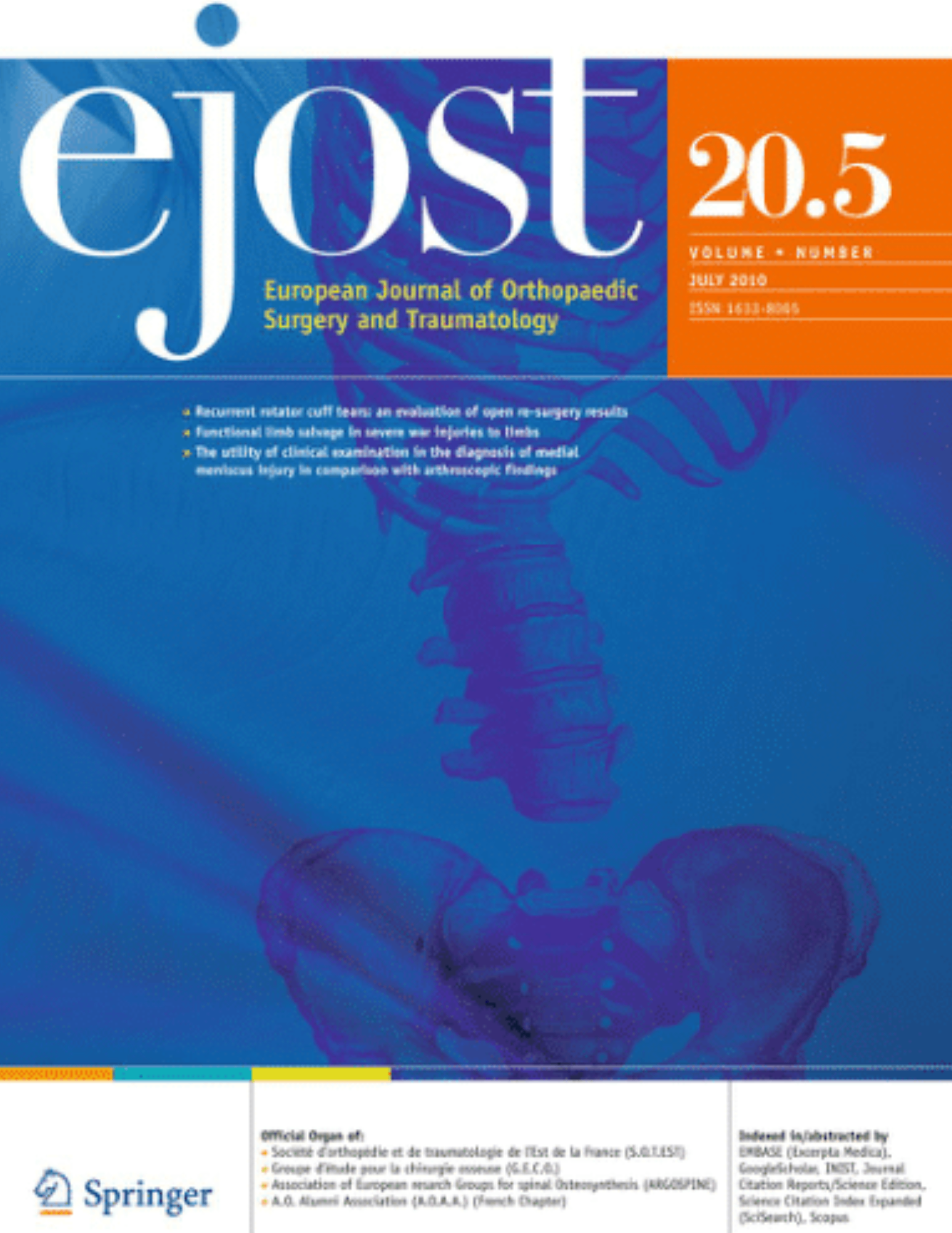
OE Journal. 2013;1(16):51 Eur J Orthop Surg Traumatol. 2013 Aug 7.72 patients with Type C distal humerus fractures were included in this trial and scheduled for treatment using a double-plating surgery. Patients were then randomized to two different plating groups to compare an orthogonal pattern with a locking compression distal humerus plate and a parallel plating pattern. Both plating methods utilized anatomically precontoured plates. At final follow-up there were no non-unions observed in either group. Pain, functional outcomes, complications and heterotrophic ossification rates were similar between the two groups. The results of this study did not identify any advantage of one plating method over another.
Was the allocation sequence adequately generated?
Was allocation adequately concealed?
Blinding Treatment Providers: Was knowledge of the allocated interventions adequately prevented?
Blinding Outcome Assessors: Was knowledge of the allocated interventions adequately prevented?
Blinding Patients: Was knowledge of the allocated interventions adequately prevented?
Was loss to follow-up (missing outcome data) infrequent?
Are reports of the study free of suggestion of selective outcome reporting?
Were outcomes objective, patient-important and assessed in a manner to limit bias (ie. duplicate assessors, Independent assessors)?
Was the sample size sufficiently large to assure a balance of prognosis and sufficiently large number of outcome events?
Was investigator expertise/experience with both treatment and control techniques likely the same (ie.were criteria for surgeon participation/expertise provided)?
نعم = 1
غير مؤكد = 0.5
غير ذي صلة = 0
لا = 0
يقيّم تقييم معايير الإبلاغ الشفافية التي يبلغ بها المؤلفون عن الخصائص المنهجية والتجريبية للتجربة في المنشور. ينقسم التقييم إلى خمس فئات معروضة أدناه.
3/4
Randomização
3/4
Medidas de resultado
4/4
Inclusão/Exclusão
4/4
Descrição do tratamento
3/4
Estatística
Detsky AS, Naylor CD, O'Rourke K, McGeer AJ, L'Abbé KA. J Clin Epidemiol. 1992;45:255-65
مؤشر الهشاشة هو أداة تساعد في تفسير النتائج المهمة، وتوفر مقياسًا لقوة النتيجة. ويمثل مؤشر الهشاشة عدد الأحداث المتتالية التي يجب إضافتها إلى نتيجة ثنائية التفرع لجعل النتيجة غير مهمة. يمثل الرقم الصغير نتيجة أضعف ويمثل الرقم الكبير نتيجة أقوى.
لماذا كانت هناك حاجة لهذه الدراسة الآن؟
Distal humeral fractures can be treated in a number of different ways. Previous investigations have demonstrated that double plate fixation provides adequate stability. Typically this treatment involves two plates placed perpendicular to each other to secure the fractured bone; however stable fixation can also be achieved with a parallel plating method. Currently there is a lack of clinical trials comparing outcomes between orthogonal and parallel plating methods using preconditioned distal humerus plates. This study was required to compare theses differing surgical plating option for the treatment of distal humeral fractures.
ما هو سؤال البحث الرئيسي؟
Does a parallel plating method yield higher success in clinical and radiological outcomes than the standard orthogonal plating method for operating on distal humeral fractures?
ما هي النتائج المهمة؟
- Complications such as ulnar neuropathy, metal failure, and infection occurred regardless of which plating method was used (p>0.05).
- 8 patients in the orthogonal plating group and 13 patients in the parallel plating group needed hardware removal (mean removal date 1.8 +/- 0.6 years after surgery).
- No nonunions were found in any patients (p=1.00).
- Operation time (p=0.68) and the time it took for bony union to form were very similar in both groups (p=0.62).
- There were no differences found in final clinical outcomes including MEPS, DASH, VAS, or elbow ROM scores (p>0.05).
- Heterotrophic ossification occurred in 3 orthogonal plating patients and 2 parallel plating patients (p=0.55).
ما الذي يجب أن أتذكره أكثر؟
Double-plating surgery with precontoured anatomical plates is equally effective when using orthogonal or parallel plating methods based on clinical and radiographic outcomes measured every 3 months for over 2 years.
كيف سيؤثر ذلك على رعاية مرضاي؟
Patients treated for Type C distal humerus fractures undergoing double-plate fixation surgery experienced the same clinical and radiographic outcomes regardless of the plating method used. Further research is required to determine the functional outcomes associated with each method and to examine different plating methods to treat specific fracture patterns.

تنويه
هذا المحتوى الموجود في هذه الصفحة هو لأغراض إعلامية فقط وليس الغرض منه أن يكون بديلاً عن المشورة الطبية المتخصصة أو التشخيص أو العلاج. إذا كنت بحاجة إلى علاج طبي، اطلب دائمًا مشورة طبيبك أو اذهب إلى أقرب قسم طوارئ إليك. الآراء والمعتقدات ووجهات النظر التي يعبر عنها الأفراد في المحتوى الموجود في هذه الصفحة لا تعكس آراء ومعتقدات ووجهات نظر أورثوإيفيدنس.
0 من 4 مقالات مجانية شهرية غير مقفلة



