










PHYSICAL THERAPY & REHAB
Effects of High-Frequency Neuronavigated Repetitive Transcranial Magnetic Stimulation in Fibromyalgia Syndrome: A Double-Blinded, Randomized Controlled Study
OrthoEvidence Journal (OE Journal) - ACE Report
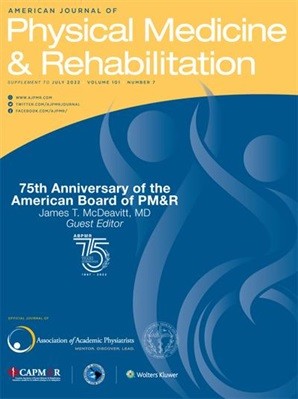
OE Journal. 2021;9(6):18 Am J Phys Med Rehabil. 2021 Feb 1;100(2): 138-146.Study Summary
Twenty patients diagnosed with fibromyalgia were randomized to receive 6 weeks of high-frequency neuro-navigated repetitive transcranial magnetic stimulation (rTMS) treatment (n=10) or sham treatment (n=10) for the improvement of pain. The primary outcome of interest was pain severity measured using a Visual Analogue Scale (VAS). Secondary outcomes of interest included stiffness measured on VAS, the Fibromyalgia Impact Questionnaire (FIQ) for quality of life, the Fatigue Severity Scale (FSS), the Hospital Anxiety and Depression Scale (HADS), and the Addenbrooke Cognitive Examination Revised (ACE-R) total score and associated sub-scores (mini-mental state examination; attention and orientation; memory; verbal fluency; language; visual-spatial abilities). Outcomes were assessed at 2 weeks and 6 weeks follow-up for VAS pain, VAS stiffness, FIQ scores, and FSS scores. Furthermore, HADS and ACE-R total scores and sub-scores were assessed at 6 weeks follow-up only. Also, VAS stiffness scores and FIQ scores were statistically significantly improved from baseline in the rTMS group at 2 weeks follow up (p<0.05 for both). Also, HADS depression scores in the sham group and ACE-R memory scores in the rTMS group were statistically significantly improved from baseline at 6 weeks follow up (p<0.05 for both). Whilst 6 week ACE-R total and attention and orientation scores were statistically significantly in favour of the sham group, no statistically significant differences in the improvement from baseline in all outcomes, at all timepoints, were observed between the two groups.
Unlock the Full ACE Report
You have access to 4 more FREE articles this month.
Click below to unlock and view this ACE Reports
Unlock Now
Critical appraisals of the latest, high-impact randomized controlled trials and systematic reviews in orthopaedics
Access to OrthoEvidence podcast content, including collaborations with the Journal of Bone and Joint Surgery, interviews with internationally recognized surgeons, and roundtable discussions on orthopaedic news and topics
Subscription to The Pulse, a twice-weekly evidence-based newsletter designed to help you make better clinical decisions
Exclusive access to original content articles, including in-house systematic reviews, and articles on health research methods and hot orthopaedic topics
Or upgrade today and gain access to all OrthoEvidencecontent for as little as $1.99 per week.
Already have an account? Log in
Are you affiliated with one of our partner associations?
Click here to gain complimentary access as part your association member benefits!


0 of 4 monthly FREE articles unlocked



