




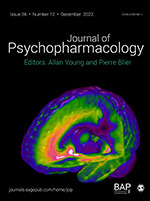






Neuronal correlates of visual and auditory alertness in the DMT and ketamine model of psychosis
 Cette étude a été identifiée comme étant potentiellement à fort impact.
L'indicateur High Impact de l'ENP, basé sur l'IA, estime l'influence qu'un article est susceptible d'avoir en intégrant des signaux provenant à la fois de la revue dans laquelle il est publié et du contenu scientifique de l'article lui-même.
Développé à l'aide d'un traitement du langage naturel de pointe, le modèle High Impact de l'ENP prédit avec plus de précision les futures citations d'une étude que le seul facteur d'impact de la revue.
Cela permet d'identifier plus tôt les recherches cliniquement significatives et aide les lecteurs à se concentrer sur les articles les plus susceptibles de façonner la pratique future.
Cette étude a été identifiée comme étant potentiellement à fort impact.
L'indicateur High Impact de l'ENP, basé sur l'IA, estime l'influence qu'un article est susceptible d'avoir en intégrant des signaux provenant à la fois de la revue dans laquelle il est publié et du contenu scientifique de l'article lui-même.
Développé à l'aide d'un traitement du langage naturel de pointe, le modèle High Impact de l'ENP prédit avec plus de précision les futures citations d'une étude que le seul facteur d'impact de la revue.
Cela permet d'identifier plus tôt les recherches cliniquement significatives et aide les lecteurs à se concentrer sur les articles les plus susceptibles de façonner la pratique future.
OrthoEvidence Journal (OE Journal) - ACE Report
OE Journal. 2022;10(13):5 J Psychopharmacol. 2010 23-Feb;():. 10.1177/0269881109103227Résumé de l'étude
Fourteen healthy participants were included in this randomized, double-blind, cross-over study investigating the cerebral correlates of alertness in the human 5HT2A agonist and N-methyl-D-aspartic acid (NMDA) antagonist models of psychosis. Participants were administered both placebo and active drug [dimethyltryptamine (DMT) or S-ketamine] in two sessions with a 2-4 hour break between both conditions and a washout period of at least 14 days between sessions. Subjective drug effects were assessed using the Hallucinogenic Rating Scale (HRS) and the Abnormer psychischer Zustand (APZ) altered states of consciousness questionnaire. Schizophrenia-like symptoms were assessed using the the Brief Psychiatric Rating Scale (BPRS), the Scale for the Assessment of Positive Symptoms (SAPS), the Scale for the Assessment of Negative Symptoms (SANS), and the Schizophrenia Proneness Instrument – Adult version (SPI-A). Visual and auditory alertness was also measured using a target-detection task with brain images being obtained through fMRI. Study results show that both drugs induced psychotic symptoms similar to those of schizophrenia. The intensity of hallucinogenic effect was similar for both drugs, with visual alterations being more pronounced after DMT. Overall, the administration of DMT led to decreased activation during both visual and auditory modalities, while S-ketamine increased activation during the auditory modality. An analysis of cue benefits revealed an attentional impairment particularly accompanied by DMT administration.
Débloquez le rapport complet du CAE
Vous avez accès à 4 plus d'articles GRATUITS ce mois-ci.
Cliquez ci-dessous pour déverrouiller et visionner ce ACE Reports
Déverrouillez maintenant
Évaluations critiques des derniers essais contrôlés randomisés à fort impact et des revues systématiques en orthopédie
Accès au contenu des podcasts OrthoEvidence, y compris les collaborations avec le Journal of Bone and Joint Surgery, les entretiens avec des chirurgiens de renommée internationale et les tables rondes sur l'actualité et les sujets orthopédiques.
Abonnement à The Pulse, une lettre d'information bihebdomadaire fondée sur des données probantes, conçue pour vous aider à prendre de meilleures décisions cliniques.
Accès exclusif à des articles au contenu original, y compris des revues systématiques internes et des articles sur les méthodes de recherche en santé et les sujets d'actualité en orthopédie.
Ou mettez votre compte à niveau dès aujourd'hui et accédez à tout le contenu d'OrthoEvidence pour seulement 1,99 $ par semaine.
Vous avez déjà un compte ? Se connecter
Vous êtes affilié à l'une de nos associations partenaires ?
Cliquez ici pour bénéficier d'un accès gratuit dans le cadre des avantages réservés aux membres de votre association !


Abonnez-vous à "Le pouls"
L'orthopédie fondée sur des données probantes directement dans votre boîte de réception. S'ABONNER
0 de 4 articles mensuels GRATUITS débloqués



