




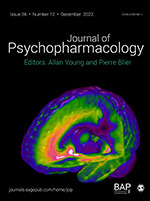






Neuronal correlates of visual and auditory alertness in the DMT and ketamine model of psychosis
 Este estudio ha sido identificado como potencialmente de alto impacto.
La métrica de alto impacto de OE, basada en la inteligencia artificial, estima la influencia que puede tener un artículo integrando señales procedentes tanto de la revista en la que se publica como del contenido científico del propio artículo.
Desarrollado mediante el procesamiento del lenguaje natural más avanzado, el modelo de Alto Impacto de OE predice con mayor precisión el futuro rendimiento de las citas de un estudio que el factor de impacto de la revista por sí solo.
Esto permite reconocer antes las investigaciones clínicamente significativas y ayuda a los lectores a centrarse en los artículos con más probabilidades de configurar la práctica futura.
Este estudio ha sido identificado como potencialmente de alto impacto.
La métrica de alto impacto de OE, basada en la inteligencia artificial, estima la influencia que puede tener un artículo integrando señales procedentes tanto de la revista en la que se publica como del contenido científico del propio artículo.
Desarrollado mediante el procesamiento del lenguaje natural más avanzado, el modelo de Alto Impacto de OE predice con mayor precisión el futuro rendimiento de las citas de un estudio que el factor de impacto de la revista por sí solo.
Esto permite reconocer antes las investigaciones clínicamente significativas y ayuda a los lectores a centrarse en los artículos con más probabilidades de configurar la práctica futura.
OrthoEvidence Journal (OE Journal) - ACE Report
OE Journal. 2022;10(13):5 J Psychopharmacol. 2010 23-Feb;():. 10.1177/0269881109103227Resumen del estudio
Fourteen healthy participants were included in this randomized, double-blind, cross-over study investigating the cerebral correlates of alertness in the human 5HT2A agonist and N-methyl-D-aspartic acid (NMDA) antagonist models of psychosis. Participants were administered both placebo and active drug [dimethyltryptamine (DMT) or S-ketamine] in two sessions with a 2-4 hour break between both conditions and a washout period of at least 14 days between sessions. Subjective drug effects were assessed using the Hallucinogenic Rating Scale (HRS) and the Abnormer psychischer Zustand (APZ) altered states of consciousness questionnaire. Schizophrenia-like symptoms were assessed using the the Brief Psychiatric Rating Scale (BPRS), the Scale for the Assessment of Positive Symptoms (SAPS), the Scale for the Assessment of Negative Symptoms (SANS), and the Schizophrenia Proneness Instrument – Adult version (SPI-A). Visual and auditory alertness was also measured using a target-detection task with brain images being obtained through fMRI. Study results show that both drugs induced psychotic symptoms similar to those of schizophrenia. The intensity of hallucinogenic effect was similar for both drugs, with visual alterations being more pronounced after DMT. Overall, the administration of DMT led to decreased activation during both visual and auditory modalities, while S-ketamine increased activation during the auditory modality. An analysis of cue benefits revealed an attentional impairment particularly accompanied by DMT administration.
Desbloquear el informe ACE completo
Tiene acceso a 4 más artículos GRATUITOS este mes.
Haga clic a continuación para desbloquear y ver este ACE Reports
Desbloquear ahora
Evaluaciones críticas de los últimos ensayos controlados aleatorizados de gran impacto y revisiones sistemáticas en ortopedia
Acceso al contenido del podcast OrthoEvidence, que incluye colaboraciones con el Journal of Bone and Joint Surgery, entrevistas con cirujanos reconocidos internacionalmente y mesas redondas sobre noticias y temas ortopédicos
Suscripción a The Pulse, un boletín quincenal basado en la evidencia y diseñado para ayudarle a tomar mejores decisiones clínicas
Acceso exclusivo a artículos de contenido original, incluidas revisiones sistemáticas propias, y artículos sobre métodos de investigación sanitaria y temas ortopédicos de actualidad
O actualícese hoy mismo y obtenga acceso a todo el contenido de OrthoEvidencepor tan sólo 1,99 $ a la semana.
¿Ya tiene una cuenta? Conectarse
¿Está afiliado a una de nuestras asociaciones colaboradoras?
¡Haga clic aquí para obtener acceso gratuito como parte de los beneficios de miembro de su asociación!


Suscríbase a "El Pulso"
Ortopedia basada en la evidencia directamente a su bandeja de entrada. SUSCRIBIRSE
0 de 4 artículos mensuales GRATIS desbloqueados



