










PHYSICAL THERAPY & REHAB
Combined arm stretch positioning and neuromuscular electrical stimulation during rehabilitation does not improve range of motion, shoulder pain or function in patients after stroke: a randomised trial
OrthoEvidence Journal (OE Journal) - ACE Report
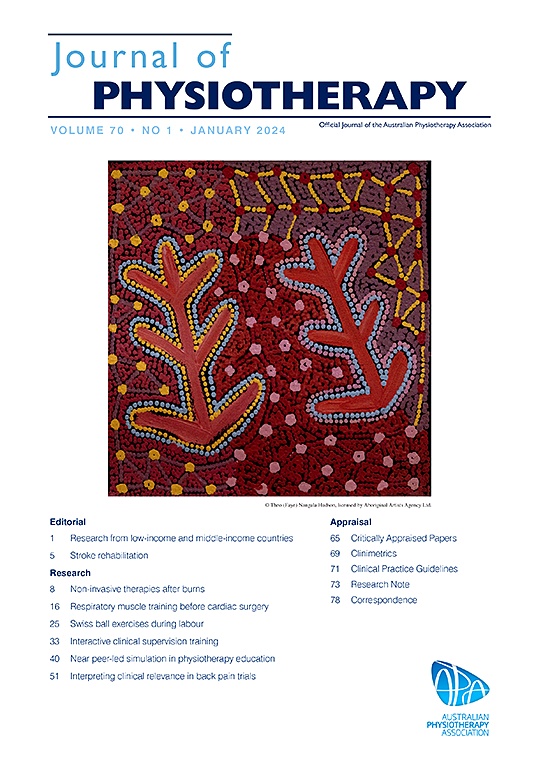
OE Journal. 2014;2(7):19 J Physiother. 2013 Dec;59(4):245-54. doi: 10.1016/S1836-9553(13)70201-746 patients who had sustained a stroke resulting in paralysis or severe paresis in their upper limb, and a poor prognosis for functional recovery were randomized to undergo an 8-week treatment regimen of either neuromuscular electrical stimulation (NMES) and simultaneous passive range of motion stretches, or a sham treatment. This study was conducted in the sub-acute phase of stroke. Upon completion of the treatment period, results indicated that there was no significant difference in arm passive range of motion, shoulder pain, the ability to perform basic arm activities, the severity of hypertonia/spasticity, arm motor control and subluxation between the experimental and control groups.
افتح تقرير ACE الكامل
لديك إمكانية الوصول إلى المزيد من المقالات المجانية هذا الشهر، انقر أدناه لفتح هذا ACE Reports
افتح الآنتقييمات نقدية لأحدث التجارب المعشاة ذات الشواهد عالية التأثير والمراجعات المنهجية في جراحة العظام
الوصول إلى محتوى المدونة الصوتية OrthoEvidence، بما في ذلك التعاون مع مجلة جراحة العظام والمفاصل، ومقابلات مع جراحين معترف بهم دوليًا، ومناقشات المائدة المستديرة حول أخبار وموضوعات جراحة العظام
الاشتراك في النشرة الإخبارية The Pulse، وهي نشرة إخبارية مبنية على الأدلة مرتين أسبوعيًا مصممة لمساعدتك في اتخاذ قرارات سريرية أفضل
إمكانية الوصول الحصري إلى مقالات المحتوى الأصلي، بما في ذلك المراجعات المنهجية الداخلية، ومقالات عن طرق البحث الصحي وموضوعات جراحة العظام الساخنة
أو قم بالترقية اليوم واحصل على إمكانية الوصول إلى جميع محتويات OrthoEvidence مقابل 1.99 دولارًا أمريكيًا في الأسبوع.
هل لديك حساب بالفعل؟ تسجيل الدخول
هل أنت منتسب إلى إحدى الجمعيات الشريكة لنا؟
انقر هنا لتحصل على وصول مجاني كجزء من مزايا عضوية جمعيتك!



0 من 4 مقالات مجانية شهرية غير مقفلة



