










ARTHROPLASTY
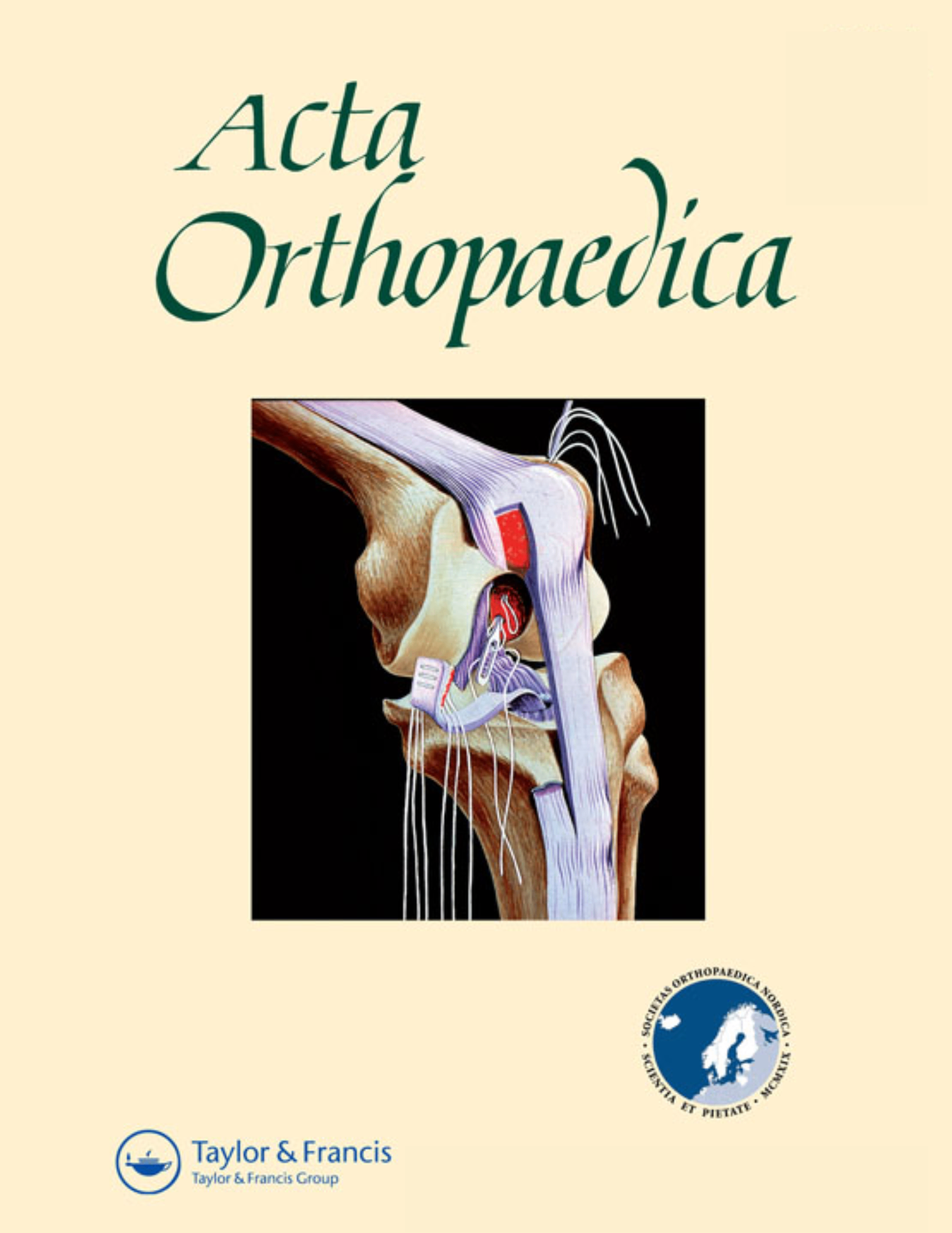
Minimally invasive surgery did not improve outcome compared to conventional surgery following unicompartmental knee arthroplasty using local infiltration analgesia: a randomized controlled trial with 40 patients
 This report has been verified
by one or more authors of the
original publication.
This report has been verified
by one or more authors of the
original publication.
OrthoEvidence Journal (OE Journal) - ACE Report
OE Journal. 2013;1(6):25 Acta Orthop. 2012 Dec;83(6):634-41. doi: 10.3109/17453674.2012.736169. Epub 2012 Oct 840 patients undergoing unicompartmental knee arthroplasty with local anaesthetic infiltration were randomized to receive a minimally invasive or conventional surgical procedure to determine if minimally invasive surgery (MIS) would result in earlier postoperative home-readiness, as well as improved pain and functional outcomes. Follow-up was conducted over 6 months postoperatively. The results indicated that there were no benefits to using MIS techniques over conventional techniques as there were no differences in the outcomes.
Was the allocation sequence adequately generated?
Was allocation adequately concealed?
Blinding Treatment Providers: Was knowledge of the allocated interventions adequately prevented?
Blinding Outcome Assessors: Was knowledge of the allocated interventions adequately prevented?
Blinding Patients: Was knowledge of the allocated interventions adequately prevented?
Was loss to follow-up (missing outcome data) infrequent?
Are reports of the study free of suggestion of selective outcome reporting?
Were outcomes objective, patient-important and assessed in a manner to limit bias (ie. duplicate assessors, Independent assessors)?
Was the sample size sufficiently large to assure a balance of prognosis and sufficiently large number of outcome events?
Was investigator expertise/experience with both treatment and control techniques likely the same (ie.were criteria for surgeon participation/expertise provided)?
はい = 1
不確実=0.5
無関係 = 0
いいえ = 0
報告基準評価では、著者が出版物内で試験の方法論的特徴や試験特性を報告する際の透明性を評価します。評価は以下の5つのカテゴリーに分類されます。
4/4
Randomization
3/4
Outcome Measurements
4/4
Inclusion / Exclusion
4/4
Therapy Description
4/4
Statistics
Detsky AS, Naylor CD, O'Rourke K, McGeer AJ, L'Abbé KA. J Clin Epidemiol. 1992;45:255-65
Fragility Indexは、重要な所見の解釈を助けるツールで、結果の強さの尺度を提供します。Fragility Indexは、その所見が有意でなくなるために、二項対立の結果に追加する必要がある連続した事象の数を表します。数値が小さいほど弱い所見を表し、数値が大きいほど強い所見を表します。
なぜ今この研究が必要なのですか?
Many studies have investigated procedures that focused on improving postoperative pain and mobilization in patients following knee arthroplasty. Minimally invasive surgery (MIS) with local infiltration analgesia (LIA) was developed with respect to these criteria in unicompartmental knee arthroplasty on the basis that it caused less trauma to the soft tissue surrounding the knee and improved patient outcomes. However, the MIS technique is more demanding than conventional methods, and some surgeons hesitate to use it due to its longer learning curve. Moreover, there has been recent interest in the investigation of the importance of MIS with local anaesthetic infiltration, indicating the need for this study.
主な研究課題は何ですか?
Did the use of minimally invasive surgery with local infiltration analgesia in unicompartmental knee arthroplasty lead to improved postoperative outcomes in pain management and mobilization when compared to conventional surgery, assessed over a 6 month period?
重要な知見は?
- Time of fulfillment for discharge criteria (home-readiness) did not statistically differ between groups (p=0.6), with the median discharge 24 (21-71) hours in the MIS group and 24 (21-46) hours in the CON group. Length of hospital stay also did not significantly differ (p=0.7).
- VAS-pain scores at rest and 60 degrees flexion did not significantly differ between groups at any time.
- There was no significant difference in analgesic consumption between groups at any time during follow up. (1 day p=0.2, 2 days p=0.6, 3 days p=0.3, 7 days p=0.2)
- Postoperative functional outcomes of patient satisfaction, Oxford Knee Score, and EQ-5D questionnaire did not significantly differ at any point during follow-up (p>0.05).
- There were numerical differences indicating better maximum knee extension and knee flexion in the MIS group, however these did not reach statistical significance (p>0.05).
- Postoperative mobilization assessed by the "time to up and go" (TUG) test showed no difference between groups at any point during follow up (p>0.05).
- Incidences of adverse events on the first postoperative were similar between groups, but nausea was significant higher in MIS patients on the second postoperative day (p=0.006). No postoperative complications were encountered in either group during the 6-month follow up period
最も覚えておくべきことは?
MIS technique for medial unicompartmental knee arthroplasty with local anaesthetic infiltration did not provide any advantages over a conventional surgical technique with respect to postoperative home-readiness, pain, functional outcome, mobilization and adverse events.
それが私の患者ケアにどのように影響するか?
The operating surgeon should decide whether to use a conventional or an MIS technique for medial unicompartmental knee arthroplasty based on preference and the individual patient characteristics, as both procedures provide similar outcomes. Further clinical assessments with extended follow-up periods may prove useful in examining any differences in long-term outcomes.

免責事項
このページに記載されている内容は、情報提供のみを目的としたものであり、専門的な医療アドバイス、診断、治療の代わりとなるものではありません。治療が必要な場合は、必ず医師の診断を仰ぐか、最寄りの救急外来を受診してください。このページに記載されている内容に関して個人が表明した意見、信念、見解は、OrthoEvidenceの意見、信念、見解を反映するものではありません。
0の4 月間無料記事のロック解除



