










ARTHROPLASTY
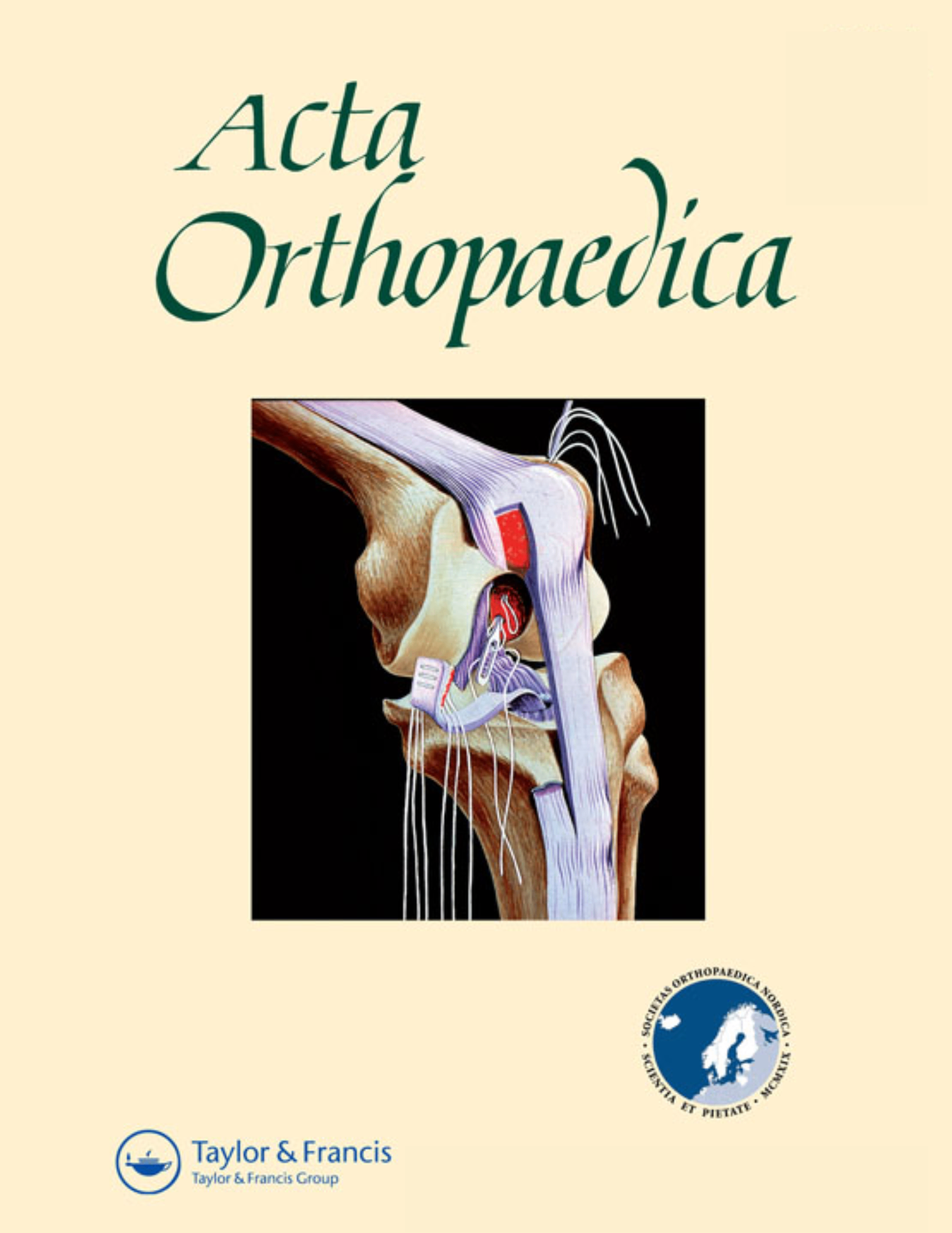
Minimally invasive surgery did not improve outcome compared to conventional surgery following unicompartmental knee arthroplasty using local infiltration analgesia: a randomized controlled trial with 40 patients
 This report has been verified
by one or more authors of the
original publication.
This report has been verified
by one or more authors of the
original publication.
OrthoEvidence Journal (OE Journal) - ACE Report
OE Journal. 2013;1(6):25 Acta Orthop. 2012 Dec;83(6):634-41. doi: 10.3109/17453674.2012.736169. Epub 2012 Oct 840 patients undergoing unicompartmental knee arthroplasty with local anaesthetic infiltration were randomized to receive a minimally invasive or conventional surgical procedure to determine if minimally invasive surgery (MIS) would result in earlier postoperative home-readiness, as well as improved pain and functional outcomes. Follow-up was conducted over 6 months postoperatively. The results indicated that there were no benefits to using MIS techniques over conventional techniques as there were no differences in the outcomes.
Was the allocation sequence adequately generated?
Was allocation adequately concealed?
Blinding Treatment Providers: Was knowledge of the allocated interventions adequately prevented?
Blinding Outcome Assessors: Was knowledge of the allocated interventions adequately prevented?
Blinding Patients: Was knowledge of the allocated interventions adequately prevented?
Was loss to follow-up (missing outcome data) infrequent?
Are reports of the study free of suggestion of selective outcome reporting?
Were outcomes objective, patient-important and assessed in a manner to limit bias (ie. duplicate assessors, Independent assessors)?
Was the sample size sufficiently large to assure a balance of prognosis and sufficiently large number of outcome events?
Was investigator expertise/experience with both treatment and control techniques likely the same (ie.were criteria for surgeon participation/expertise provided)?
Ja = 1
Ungewiss = 0.5
Nicht relevant = 0
Nein = 0
Die Bewertung der Berichtskriterien bewertet die Transparenz, mit der die Autoren die methodischen und studienspezifischen Merkmale der Studie in der Veröffentlichung angeben. Die Bewertung ist in fünf Kategorien unterteilt, die im Folgenden vorgestellt werden.
4/4
Asignación aleatoria
3/4
Criterios de resultado
4/4
Criterios de inclusión/exclusión
4/4
Descripción del tratamiento
4/4
Estadística
Detsky AS, Naylor CD, O'Rourke K, McGeer AJ, L'Abbé KA. J Clin Epidemiol. 1992;45:255-65
Der Fragilitätsindex ist ein Instrument, das bei der Interpretation signifikanter Ergebnisse hilft und ein Maß für die Stärke eines Ergebnisses liefert. Der Fragilitätsindex gibt die Anzahl der aufeinanderfolgenden Ereignisse an, die zu einem dichotomen Ergebnis hinzugefügt werden müssen, damit das Ergebnis nicht mehr signifikant ist. Eine kleine Zahl steht für ein schwächeres Ergebnis und eine große Zahl für ein stärkeres Ergebnis.
Warum wurde diese Studie jetzt benötigt?
Many studies have investigated procedures that focused on improving postoperative pain and mobilization in patients following knee arthroplasty. Minimally invasive surgery (MIS) with local infiltration analgesia (LIA) was developed with respect to these criteria in unicompartmental knee arthroplasty on the basis that it caused less trauma to the soft tissue surrounding the knee and improved patient outcomes. However, the MIS technique is more demanding than conventional methods, and some surgeons hesitate to use it due to its longer learning curve. Moreover, there has been recent interest in the investigation of the importance of MIS with local anaesthetic infiltration, indicating the need for this study.
Was war die wichtigste Forschungsfrage?
Did the use of minimally invasive surgery with local infiltration analgesia in unicompartmental knee arthroplasty lead to improved postoperative outcomes in pain management and mobilization when compared to conventional surgery, assessed over a 6 month period?
Was waren die wichtigsten Ergebnisse?
- Time of fulfillment for discharge criteria (home-readiness) did not statistically differ between groups (p=0.6), with the median discharge 24 (21-71) hours in the MIS group and 24 (21-46) hours in the CON group. Length of hospital stay also did not significantly differ (p=0.7).
- VAS-pain scores at rest and 60 degrees flexion did not significantly differ between groups at any time.
- There was no significant difference in analgesic consumption between groups at any time during follow up. (1 day p=0.2, 2 days p=0.6, 3 days p=0.3, 7 days p=0.2)
- Postoperative functional outcomes of patient satisfaction, Oxford Knee Score, and EQ-5D questionnaire did not significantly differ at any point during follow-up (p>0.05).
- There were numerical differences indicating better maximum knee extension and knee flexion in the MIS group, however these did not reach statistical significance (p>0.05).
- Postoperative mobilization assessed by the "time to up and go" (TUG) test showed no difference between groups at any point during follow up (p>0.05).
- Incidences of adverse events on the first postoperative were similar between groups, but nausea was significant higher in MIS patients on the second postoperative day (p=0.006). No postoperative complications were encountered in either group during the 6-month follow up period
Was sollte ich mir besonders merken?
MIS technique for medial unicompartmental knee arthroplasty with local anaesthetic infiltration did not provide any advantages over a conventional surgical technique with respect to postoperative home-readiness, pain, functional outcome, mobilization and adverse events.
Wie wird sich dies auf die Behandlung meiner Patienten auswirken?
The operating surgeon should decide whether to use a conventional or an MIS technique for medial unicompartmental knee arthroplasty based on preference and the individual patient characteristics, as both procedures provide similar outcomes. Further clinical assessments with extended follow-up periods may prove useful in examining any differences in long-term outcomes.

HAFTUNGSAUSSCHLUSS
Der Inhalt dieser Seite dient nur zu Informationszwecken und ist nicht als Ersatz für professionelle medizinische Beratung, Diagnose oder Behandlung gedacht. Wenn Sie eine medizinische Behandlung benötigen, wenden Sie sich immer an Ihren Arzt oder suchen Sie die nächstgelegene Notaufnahme auf. Die Meinungen, Überzeugungen und Standpunkte, die von den Personen auf dieser Seite geäußert werden, spiegeln nicht die Meinungen, Überzeugungen und Standpunkte von OrthoEvidence wider.
0 von 4 monatliche KOSTENLOSE Artikel freigeschaltet



