










PHYSICAL THERAPY & REHAB
Surgery versus physical therapy for a meniscal tear and osteoarthritis
 This report has been verified
by one or more authors of the
original publication.
This report has been verified
by one or more authors of the
original publication.
OrthoEvidence Journal (OE Journal) - ACE Report
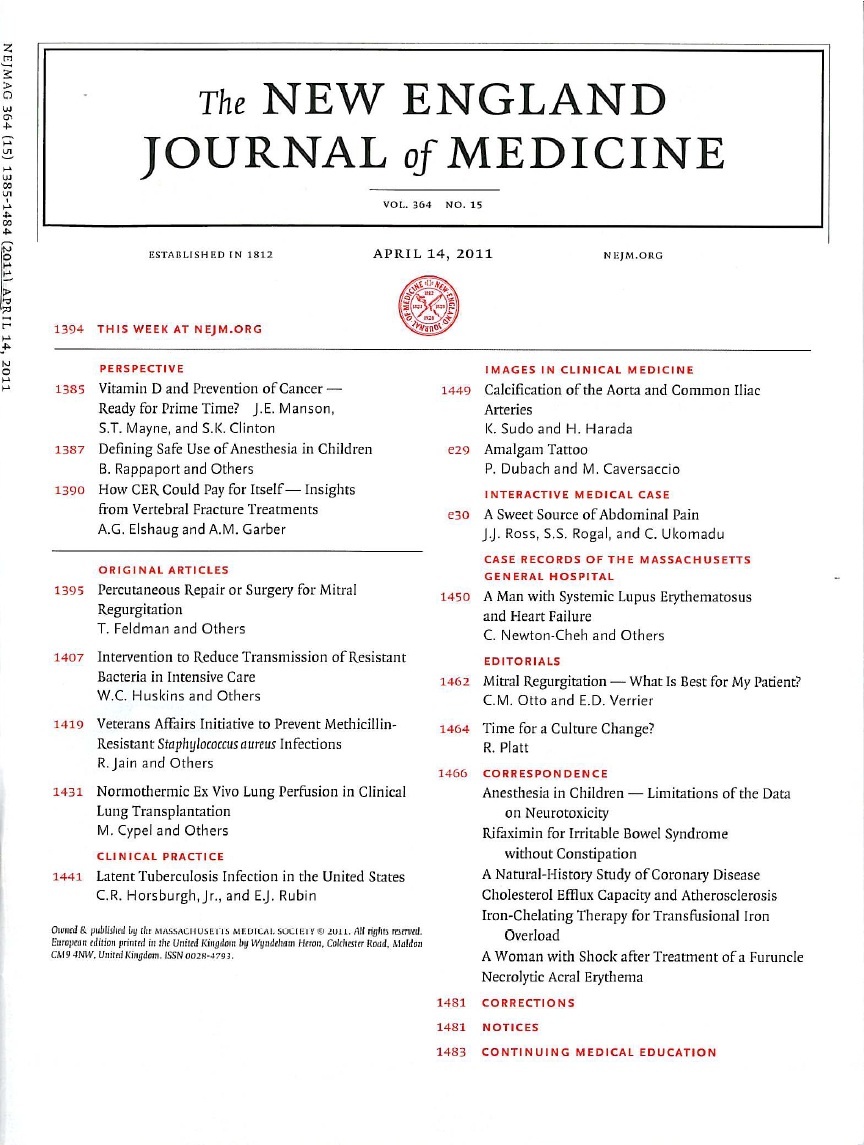
OE Journal. 2018;6(11):8 N Engl J Med. 2013 May 2;368(18):1675-84. doi: 10.1056/NEJMoa1301408. Epub 2013 Mar 18Exclusive Author Interview
Dr. Jeff Katz discusses surgery versus physical therapy for meniscal tears in patients with OA
351 patients with a meniscus tear and knee osteoarthritis (OA) were randomized to either undergo arthroscopic partial meniscectomy (APM) followed by a physical therapy program or physical therapy alone, in order to compare clinical and functional outcomes. Following treatment over a 12 month period, all patients improved similarly in WOMAC physical-function score, KOOS pain score, and SF-36 physical-activity score.
Was the allocation sequence adequately generated?
Was allocation adequately concealed?
Blinding Treatment Providers: Was knowledge of the allocated interventions adequately prevented?
Blinding Outcome Assessors: Was knowledge of the allocated interventions adequately prevented?
Blinding Patients: Was knowledge of the allocated interventions adequately prevented?
Was loss to follow-up (missing outcome data) infrequent?
Are reports of the study free of suggestion of selective outcome reporting?
Were outcomes objective, patient-important and assessed in a manner to limit bias (ie. duplicate assessors, Independent assessors)?
Was the sample size sufficiently large to assure a balance of prognosis and sufficiently large number of outcome events?
Was investigator expertise/experience with both treatment and control techniques likely the same (ie.were criteria for surgeon participation/expertise provided)?
Yes = 1
Uncertain = 0.5
Not Relevant = 0
No = 0
The Reporting Criteria Assessment evaluates the transparency with which authors report the methodological and trial characteristics of the trial within the publication. The assessment is divided into five categories which are presented below.
3/4
Randomizzazione
2/4
Misurazioni degli esiti
4/4
Inclusione / Esclusione
4/4
Descrizione della terapia
2/4
Statistica
Detsky AS, Naylor CD, O'Rourke K, McGeer AJ, L'Abbé KA. J Clin Epidemiol. 1992;45:255-65
The Fragility Index is a tool that aids in the interpretation of significant findings, providing a measure of strength for a result. The Fragility Index represents the number of consecutive events that need to be added to a dichotomous outcome to make the finding no longer significant. A small number represents a weaker finding and a large number represents a stronger finding.
Why was this study needed now?
Meniscal tears in older patients with knee osteoarthritis (OA) are a common occurrence and most often these tears are treated by arthroscopic partial meniscectomy. However, it has also been suggested that meniscal tears may be treated non-surgically through a physical therapy program. Currently, it is unclear which of the two methods provides the best functional outcomes, indicating the need for this study.
What was the principal research question?
Did patients with a meniscal tear and knee OA obtain better functional outcomes when treated with arthroscopic partial meniscectomy followed by physical therapy or physical therapy alone assessed at 12 months?
What were the important findings?
- At 6 months 51 patients (30.2%) in the PT group crossed over to the other group and underwent APM, while 9 patients (5.6%) in the APM group did not undergo the surgical procedure and instead crossed over to the PT group. Between 6 to 12 months, another 8 patients (4.7%) from the PT group crossed over to the APM group.
- The intention-to-treat analysis indicated that from baseline to 6 months WOMAC physical-function scores improved by an average of 20.9 points (95% CI: 17.9 to 23.9) in the APM group, compared to 18.5 points (95% CI: 15.6 to 21.5) in the PT group (Between-group difference: 2.4 points; 95% CI: -1.8 to 6.5). By 12 months both groups continued to improve at similar rates.
- The intention-to-treat analysis indicated that from baseline to 6 months KOOS pain scores decreased by an average of 24.2 points in the APM group, while the PT group decreased by 21.3 points in the PT group (Between-group difference: 2.9 points; 95% CI: -1.2 to 7.0). By 12 months both groups continued to improve at similar rates.
- At 6 months significantly more patients in the APM group had an improvement of at least 8 WOMAC physical function points and had not crossed over into the other group (67.1% of patients), in comparison to the physical therapy group (43.8%) (p=0.001).
- Generally it was observed that patients in the physical therapy group who had crossed over to the APM group had little improvement until the group switch occurred.
- During the 12 month follow-up 5 serious adverse events were reported (3 patients in the APM group versus 2 patients in the physical therapy group) and 28 mild adverse events occurred (15 patients in the APM group versus 13 patients in the physical therapy group). There were no significant differences between the two groups.
What should I remember most?
Results indicated that patients who received physical therapy in addition to arthroscopic partial meniscectomy and those who performed physical therapy alone experienced similar and noticeable improvements in knee function and pain at 6 months and that this finding was reproduced at 12 months. However, it should be noted that 30% of patients who were assigned to physical therapy alone underwent surgery within 6 months.
How will this affect the care of my patients?
Patients with meniscal tears and knee osteoarthritis may choose to either receive physical therapy alone or physical therapy in addition to arthroscopic partial meniscectomy as both treatments provide improvement in knee function and pain. It should be noted that it is unknown whether patients are increasing their risk for progression of osteoarthritis by undergoing arthroscopic partial meniscectomy, compared to those receiving nonsurgical treatment. Hence it is advised that longitudinal evaluation of imaging studies be performed to address this issue.

DISCLAIMER
This content found on this page is for informational purposes only and is not intended to be a substitute for professional medical advice, diagnosis, or treatment. If you require medical treatment, always seek the advice of your physician or go to your nearest emergency department. The opinions, beliefs, and viewpoints expressed by the individuals on the content found on this page do not reflect the opinions, beliefs, and viewpoints of OrthoEvidence.
0 of 4 monthly FREE articles unlocked



