










ARTHROPLASTY
Perioperative local infiltration anesthesia with ropivacaine has no effect on postoperative pain after total hip arthroplasty
OrthoEvidence Journal (OE Journal) - ACE Report
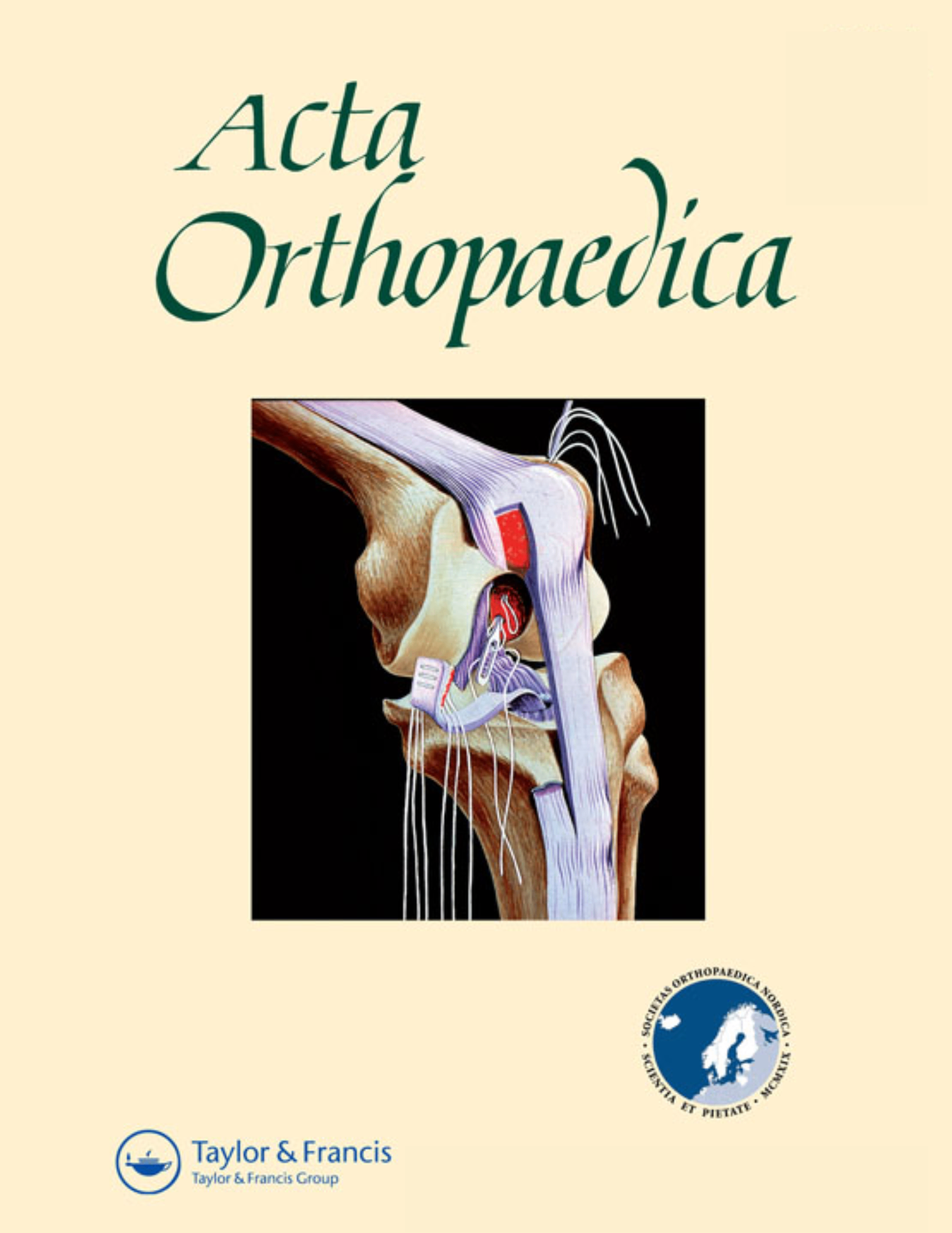
OE Journal. 2016;4(9):10 Acta Orthop. 2015 Dec;86(6):654-8116 patients scheduled to undergo total hip arthroplasty (THA) were randomized to undergo the procedure with or without local infiltration analgesia (LIA) including 0.2% ropivacaine. The purpose of this study was to assess the effectiveness of LIA with ropivacaine (in addition to a multimodal analgesic regimen) on postoperative pain and opioid requirement following THA. The results of this study demonstrated that LIA with ropivacaine did not provide additional analgesic effect and that the consumption of opioids over the first postoperative day was comparable between groups.
Was the allocation sequence adequately generated?
Was allocation adequately concealed?
Blinding Treatment Providers: Was knowledge of the allocated interventions adequately prevented?
Blinding Outcome Assessors: Was knowledge of the allocated interventions adequately prevented?
Blinding Patients: Was knowledge of the allocated interventions adequately prevented?
Was loss to follow-up (missing outcome data) infrequent?
Are reports of the study free of suggestion of selective outcome reporting?
Were outcomes objective, patient-important and assessed in a manner to limit bias (ie. duplicate assessors, Independent assessors)?
Was the sample size sufficiently large to assure a balance of prognosis and sufficiently large number of outcome events?
Was investigator expertise/experience with both treatment and control techniques likely the same (ie.were criteria for surgeon participation/expertise provided)?
Oui = 1
Incertain = 0,5
Non pertinent = 0
Non = 0
L'évaluation des critères de rapport permet d'évaluer la transparence avec laquelle les auteurs rapportent les caractéristiques méthodologiques et les caractéristiques de l'essai dans la publication. L'évaluation est divisée en cinq catégories qui sont présentées ci-dessous.
3/4
Asignación aleatoria
2/4
Criterios de resultado
4/4
Criterios de inclusión/exclusión
4/4
Descripción del tratamiento
4/4
Estadística
Detsky AS, Naylor CD, O'Rourke K, McGeer AJ, L'Abbé KA. J Clin Epidemiol. 1992;45:255-65
L'indice de fragilité est un outil qui aide à l'interprétation des résultats significatifs, en fournissant une mesure de la force d'un résultat. L'indice de fragilité représente le nombre d'événements consécutifs qui doivent être ajoutés à un résultat dichotomique pour que le résultat ne soit plus significatif. Un petit nombre représente un résultat plus faible et un grand nombre un résultat plus fort.
Pourquoi cette étude était-elle nécessaire maintenant ?
Pain management is a primary concern following total hip arthroplasty (THA) as it can affect early postoperative mobilization and rehabilitation. Local infiltration analgesia (LIA) is commonly used as part of a multi-modal analgesia treatment for post-operative pain. However, trials investigating the efficacy LIA with ropivacaine as a part of a multimodal analgesia treatment have been unable to identify additional benefits of its use following THA. The aim of this study was to determine the analgesic effects of LIA with 0.2% ropivacaine through the measurement of pain scores and opioid consumption over the first postoperative day.
Quelle était la principale question de recherche ?
In patients undergoing total hip arthroplasty, did single-shot local infiltration analgesia with 0.2% ropivacaine combined with a multimodal analgesic regimen reduce pain and opioid consumption in comparison to control patients not receiving LIA after 48 hours?
Quels sont les résultats importants ?
- Pain during mobilization in the PACU was not significantly different between groups (3 in both groups , p=0.7). Pain scores during mobilization on the first postoperative day were similar between groups (4 in both groups, p=0.3).
- The median opioid consumption in the PACU was similar between groups. (0 mg [Range: 0-3.1] and 0 mg [Range: 0-5] in the placebo and ropivacaine groups respectively p=0.9). Total oxycodone consumption on the first postoperative day was 20 mg [Range: 10-30] in both groups (p=0.4).
- The median number of hours mobilized was 9 in the placebo group [Range: 7-12] and 9 in the ropivacaine group [Range: 6-11] (p=0.7). The median length of hospital stay was 2 and 3 for the placebo and ropivacaine groups respectively (p=0.5). No statistical significance was noted.
De quoi dois-je me souvenir en priorité ?
Local infiltration analgesia (LIA) with 0.2% ropivacaine did not provide a significant analgesic effect following THA when added to a multimodal analgesic regimen (acetaminophen, NSAID, and glucocorticoid). Additionally, local infiltration analgesia (LIA) with 0.2% ropivacaine did not reduce postoperative opioid consumption or mobilization pain scores.
Comment cela affectera-t-il les soins prodigués à mes patients ?
The results of this study indicate that local infiltration analgesia with 0.2% ropivacaine did not provide an additional analgesic effect following THA during mobilization in the post-anesthesia care unit (PACU) or mobilization one day postoperatively. The investigators noted that several similarly structured RCTs examining the effect of LIA following THA have used different pain treatment modalities, further complicating interpretation and comparison of this study's results. Further studies using larger population sizes and other validated and objective pain outcomes are warranted to substantiate current findings.

AVIS DE NON-RESPONSABILITÉ
Le contenu de cette page est fourni à titre d'information uniquement et n'est pas destiné à remplacer un avis médical, un diagnostic ou un traitement professionnel. Si vous avez besoin d'un traitement médical, demandez toujours l'avis de votre médecin ou rendez-vous au service des urgences le plus proche. Les opinions, croyances et points de vue exprimés par les individus sur le contenu de cette page ne reflètent pas les opinions, croyances et points de vue d'OrthoEvidence.
0 de 4 articles mensuels GRATUITS débloqués



