










HAND & WRIST
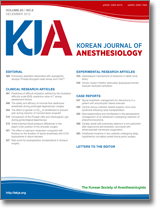
Does intravenous patient-controlled analgesia or continuous block prevent rebound pain following infraclavicular brachial plexus block after distal radius fracture fixation? A prospective randomized controlled trial.
OrthoEvidence Journal (OE Journal) - ACE Report
OE Journal. 2025;13(16):20 Korean J Anesthesiol . 2023 Dec;76(6):559-566.ملخص الدراسة
Sixty-six patients with displaced distal radius fractures treated with volar plate fixation were randomized to a single infraclavicular block (BPB only; n=22), BPB plus opioid-based IV patient-controlled analgesia (PCA) (n=22), or brachial plexus block (BPB) plus continuous infraclavicular block (n=22). The primary outcome was pain (VAS) at 12 hours; secondary outcomes included opioid-equivalent consumption (OEC) at prespecified intervals through 48 hours and cumulatively to two weeks, plus complications. Pain and medication use were recorded at 4, 6, 9, 12, 24, 48 hours and two weeks. Overall, the results showed less rebound pain at 9–12 hours with continuous block versus BPB only, and lower 9–12 hour OEC with either IV PCA or continuous block versus BPB only; however, total two-week OEC was highest with IV PCA. In short, continuous infraclavicular infusion mitigated rebound pain without increasing overall opioid use, whereas IV PCA controlled early pain but increased total opioid exposure.
افتح تقرير ACE الكامل
لديك إمكانية الوصول إلى المزيد من المقالات المجانية هذا الشهر، انقر أدناه لفتح هذا ACE Reports
افتح الآنتقييمات نقدية لأحدث التجارب المعشاة ذات الشواهد عالية التأثير والمراجعات المنهجية في جراحة العظام
الوصول إلى محتوى المدونة الصوتية OrthoEvidence، بما في ذلك التعاون مع مجلة جراحة العظام والمفاصل، ومقابلات مع جراحين معترف بهم دوليًا، ومناقشات المائدة المستديرة حول أخبار وموضوعات جراحة العظام
الاشتراك في النشرة الإخبارية The Pulse، وهي نشرة إخبارية مبنية على الأدلة مرتين أسبوعيًا مصممة لمساعدتك في اتخاذ قرارات سريرية أفضل
إمكانية الوصول الحصري إلى مقالات المحتوى الأصلي، بما في ذلك المراجعات المنهجية الداخلية، ومقالات عن طرق البحث الصحي وموضوعات جراحة العظام الساخنة
أو قم بالترقية اليوم واحصل على إمكانية الوصول إلى جميع محتويات OrthoEvidence مقابل 1.99 دولارًا أمريكيًا في الأسبوع.
هل لديك حساب بالفعل؟ تسجيل الدخول
هل أنت منتسب إلى إحدى الجمعيات الشريكة لنا؟
انقر هنا لتحصل على وصول مجاني كجزء من مزايا عضوية جمعيتك!



0 من 4 مقالات مجانية شهرية غير مقفلة



