










HAND & WRIST
Costs analysis and comparison of usefulness of acute MRI and 2 weeks of cast immobilization for clinically suspected scaphoid fractures
OrthoEvidence Journal (OE Journal) - ACE Report
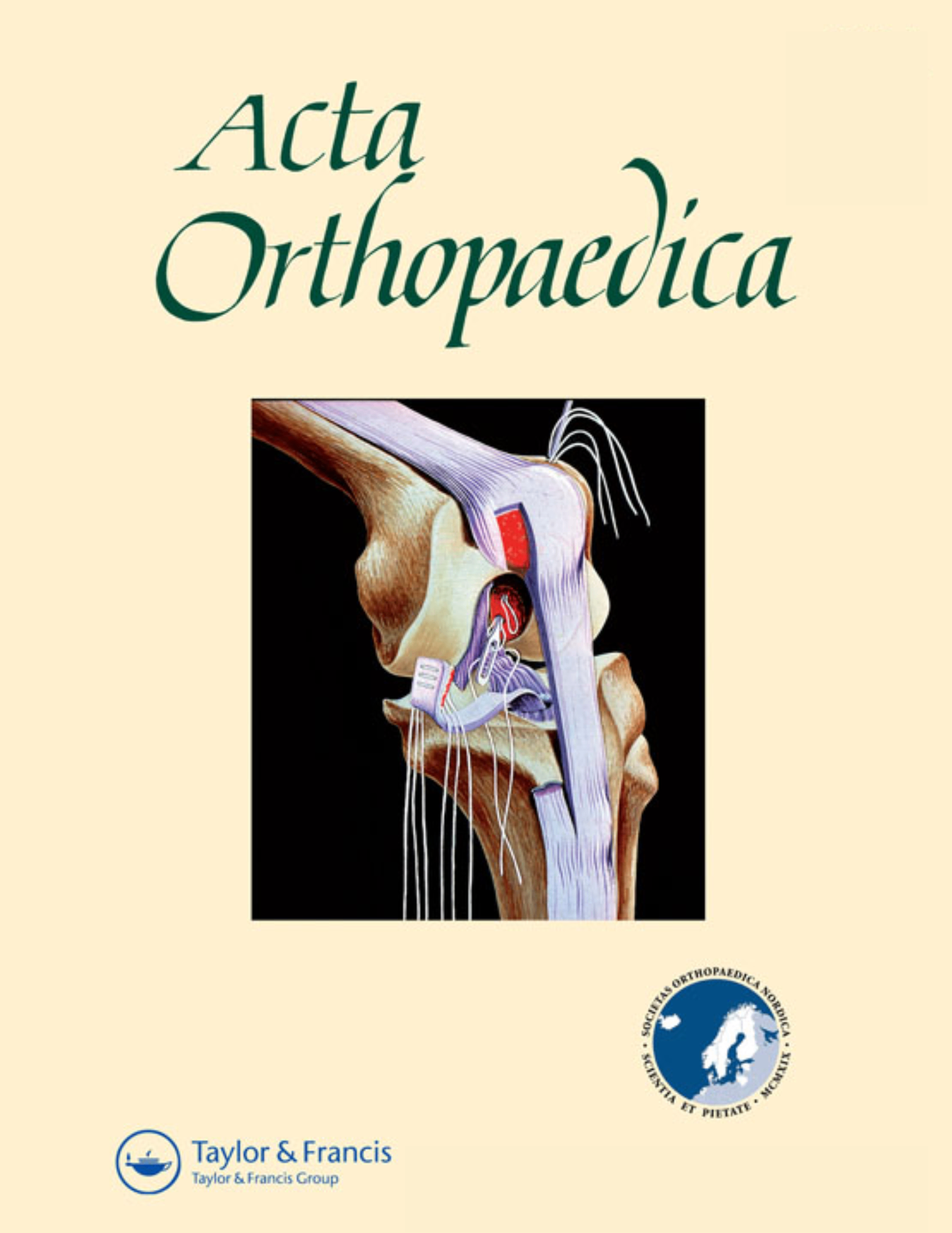
OE Journal. 2016;4(14):15 Acta Orthop. 2015 Jun;86(3):303-9125 Norwegian patients, within a week of having acute wrist trauma requiring radiographic examination, were pseudo-randomized (based on the date of admission) to receive either early MRI treatment or standard treatment. The purpose of the study was to determine how early MRI compares with conventional management in treating suspected scaphoid fractures from a cost and efficacy perspective. Results indicated that the number of days absent from work and in a cast was significantly lower in the MRI group in patients without fractures, and no major difference was noted in the cost-minimization analysis.
Was the allocation sequence adequately generated?
Was allocation adequately concealed?
Blinding Treatment Providers: Was knowledge of the allocated interventions adequately prevented?
Blinding Outcome Assessors: Was knowledge of the allocated interventions adequately prevented?
Blinding Patients: Was knowledge of the allocated interventions adequately prevented?
Was loss to follow-up (missing outcome data) infrequent?
Are reports of the study free of suggestion of selective outcome reporting?
Were outcomes objective, patient-important and assessed in a manner to limit bias (ie. duplicate assessors, Independent assessors)?
Was the sample size sufficiently large to assure a balance of prognosis and sufficiently large number of outcome events?
Was investigator expertise/experience with both treatment and control techniques likely the same (ie.were criteria for surgeon participation/expertise provided)?
Sí = 1
Incierto = 0,5
No relevante = 0
No = 0
La evaluación de los criterios de información evalúa la transparencia con la que los autores informan de las características metodológicas y del ensayo dentro de la publicación. La evaluación se divide en cinco categorías que se presentan a continuación.
1/4
Randomization
3/4
Outcome Measurements
4/4
Inclusion / Exclusion
4/4
Therapy Description
3/4
Statistics
Detsky AS, Naylor CD, O'Rourke K, McGeer AJ, L'Abbé KA. J Clin Epidemiol. 1992;45:255-65
El Índice de Fragilidad es una herramienta que ayuda en la interpretación de hallazgos significativos, proporcionando una medida de fuerza para un resultado. El Índice de Fragilidad representa el número de eventos consecutivos que es necesario añadir a un resultado dicotómico para que el hallazgo deje de ser significativo. Un número pequeño representa un hallazgo más débil y un número grande un hallazgo más fuerte.
¿Por qué se necesitaba ahora este estudio?
Conventional treatment of occult scaphoid fractures involves wrist immobilization with radiographic reassessment 2 weeks later and studies have shown that 4/5 patients are immobilized unnecessarily. Acute MRI of the wrist has become a proficient method for ruling out injuries otherwise over treated and has been shown to reduce immobilization time in patients with suspected scaphoid fractures. However, no consensus was present at the time of this study about whether early MRI in suspected scaphoid fractures saves money as compared with conventional management. Thus the present study sought to determine the difference between the two treatments from an economic perspective in a Norwegian setting.
¿Cuál era la pregunta principal de la investigación?
How does early MRI compare with traditional radiographs and conventional management in the treatment of clinically suspected scaphoid fractures, from a cost and efficacy standpoint, in Norwegian patients?
¿Cuáles fueron los hallazgos importantes?
- 7 scaphoid fractures were diagnosed in the MRI group and 4 in the control group with the number of other fractures also being higher in the MRI group than the control (n=22 vs. n=8)
- The numbers of consultations per patient were nearly identical between groups, and significant differences were found between the numbers of radiographs, the number of MRIs, and the numbers of elastic bandages used in the 2 groups
- The total number of days using a cast was lower for patients in the MRI group compared to the control group (MD= 4.6, p=0.05) and significantly lower in the MRI group in patients without fracture (MD= 13, p<0.005, 95% CI [11-15]) or without scaphoid fracture (MD= 6.5, p<0.005, 95% CI [3-10])
- In patients diagnosed with either scaphoid fractures (MD= 2.4, p=0.8) or other fractures (MD= 2.7, p=0.6), the number of days using a cast was similar
- Number of days of absence from work was not significantly different, yet for patients with no fractures, significantly fewer sick leave days were found for the MRI group (MD= 8 (3-13), p=0.002)
- No significant difference was present in the sum of all direct costs in the 2 groups (MRI group: 30,160 euros, Control group: 27, 997 euros) and the average direct medical cost of detecting/treating a patient with any occult wrist fracture was 1,160 euros in the MRI group and 2,545 euros in the control group
- Similar indirect costs were noted for the 2 groups (MRI group: 147,404 euros, Control group: 186,550 euros), yet in patients in paid work with no fracture indirect cost in the MRI group was less than half of the control
- Overall costs were marginally different between groups (MRI group: 177,564 euros, Control group: 214,548 euros)
¿Qué es lo que más debo recordar?
The number of days in a cast and absence from work was significantly lower in the MRI group in patients without fractures. No major difference was noted in the cost-minimization analysis in terms of overall costs.
¿Cómo afectará esto al cuidado de mis pacientes?
In a Norwegian setting, early MRI was useful in patients with clinically suspected scaphoid fracture and normal radiographs as it ruled out wrist fracture and decreased days in a cast and days on sick leave. However, the cost-minimization analysis found only marginal differences in overall costs between the groups. Further studies are warranted in other population subsets to determine the applicability of these results in the general population.

DESCARGO DE RESPONSABILIDAD
El contenido de esta página tiene únicamente fines informativos y no pretende sustituir el consejo, diagnóstico o tratamiento médico profesional. Si necesita tratamiento médico, busque siempre el consejo de su médico o acuda al servicio de urgencias más cercano. Las opiniones, creencias y puntos de vista expresados por las personas sobre el contenido que se encuentra en esta página no reflejan las opiniones, creencias y puntos de vista de OrthoEvidence.
0 de 4 artículos mensuales GRATIS desbloqueados



