










PHYSICAL THERAPY & REHAB
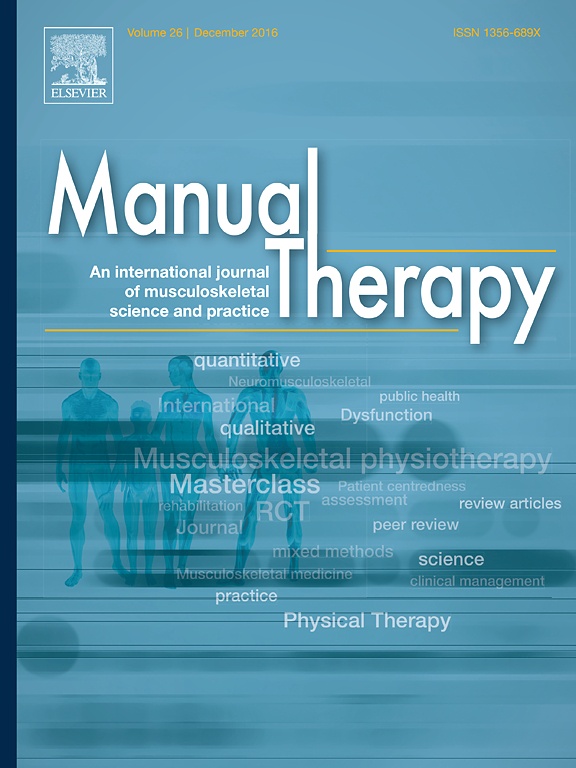
Immediate effects of active cranio-cervical flexion exercise versus passive mobilisation of the upper cervical spine on pain and performance on the cranio-cervical flexion test
 This report has been verified
by one or more authors of the
original publication.
This report has been verified
by one or more authors of the
original publication.
OrthoEvidence Journal (OE Journal) - ACE Report
OE Journal. 2014;2(10):27 Man Ther. 2014 Feb;19(1):25-31. doi: 10.1016/j.math.2013.05.011.Eighteen adults with chronic idiopathic neck pain were randomized to receive either assisted plus active cranio-cervical flexion (exercise group) or passive mobilisation plus assisted cranio-cervical flexion (mobilisation group). The purpose of the study was to determine which treatment was more efficacious with respect to performance on the cranio-cervical flexion test (CCFT), pain at rest, and pressure pain threshold. Immediately following intervention, both groups demonstrated improvements in pain and pain thresholds, but the exercise group experienced significantly greater improvements. Additionally, electromyographic amplitude of the sternocleidomastoid and anterior scalene muscle activities, measured during the CCFT, were significantly reduced with exercise group exclusively, indicating improved cervical spine muscle control.
ACEレポートのロックを解除
4今月はさらに多くの無料記事にアクセスできます。
以下をクリックしてロックを解除し、このACE Reportsをご覧ください。
今すぐロック解除
整形外科における最新のインパクトのあるランダム化比較試験とシステマティックレビューの批判的評価
Journal of Bone and Joint Surgeryとのコラボレーション、国際的に著名な外科医とのインタビュー、整形外科のニュースやトピックに関する座談会など、OrthoEvidenceポッドキャストコンテンツへのアクセス。
週2回発行されるエビデンスに基づくニュースレター、The Pulseの購読。
システマティック・レビュー、健康研究法、整形外科のホットな話題に関する記事など、オリジナル・コンテンツの独占配信
または、今すぐアップグレードして、$1.99/週からすべてのOrthoEvidenceコンテンツにアクセスしてください。
すでにアカウントをお持ちですか? ログイン
パートナー協会に所属していますか?
こちらをクリックすると、協会の会員特典として無料でアクセスできます!



0の4 月間無料記事のロック解除



