










PHYSICAL THERAPY & REHAB
Immediate effects of active cranio-cervical flexion exercise versus passive mobilisation of the upper cervical spine on pain and performance on the cranio-cervical flexion test
 This report has been verified
by one or more authors of the
original publication.
This report has been verified
by one or more authors of the
original publication.
OrthoEvidence Journal (OE Journal) - ACE Report
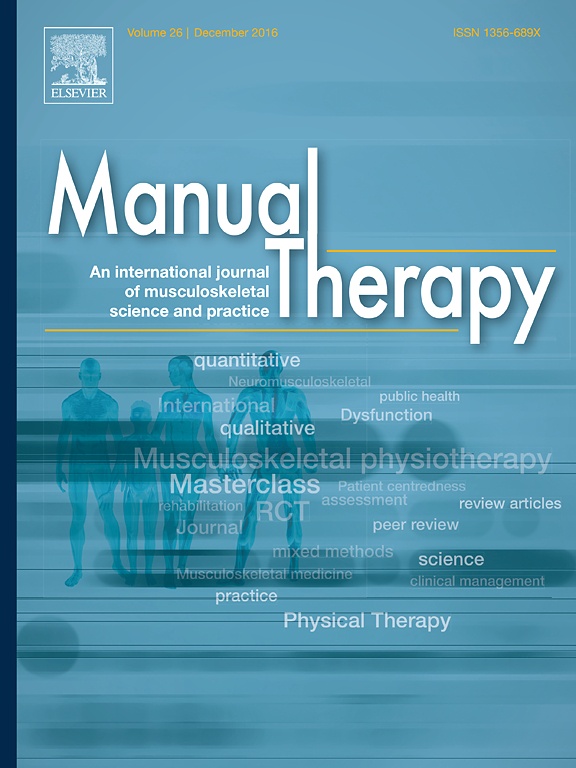
OE Journal. 2014;2(10):27 Man Ther. 2014 Feb;19(1):25-31. doi: 10.1016/j.math.2013.05.011.Eighteen adults with chronic idiopathic neck pain were randomized to receive either assisted plus active cranio-cervical flexion (exercise group) or passive mobilisation plus assisted cranio-cervical flexion (mobilisation group). The purpose of the study was to determine which treatment was more efficacious with respect to performance on the cranio-cervical flexion test (CCFT), pain at rest, and pressure pain threshold. Immediately following intervention, both groups demonstrated improvements in pain and pain thresholds, but the exercise group experienced significantly greater improvements. Additionally, electromyographic amplitude of the sternocleidomastoid and anterior scalene muscle activities, measured during the CCFT, were significantly reduced with exercise group exclusively, indicating improved cervical spine muscle control.
افتح تقرير ACE الكامل
لديك إمكانية الوصول إلى المزيد من المقالات المجانية هذا الشهر، انقر أدناه لفتح هذا ACE Reports
افتح الآنتقييمات نقدية لأحدث التجارب المعشاة ذات الشواهد عالية التأثير والمراجعات المنهجية في جراحة العظام
الوصول إلى محتوى المدونة الصوتية OrthoEvidence، بما في ذلك التعاون مع مجلة جراحة العظام والمفاصل، ومقابلات مع جراحين معترف بهم دوليًا، ومناقشات المائدة المستديرة حول أخبار وموضوعات جراحة العظام
الاشتراك في النشرة الإخبارية The Pulse، وهي نشرة إخبارية مبنية على الأدلة مرتين أسبوعيًا مصممة لمساعدتك في اتخاذ قرارات سريرية أفضل
إمكانية الوصول الحصري إلى مقالات المحتوى الأصلي، بما في ذلك المراجعات المنهجية الداخلية، ومقالات عن طرق البحث الصحي وموضوعات جراحة العظام الساخنة
أو قم بالترقية اليوم واحصل على إمكانية الوصول إلى جميع محتويات OrthoEvidence مقابل 1.99 دولارًا أمريكيًا في الأسبوع.
هل لديك حساب بالفعل؟ تسجيل الدخول
هل أنت منتسب إلى إحدى الجمعيات الشريكة لنا؟
انقر هنا لتحصل على وصول مجاني كجزء من مزايا عضوية جمعيتك!



0 من 4 مقالات مجانية شهرية غير مقفلة



