










SHOULDER & ELBOW
Which patients do not recover from shoulder impingement syndrome, either with operative treatment or with nonoperative treatment?
 This report has been verified
by one or more authors of the
original publication.
This report has been verified
by one or more authors of the
original publication.
OrthoEvidence Journal (OE Journal) - ACE Report
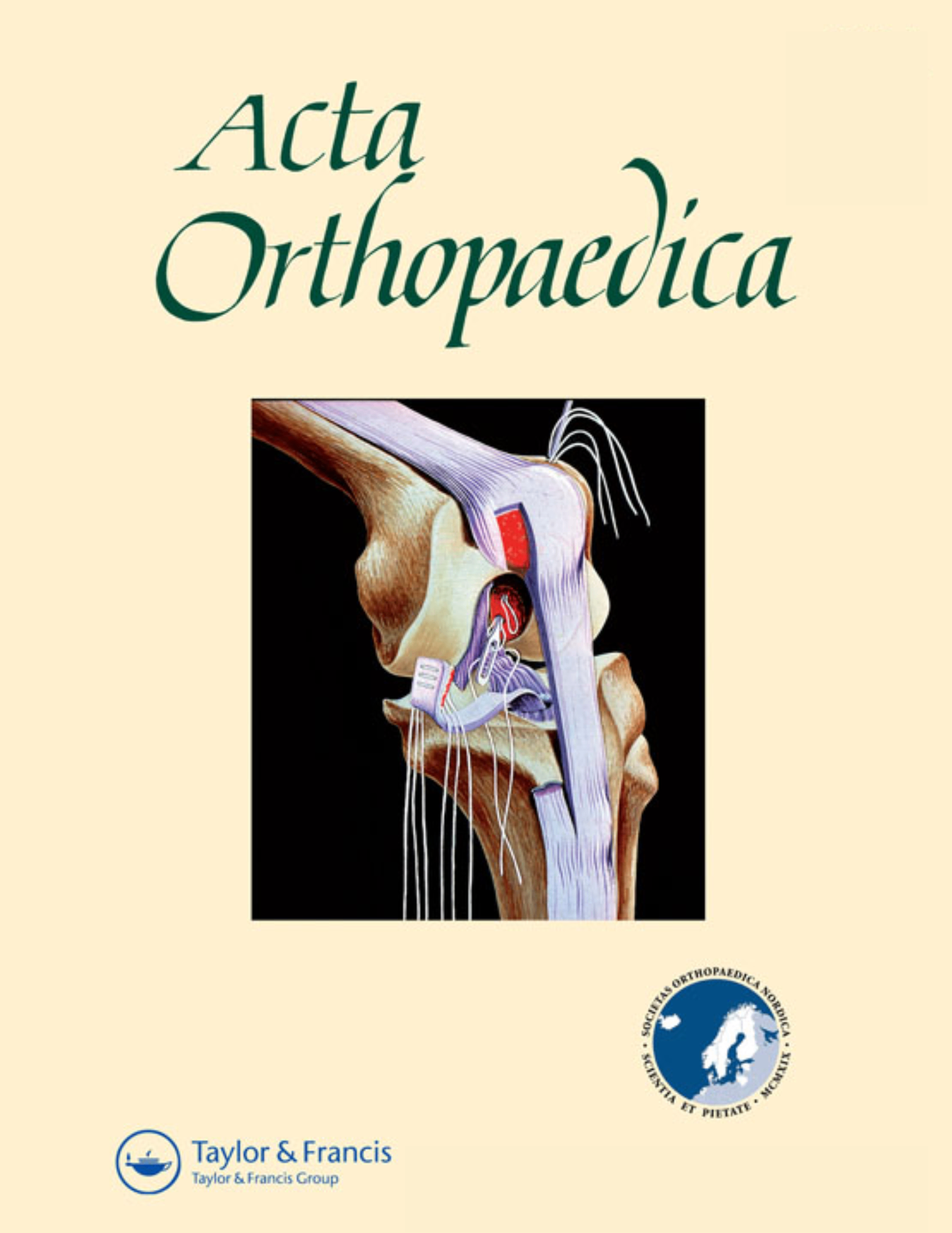
OE Journal. 2016;4(6):45 Acta Orthop. 2015 Dec;86(6):641-6140 patients with shoulder impingement syndrome were randomized to either a supervised exercise program alone or to arthroscopic acromioplasty followed with a similar exercise program. The purpose of this subgroup analysis study was to determine which patients (from either the arthroscopic acromioplasty and exercise therapy group, or the group treated solely with exercise therapy) are effectively treated for shoulder impingement syndrome when followed up at 2 and 5 years. Findings showed similar results between the patients who underwent operative treatment and the group that underwent conservative treatment. Furthermore, arthroscopic acromioplasty did not appear to improve results in patients who were originally allocated to exercise therapy alone and were unsatisfied with outcome following conservative management.
Was the allocation sequence adequately generated?
Was allocation adequately concealed?
Blinding Treatment Providers: Was knowledge of the allocated interventions adequately prevented?
Blinding Outcome Assessors: Was knowledge of the allocated interventions adequately prevented?
Blinding Patients: Was knowledge of the allocated interventions adequately prevented?
Was loss to follow-up (missing outcome data) infrequent?
Are reports of the study free of suggestion of selective outcome reporting?
Were outcomes objective, patient-important and assessed in a manner to limit bias (ie. duplicate assessors, Independent assessors)?
Was the sample size sufficiently large to assure a balance of prognosis and sufficiently large number of outcome events?
Was investigator expertise/experience with both treatment and control techniques likely the same (ie.were criteria for surgeon participation/expertise provided)?
Sim = 1
Incerto = 0,5
Não relevante = 0
Não = 0
A Avaliação dos Critérios de Relato avalia a transparência com que os autores relatam as caraterísticas metodológicas e do ensaio na publicação. A avaliação está dividida em cinco categorias que são apresentadas de seguida.
3/4
Randomization
1/4
Outcome Measurements
4/4
Inclusion / Exclusion
4/4
Therapy Description
4/4
Statistics
Detsky AS, Naylor CD, O'Rourke K, McGeer AJ, L'Abbé KA. J Clin Epidemiol. 1992;45:255-65
O Índice de Fragilidade é uma ferramenta que auxilia na interpretação de achados significativos, fornecendo uma medida de força para um resultado. O Índice de Fragilidade representa o número de eventos consecutivos que precisam de ser adicionados a um resultado dicotómico para que o resultado deixe de ser significativo. Um número pequeno representa um resultado mais fraco e um número grande representa um resultado mais forte.
Porque é que este estudo era necessário agora?
Shoulder impingement syndrome is a common source of shoulder pain and functional deficit. Both operative and non-operative methods have been used to treat shoulder impingement syndrome. Despite previous literature suggesting that arthroscopic acromioplasty may not offer any significant advantages over exercise therapy, the use of arthroscopic acromioplasty in the treatment of shoulder impingement has been increasing over the past years. . This subgroup analysis was conducted to identify the individuals within the sample population that would benefit from operative treatment.
Qual era a principal questão de investigação?
What differences, if any, exist between subgroups of patients treated with acromioplasty and exercise therapy versus exercise therapy alone in the management of shoulder impingement syndrome, as assessed over a 5-year follow-up period?
Quais foram os resultados importantes?
- Both the operative and non-operative groups reported significant improvements compared to baseline for self-reported pain, disability, working ability, pain at night, SDQ score and reported days with pain. Outcomes were similar between the groups.
- Patients who were dissatisfied in the non-operative group and later received operative treatment reported worse values compared to patients in the other groups.
- Overall in the entire cohort, 86 patients were pain-free and 48 patients reported pain (>3 on a visual analog scale) at 2-year follow-up. At 5 years, 82 patients were pain-free and 27 patients reported pain.
- A number of factors were identified as having a statistically significant impact on pain. At 2-year follow-up factors included: living alone (Odds ratio 3.29 [95%CI 1.39-7.78]), lack of professional education (OR 3.67 [95%CI 1.20-11.2]), moderate load lifted per day (20-100kg) (OR 4.36 [95%CI 1.38-13.8]), and sick leave prior to randomization exceeding 2 weeks (OR 2.52 [95%CI 1.10-10.22]). At 5-year follow-up factors included: living alone (OR 2.77 [95%CI 1.02-7.55]), moderate-heavy load lifted per day (100-500kg) (OR 4.35 [95%CI 1.13-18.1]), and sick leave prior to randomized exceeding 2 weeks (OR 3.83 [95%CI 1.35-10.9]).
- Overall satisfaction at work demonstrated a statistically significant effect on pain at 2-year follow-up (p=0.01), and requirement/challenges at work demonstrated a statistically significant effect on pain at 5 years (p=0.01).
De que é que me devo lembrar mais?
In the treatment of shoulder impingement syndrome, similar results for self-reported pain, disability, working ability, pain at night, SDQ score, and reported days with pain were demonstrated between arthroscopic acromioplasty with exercise therapy compared to exercise therapy alone. Patients initially in the exercise therapy group that later wanted arthroscopic acromioplasty did not show postoperative improvement.
Como é que isto afectará o tratamento dos meus doentes?
Based on the results of this analysis, arthroscopic acromioplasty may not offer any significant difference in clinical outcome when compared to supervised exercise therapy, or in cases of pursued surgery following supervised exercise therapy. The authors also reported that there does not appear to be a specific subgroup of patients to guide the decision between supervised exercise therapy and arthroscopic acromioplasty. Future research should consider possible patient subgroups as enrollment criteria in order to prospectively analyze outcomes between supervised exercise therapy and arthroscopic acromioplasty with a more narrow focus, as opposed to a secondary analysis with low sample sizes for multiple variables.

AVISO LEGAL
O conteúdo desta página destina-se apenas a fins informativos e não pretende substituir o aconselhamento, diagnóstico ou tratamento médico profissional. Se necessitar de tratamento médico, procure sempre o conselho do seu médico ou dirija-se ao serviço de urgência mais próximo. As opiniões, crenças e pontos de vista expressos pelos indivíduos no conteúdo encontrado nesta página não reflectem as opiniões, crenças e pontos de vista da OrthoEvidence.
0 de 4 artigos mensais GRATUITOS desbloqueados



