










TRAUMA
Treatment of proximal humerus fractures in the elderly A systematic review of 409 patients
OrthoEvidence Journal (OE Journal) - ACE Report
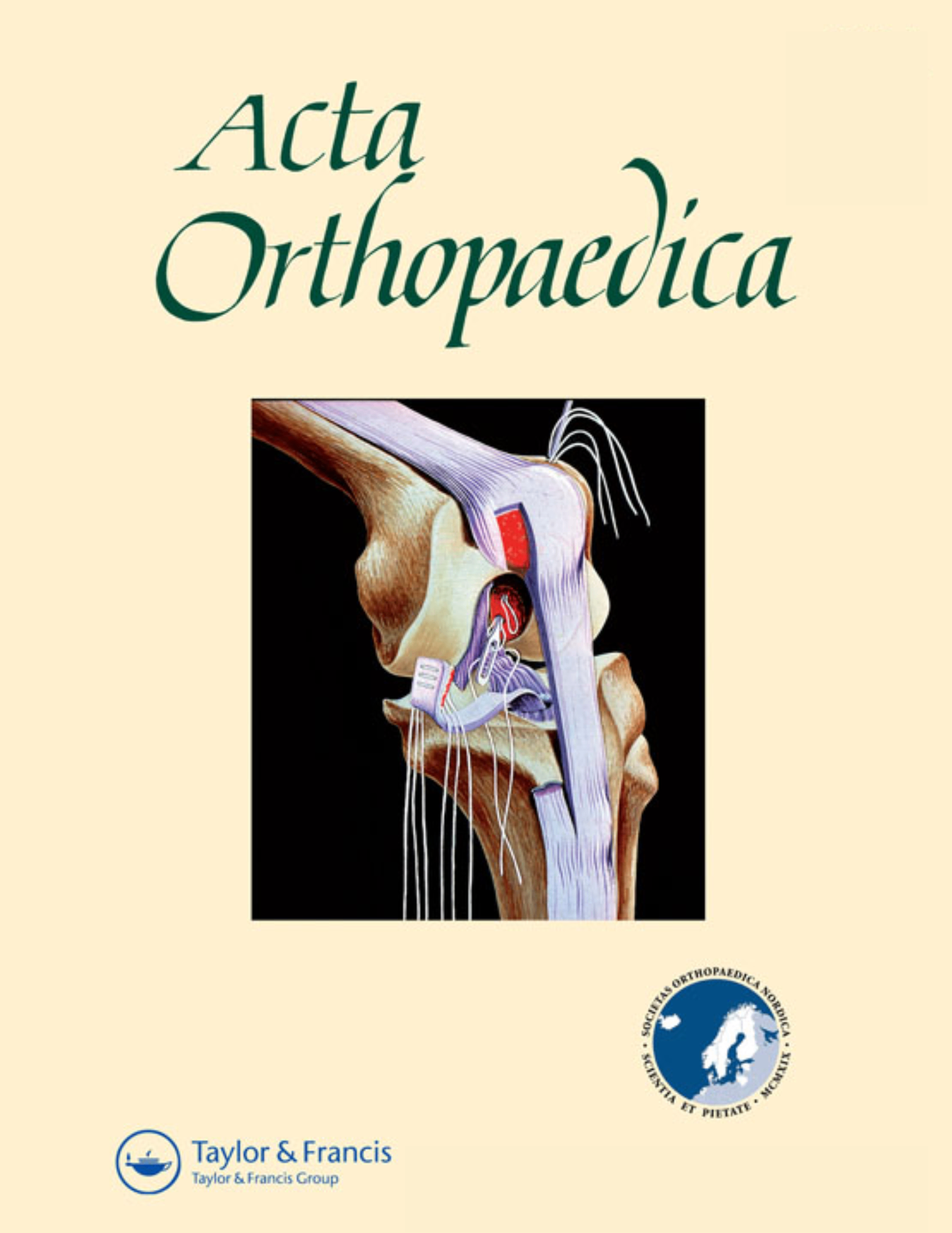
OE Journal. 2015;3(20):32 Acta Orthop. 2015 Jun;86(3):280-5.9 studies (8 RCTs, 1 controlled clinical trial) were selected for a systematic review of elderly patients with a proximal humerus fracture. The goal of this study was to determine whether surgical or nonoperative treatment is the optimal intervention in patients over the age of 60. Operative treatments identified in the included trials were the tension band technique, locking plates, pinning and hemiarthroplasty. The results of this review indicated that many studies did not find a significant difference in functional outcomes when comparing locking plates or tension bands to nonoperative treatment at 1 year. There was a significantly better health-related quality of life and Euroqol-5D in patients that received a hemiarthroplasty compared to the nonoperative group for patients with 4-part fractures. Complications were common in the operative treatment groups. This study highlights the need for further high quality investigations.
Were the search methods used to find evidence (original research) on the primary question or questions stated?
Was the search for evidence reasonably comprehensive?
Were the criteria used for deciding which studies to include in the overview reported?
Was the bias in the selection of studies avoided?
Were the criteria used for assessing the validity of the included studies reported?
Was the validity of all of the studies referred to in the text assessed with use of appropriate criteria (either in selecting the studies for inclusion or in analyzing the studies that were cited)?
Were the methods used to combine the findings of the relevant studies (to reach a conclusion) reported?
Were the findings of the relevant studies combined appropriately relative to the primary question that the overview addresses?
Were the conclusions made by the author or authors supported by the data and or analysis reported in the overview?
How would you rate the scientific quality of this evidence?
Sí = 1
Incierto = 0,5
No relevante = 0
No = 0
La evaluación de los criterios de información evalúa la transparencia con la que los autores informan de las características metodológicas y del ensayo dentro de la publicación. La evaluación se divide en cinco categorías que se presentan a continuación.
4/4
Introdução
4/4
Acesso aos dados
2/4
Análise dos dados
1/4
Resultados
2/4
Discussão
Detsky AS, Naylor CD, O'Rourke K, McGeer AJ, L'Abbé KA. J Clin Epidemiol. 1992;45:255-65
El Índice de Fragilidad es una herramienta que ayuda en la interpretación de hallazgos significativos, proporcionando una medida de fuerza para un resultado. El Índice de Fragilidad representa el número de eventos consecutivos que es necesario añadir a un resultado dicotómico para que el hallazgo deje de ser significativo. Un número pequeño representa un hallazgo más débil y un número grande un hallazgo más fuerte.
¿Por qué se necesitaba ahora este estudio?
As the growing population ages, the incidence of osteoporotic trauma will also grow. Among the more common of these fractures are those of the proximal humerus. There is little high-quality evidence comparing the various methods of treatment, which also have a high degree of variation between practitioners. Previous literature reviews have not focused on proximal humerus fractures associated with osteoporosis, and with new literature published, there is a need for an updated assessment.
¿Cuál era la pregunta principal de la investigación?
What were the effects of various surgical treatments of osteoporotic proximal humerus fractures on function, disability, and complications in elderly patients?
¿Cuáles fueron los hallazgos importantes?
- Studies investigated the use of surgical treatments which included the tension band technique (1 study), locking plates (3 studies), hemiarthroplasty (3 studies) and MIROS pinning (1 study).
- A comparison of tension band to nonoperative treatment found that there was no significant difference in Constant score after 1 year
- Studies comparing locking plate fixation to nonoperative treatment found no difference in Constant score (2 studies), American Shoulder and Elbow Surgeons shoulder score (1 study), Disabilities of the arm, shoulder, and hand (DASH) score (1 study) or health-related quality of life (2 studies) at one year.
- 1 study found no differences between monaxial and polyaxial constructions in locking plates in constant score, DASH and simple shoulder test.
- One study comparing hemiarthroplasty with nonoperative treatment in patients with 4 part fractures found that hemiarthroplasty had a significantly better EQ-5D, but no significant difference was found for DASH or Constant score after 2 years
- Another study comparing hemiarthroplasty and nonoperative treatment found no significant difference for Constant score, simple shoulder test, or visual analogue scale after 12 months
- One study comparing hemiarthroplasty devices (Epoca, Depuy Synthesis and HAS, Stryker) found that the individual Constant score and the regular Constant score were in favor of the Epoca prosthesis; 2 infections were reported for the Epoca group
- Complications were common with operative care (10-29%) as well as reoperation rates (16-30%)
¿Qué es lo que más debo recordar?
Many of the studies found no significant difference between the functional outcomes for operative and nonoperative treatment of proxmial humerus fractures in patients over the age of 60. Many studies reported high complication rates in the operative group. Both tension band and locking plate systems did not provide significant benefits over nonoperative treatment. Treatment of 4-part fractures with hemiarthroplasty found that HRQoL and EQ-5D was significantly better than nonoperative treatment, but the complication rates were high.
¿Cómo afectará esto al cuidado de mis pacientes?
The results from this study indicate the operative treatments such as tension band and locking plate systems did not provide significant benefits over nonoperative treatment, and while hemi arthroplasty my provide some benefit there were concerns relating to the number of complications. The study highlights the need for further high quality investigations into the treatment of 3-4 part humeral fractures that use standardized reporting that will allow for meta-analysis.

DESCARGO DE RESPONSABILIDAD
El contenido de esta página tiene únicamente fines informativos y no pretende sustituir el consejo, diagnóstico o tratamiento médico profesional. Si necesita tratamiento médico, busque siempre el consejo de su médico o acuda al servicio de urgencias más cercano. Las opiniones, creencias y puntos de vista expresados por las personas sobre el contenido que se encuentra en esta página no reflejan las opiniones, creencias y puntos de vista de OrthoEvidence.
0 de 4 artículos mensuales GRATIS desbloqueados



