










ARTHROPLASTY
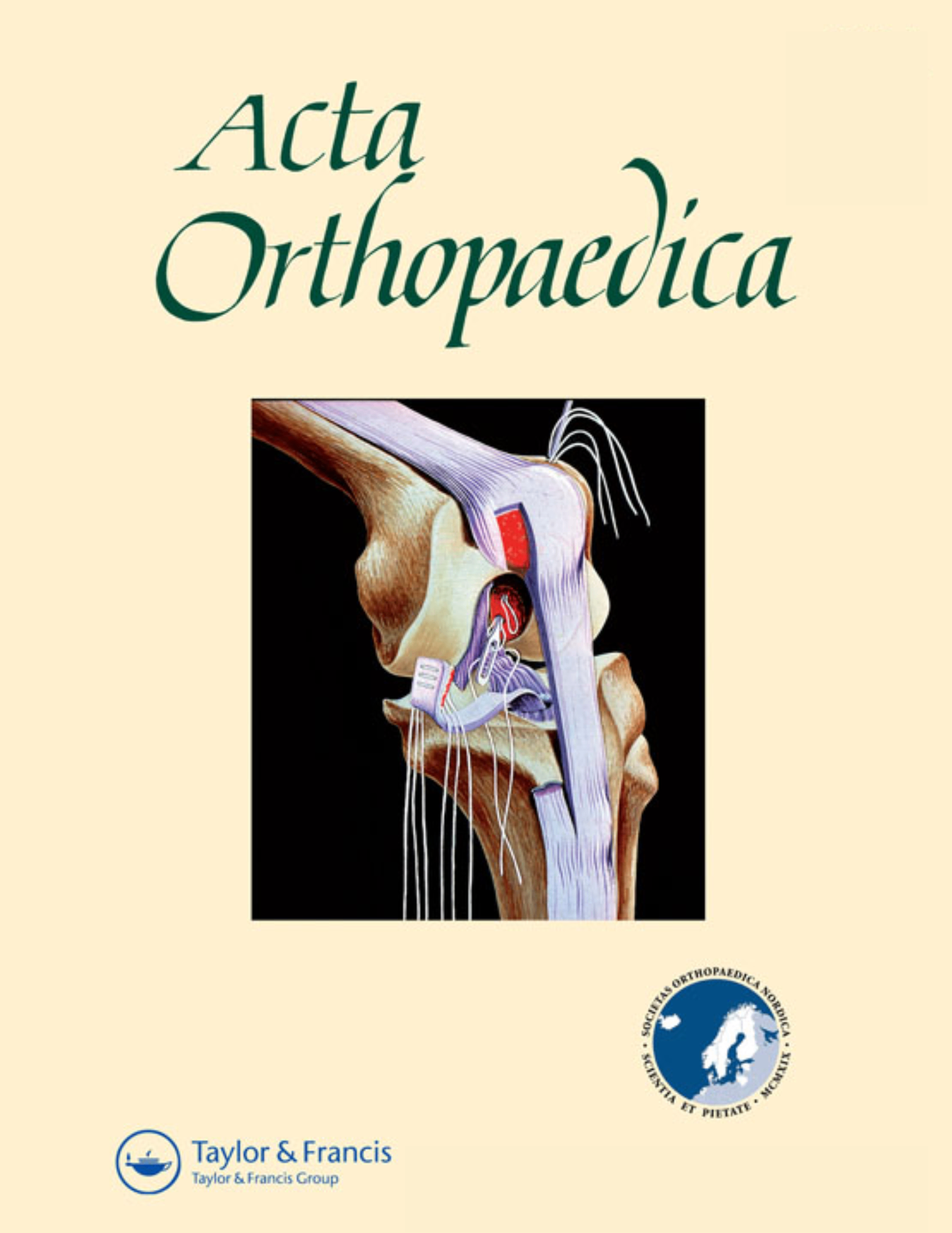
Comparison of peri- and intraarticular analgesia with femoral nerve block after total knee arthroplasty: A randomized clinical trial
 Diese Studie wurde als potenziell hochrangig eingestuft.
Die KI-gesteuerte High-Impact-Metrik von OE schätzt den Einfluss ein, den eine Arbeit wahrscheinlich haben wird, indem sie Signale sowohl aus der Zeitschrift, in der sie veröffentlicht wurde, als auch aus dem wissenschaftlichen Inhalt des Artikels selbst integriert.
Das mit Hilfe modernster natürlicher Sprachverarbeitung entwickelte OE High Impact-Modell sagt die zukünftige Zitationsleistung einer Studie genauer voraus als der Impact-Faktor einer Zeitschrift allein.
Dies ermöglicht eine frühere Erkennung von klinisch bedeutsamer Forschung und hilft den Lesern, sich auf Artikel zu konzentrieren, die die zukünftige Praxis am ehesten beeinflussen werden.
Diese Studie wurde als potenziell hochrangig eingestuft.
Die KI-gesteuerte High-Impact-Metrik von OE schätzt den Einfluss ein, den eine Arbeit wahrscheinlich haben wird, indem sie Signale sowohl aus der Zeitschrift, in der sie veröffentlicht wurde, als auch aus dem wissenschaftlichen Inhalt des Artikels selbst integriert.
Das mit Hilfe modernster natürlicher Sprachverarbeitung entwickelte OE High Impact-Modell sagt die zukünftige Zitationsleistung einer Studie genauer voraus als der Impact-Faktor einer Zeitschrift allein.
Dies ermöglicht eine frühere Erkennung von klinisch bedeutsamer Forschung und hilft den Lesern, sich auf Artikel zu konzentrieren, die die zukünftige Praxis am ehesten beeinflussen werden.
OrthoEvidence Journal (OE Journal) - ACE Report
OE Journal. 2013;1(11):10 Acta Orthop. 2007 Apr;78(2):172-9.80 patients requiring total knee arthroplasty (TKA) were randomized to receive one of two treatments for managing postoperative TKA pain. One group received a periarticular injection of analgesic followed by intra-articular bolus injections, and the other group underwent a continuous femoral nerve block (a standard treatment for postoperative pain at the institution of study) followed by an infusion of a local anaesthetic. Results showed that the group receiving a periarticular injection of analgesics followed by bolus injections had lower pain scores and better mobilization compared to the group receiving the continuous nerve block treatment.
Was the allocation sequence adequately generated?
Was allocation adequately concealed?
Blinding Treatment Providers: Was knowledge of the allocated interventions adequately prevented?
Blinding Outcome Assessors: Was knowledge of the allocated interventions adequately prevented?
Blinding Patients: Was knowledge of the allocated interventions adequately prevented?
Was loss to follow-up (missing outcome data) infrequent?
Are reports of the study free of suggestion of selective outcome reporting?
Were outcomes objective, patient-important and assessed in a manner to limit bias (ie. duplicate assessors, Independent assessors)?
Was the sample size sufficiently large to assure a balance of prognosis and sufficiently large number of outcome events?
Was investigator expertise/experience with both treatment and control techniques likely the same (ie.were criteria for surgeon participation/expertise provided)?
Ja = 1
Ungewiss = 0.5
Nicht relevant = 0
Nein = 0
Die Bewertung der Berichtskriterien bewertet die Transparenz, mit der die Autoren die methodischen und studienspezifischen Merkmale der Studie in der Veröffentlichung angeben. Die Bewertung ist in fünf Kategorien unterteilt, die im Folgenden vorgestellt werden.
3/4
Randomização
2/4
Medidas de resultado
4/4
Inclusão/Exclusão
4/4
Descrição do tratamento
4/4
Estatística
Detsky AS, Naylor CD, O'Rourke K, McGeer AJ, L'Abbé KA. J Clin Epidemiol. 1992;45:255-65
Der Fragilitätsindex ist ein Instrument, das bei der Interpretation signifikanter Ergebnisse hilft und ein Maß für die Stärke eines Ergebnisses liefert. Der Fragilitätsindex gibt die Anzahl der aufeinanderfolgenden Ereignisse an, die zu einem dichotomen Ergebnis hinzugefügt werden müssen, damit das Ergebnis nicht mehr signifikant ist. Eine kleine Zahl steht für ein schwächeres Ergebnis und eine große Zahl für ein stärkeres Ergebnis.
Warum wurde diese Studie jetzt benötigt?
Postoperative pain management after total knee surgery often involves a combination of different modalities and can cause numerous side effects. Postoperative pain may delay recovery; therefore, alternative methods of analgesia are of interest to researchers. Recent studies suggest that periarticular infiltration of local anaesthetics may be an effective way to reduce postoperative pain. This study examined the effects of using a peri- and intra-articular analgesic treatment compared to femoral nerve block treatment in managing postoperative pain.
Was war die wichtigste Forschungsfrage?
What is the quality of analgesia and mobilization in patients requiring total knee arthroplasty undergoing peri- and intra-articular injections compared to a continuous femoral nerve block procedure from the end of surgery to postoperative day 3?
Was waren die wichtigsten Ergebnisse?
- More patients in Group I (peri- and intra-articular injection group) (29/39) were able to walk >3 m on the first day post-operation compared to the Group F (continuous femoral nerve block group) (7/37). (P<0.001)
- Group I showed lower pain scores (median: 3 compared to median:5) and opioid consumption (median: 83 mg compared to median: 100 mg) on the first day post-operation compared to Group F. (P=0.001 and P=0.02)
- More patients in Group I were able to hold quadriceps tension for >5 sec (30/37 compared to 18/36) and achieved flexion >90 degrees (24/39 compared to 18/37) compared to Group F on the first day post-operation. (P=0.002 and P=0.3)
- The length of stay between Group I and Group F in the recovery room were similar (Group F: 3.5h; Group I: 3.0h). (p=0.05)
- The median length of stay for Group I was 5 days, and for Group F was 6 days. (P=0.03)
- No significant difference was seen in the number of days each group experienced adverse effects. (P>0.20)
Was sollte ich mir besonders merken?
Peri-articular injections of analgesics followed by intra-articular bolus injections can improve postoperative analgesia in patients undergoing total knee arthroplasty in comparison to a femoral nerve block.
Wie wird sich dies auf die Behandlung meiner Patienten auswirken?
Use of peri- and intra-articular infiltration and injection may provide better postoperative pain management for patients undergoing total knee arthroplasty. Further studies are required to determine appropriate drug dosage and duration of treatment. It is also uncertain if patients may benefit from subsequent bolus injections after the morning of the first postoperative day.

HAFTUNGSAUSSCHLUSS
Der Inhalt dieser Seite dient nur zu Informationszwecken und ist nicht als Ersatz für professionelle medizinische Beratung, Diagnose oder Behandlung gedacht. Wenn Sie eine medizinische Behandlung benötigen, wenden Sie sich immer an Ihren Arzt oder suchen Sie die nächstgelegene Notaufnahme auf. Die Meinungen, Überzeugungen und Standpunkte, die von den Personen auf dieser Seite geäußert werden, spiegeln nicht die Meinungen, Überzeugungen und Standpunkte von OrthoEvidence wider.
0 von 4 monatliche KOSTENLOSE Artikel freigeschaltet



